Where to read or listen
- Is there an audiobook of Glucose Revolution?
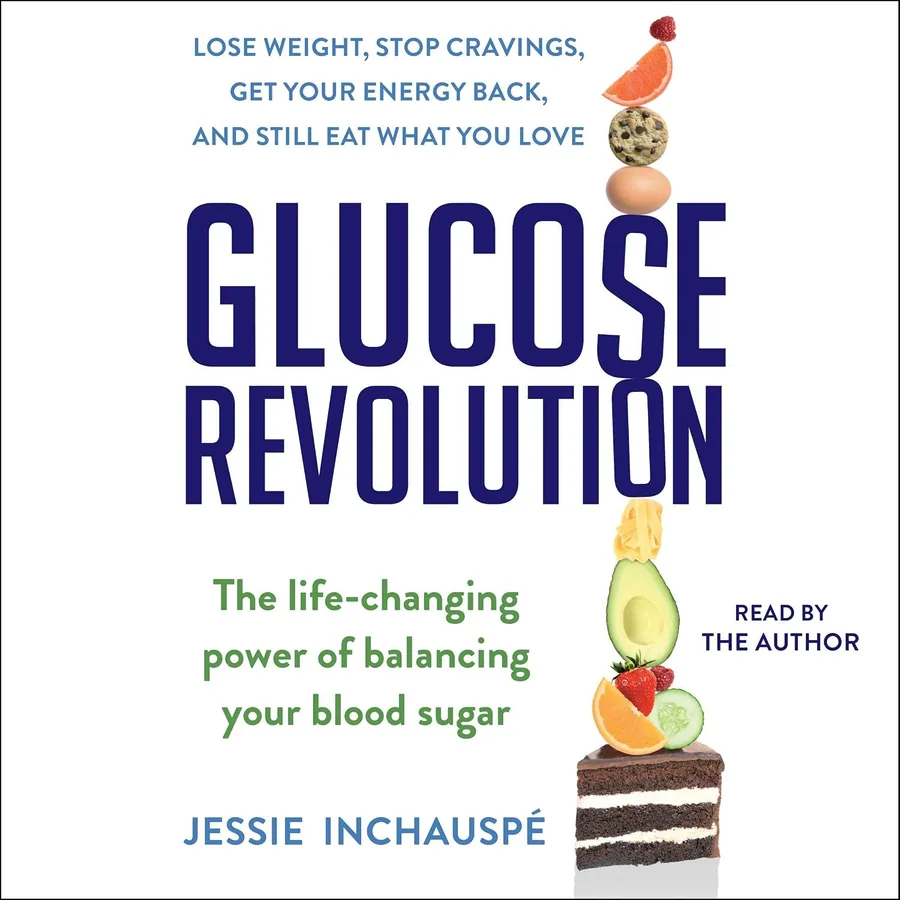
- Yes. Glucose Revolution has an Audible audiobook edition, narrated by Jessie Inchauspe.Listen free with Audible
We earn from qualifying Amazon purchases.
- How long is the Glucose Revolution audiobook?
- The Glucose Revolution audiobook runs 6 hr 3 min.
- Is Glucose Revolution on Kindle+?
- No. Glucose Revolution was not included with Kindle+ when we last checked on November 23, 2026.
Common questions
- What is Glucose Revolution: The Life-Changing Power of Balancing Your Blood Sugar about?
- Inchauspe's pitch is the most appealing one in the diet shelf: change what happens after you eat, and leave what you eat mostly alone. She is a biochemist, and Glucose Revolution argues that spikes in blood sugar sit behind a long list of everyday complaints, from cravings and fatigue to skin…
- Is Glucose Revolution: The Life-Changing Power of Balancing Your Blood Sugar worth reading?
- We scored Glucose Revolution: The Life-Changing Power of Balancing Your Blood Sugar 4.9 out of 5. Jessie Inchauspe's Glucose Revolution is a practical nutrition and health book from a biochemist who argues you can change how your body handles a meal without dieting or giving up foods you like. It explains blood sugar plainly, then hands you ten small hacks to try.
More like this
Related books

Fiber Fueled: The Plant-Based Gut Health Program
Will Bulsiewicz MD

The China Study
T. Colin Campbell

Outlive: The Science and Art of Longevity
Peter Attia MD

The Obesity Code: Unlocking the Secrets of Weight Loss
Dr. Jason Fung

Good Energy: The Surprising Connection Between Metabolism and Limitless Health
Casey Means MD

The Comfort Crisis: Embrace Discomfort to Reclaim Your Wild, Happy, Healthy Self
Michael Easter

Exercised: Why Something We Never Evolved to Do Is Healthy and Rewarding
Daniel E. Lieberman

Lifespan: Why We Age, and Why We Don't Have To
David Sinclair

Bigger Leaner Stronger: The Simple Science of Building the Ultimate Male Body
Michael Matthews

Protocols: An Operating Manual for the Human Body
Andrew D. Huberman