Where to read or listen
- Is there an audiobook of The Comfort Crisis?
- Yes. The Comfort Crisis has an Audible audiobook edition, narrated by Michael Easter.Listen free with Audible
We earn from qualifying Amazon purchases.
- How long is the The Comfort Crisis audiobook?
- The The Comfort Crisis audiobook runs 8 hr 52 min.
- Is The Comfort Crisis on Kindle+?
- No. The Comfort Crisis was not included with Kindle+ when we last checked on November 23, 2026.
Common questions
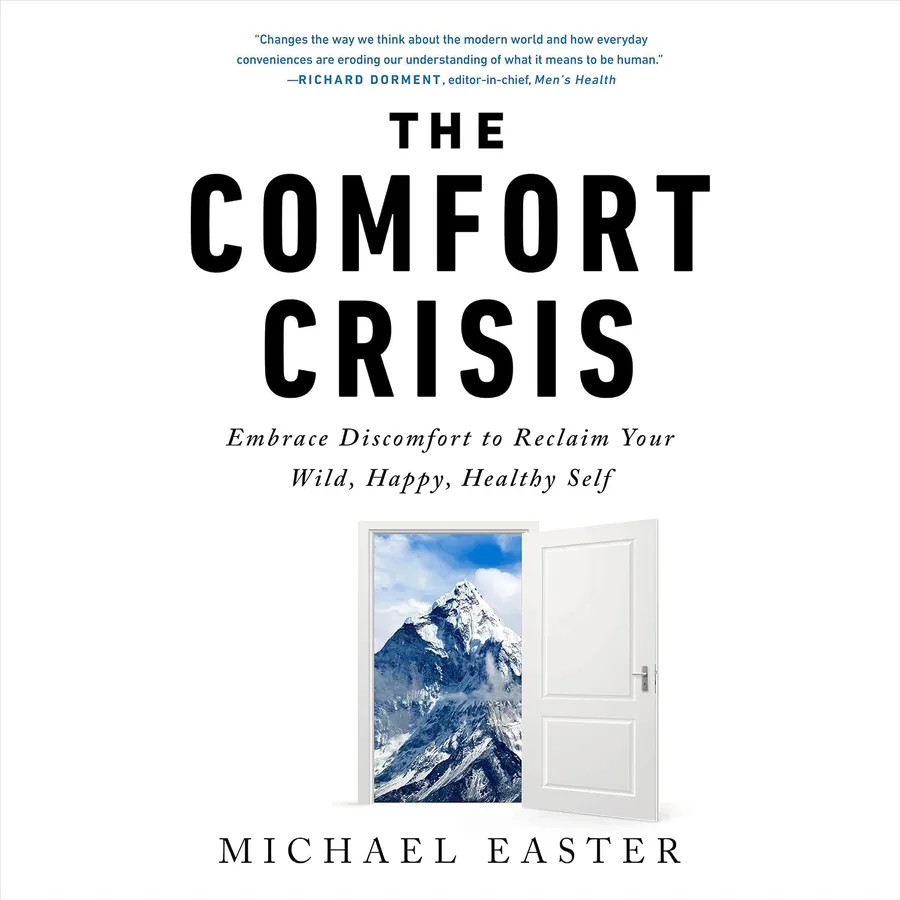
- What is The Comfort Crisis: Embrace Discomfort to Reclaim Your Wild, Happy, Healthy Self about?
- The Comfort Crisis is a smarter book than its pitch suggests. The pitch is easy to wave off: modern life has made us soft, so go do something hard. Michael Easter's evolutionary health book spends its pages on a better question. What do we lose when heat, food, and stimulation are always a few…
- Is The Comfort Crisis: Embrace Discomfort to Reclaim Your Wild, Happy, Healthy Self worth reading?
- We scored The Comfort Crisis: Embrace Discomfort to Reclaim Your Wild, Happy, Healthy Self 4.8 out of 5. Michael Easter's The Comfort Crisis is an evolutionary health book arguing that sheltered, climate-controlled, overfed lives sit behind many modern physical and mental health problems. Part reported science, part Alaskan hunting-trip narrative, it makes a brisk case for…
More like this
Related books

Exercised: Why Something We Never Evolved to Do Is Healthy and Rewarding
Daniel E. Lieberman

Lifespan: Why We Age, and Why We Don't Have To
David Sinclair

Protocols: An Operating Manual for the Human Body
Andrew D. Huberman

Why We Sleep: Unlocking the Power of Sleep and Dreams
Matthew Walker PhD

Spark: The Revolutionary New Science of Exercise and the Brain
John J. Ratey MD

Breath: The New Science of a Lost Art
James Nestor

When Breath Becomes Air
Paul Kalanithi

Fiber Fueled: The Plant-Based Gut Health Program
Will Bulsiewicz MD

The China Study
T. Colin Campbell

The Immortal Life of Henrietta Lacks
Rebecca Skloot