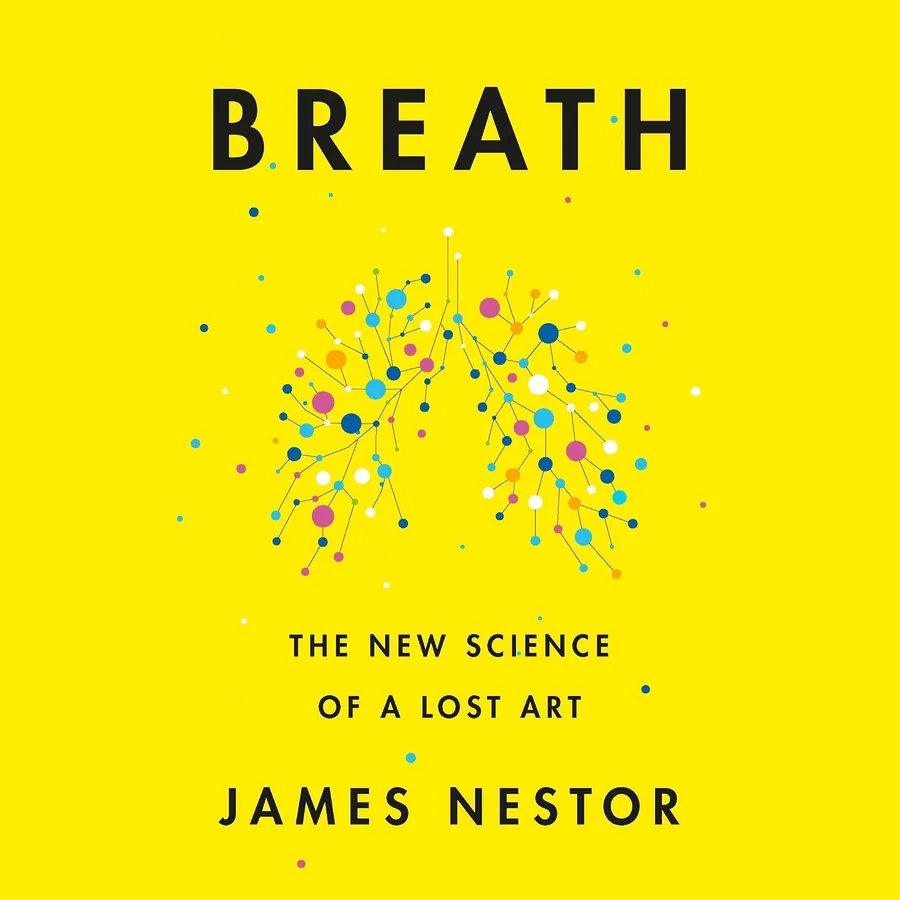
Where to read or listen
- Is there an audiobook of Breath: The New Science of a Lost Art?
- Yes. Breath: The New Science of a Lost Art has an Audible audiobook edition, narrated by James Nestor.Listen free with Audible
We earn from qualifying Amazon purchases.
- How long is the Breath: The New Science of a Lost Art audiobook?
- The Breath: The New Science of a Lost Art audiobook runs 7 hr 55 min.
- Is Breath: The New Science of a Lost Art on Kindle+?
- No. Breath: The New Science of a Lost Art was not included with Kindle+ when we last checked on November 23, 2026.
Common questions
- What is Breath: The New Science of a Lost Art about?
- Breath reads like a travelogue that keeps turning into an experiment. James Nestor's reporting takes him to ancient burial digs, a choir school in New Jersey, secret Soviet sites, the catacombs in France, and the smog of São Paulo, and each stop carries a new person with a new theory about how…
- Is Breath: The New Science of a Lost Art worth reading?
- We scored Breath: The New Science of a Lost Art 4.5 out of 5. Breath: The New Science of a Lost Art by James Nestor is a health and science book about how modern humans forgot how to breathe well, and what to do about it. Nestor, a journalist, travels the world and tests ancient and modern breathing methods on himself, in an easy, funny…
More like this
Related books

Protocols: An Operating Manual for the Human Body
Andrew D. Huberman

Why We Sleep: Unlocking the Power of Sleep and Dreams
Matthew Walker PhD

Spark: The Revolutionary New Science of Exercise and the Brain
John J. Ratey MD

Lifespan: Why We Age, and Why We Don't Have To
David Sinclair

The Comfort Crisis: Embrace Discomfort to Reclaim Your Wild, Happy, Healthy Self
Michael Easter

Exercised: Why Something We Never Evolved to Do Is Healthy and Rewarding
Daniel E. Lieberman

Replaceable You: Adventures in Human Anatomy
Mary Roach

A Short History of Nearly Everything
Bill Bryson

The Hidden Life of Trees: What They Feel, How They Communicate
Peter Wohlleben

The Obesity Code: Unlocking the Secrets of Weight Loss
Dr. Jason Fung