Reading notes
How to Edit Your Novel in 2026: A Self-Editing Guide for Writers
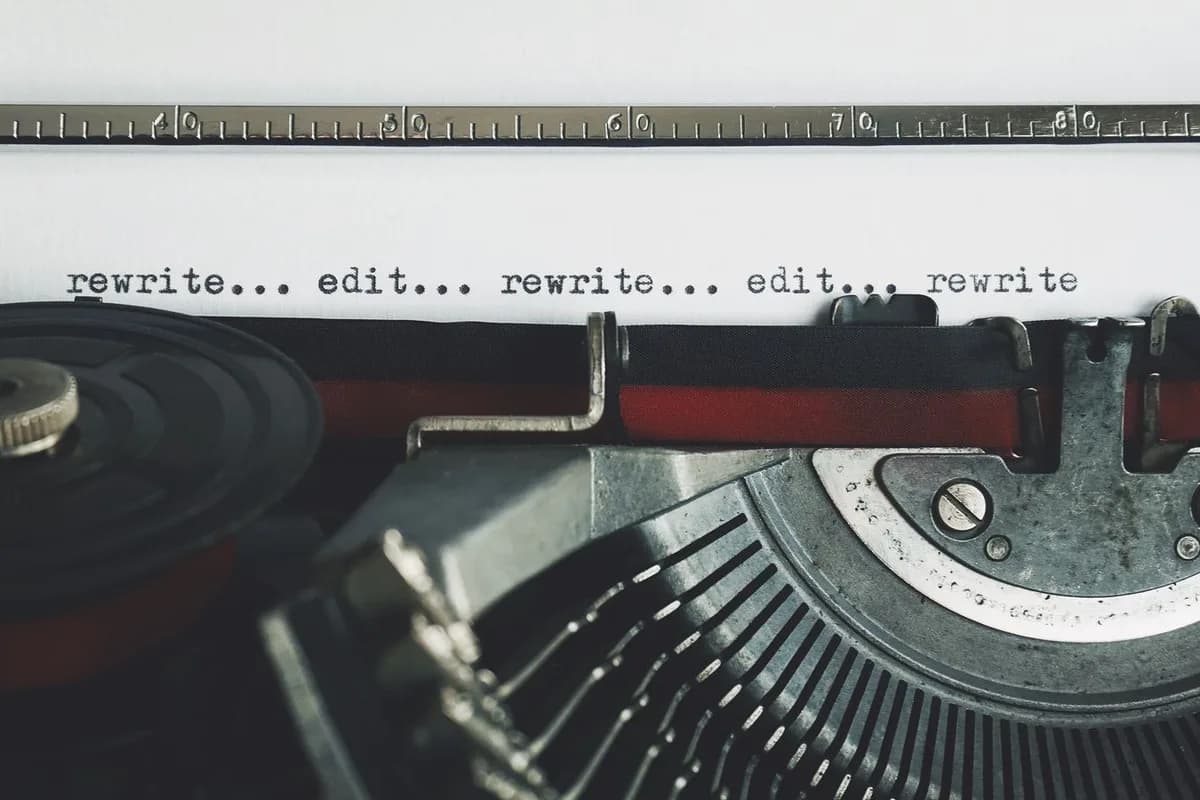
Advertisement
Every novel is written twice: once to get the story down, and once to make it good. The first draft is an act of faith; the edit is an act of judgment. If you have typed THE END on a manuscript and felt equal parts triumph and panic — because you can sense it isn't ready but can't yet name why — this guide is for you. Learning how to edit your novel is the skill that turns a finished draft into a book a reader can't put down, and in 2026 it is also the difference between a manuscript an agent requests and one they pass on.
Self-editing is not the same as hiring an editor, and it does not replace one. It is the deliberate, layered work you do on your own pages first — so that whoever reads next, whether a beta reader, an agent, or a professional editor, meets the strongest version of your book you are capable of making alone. This guide walks the whole process in the order the pros use it: rest, read, then edit from the largest problems down to the smallest, finishing with a clear-eyed view of when to bring in help. You finished writing it in our guide to writing your first novel; this is what happens next.
How long should you let a manuscript rest before editing?
The most important editing tool costs nothing and requires no skill: distance. The day you finish a draft, you are the worst possible reader of it. Your memory fills every gap the prose leaves open; you see the story you meant to tell, not the one actually on the page. That gap between intention and execution is exactly what editing has to close, and you cannot see it while the book is still warm.
So put it away. Two weeks is a minimum; a month is better. Write something else, read other people's books, live your life. When you come back, the manuscript will feel pleasantly unfamiliar — and the flat scenes, the repeated phrases, the plot turn that never quite tracked will jump off the page as if someone else wrote them. That stranger's-eye view is the whole game. Everything else in this guide is a way of manufacturing it on purpose.
How do you read your own draft like a reader?
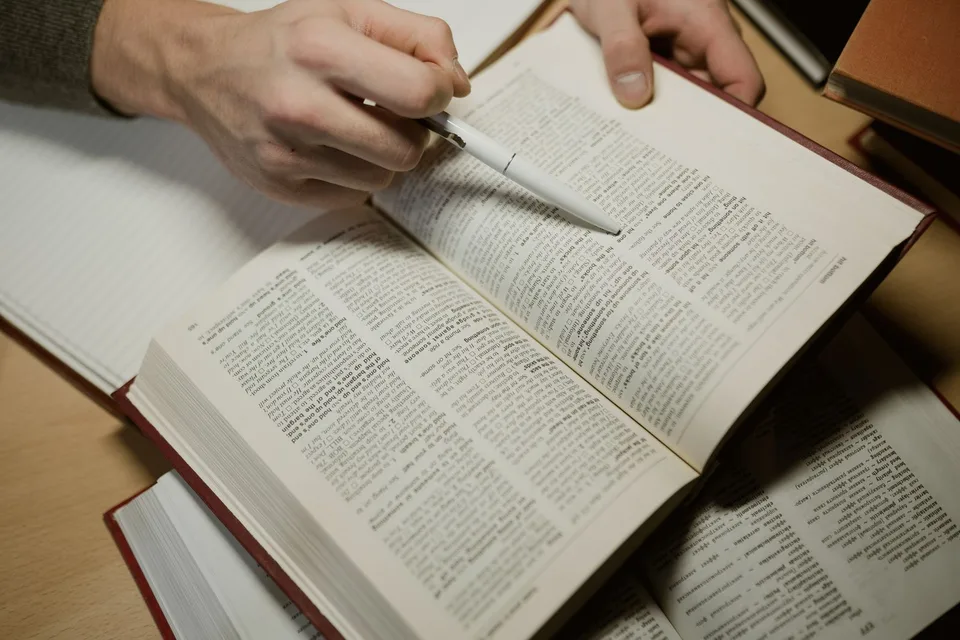
Before you change anything, read the entire manuscript straight through — ideally on paper or a device, somewhere other than the screen you drafted on. The goal of this first pass is not to fix; it is to diagnose. Resist the itch to start rewriting line one on day one, because the problem with line one might be that the chapter it belongs to should not exist, and you will have polished a paragraph you are about to delete.
Read fast, the way a real reader would, and keep a notebook beside you. Jot the big reactions, not the typos: got bored here, stopped believing this, why is she suddenly angry, this subplot disappears, saw the twist coming on page 40. Mark where your own attention drifts — that drift is the truest signal you will get, because if the writer is bored, the reader left two chapters ago. By the end you will have a map of the book's real problems, ranked by how much they hurt. That map is your revision plan.
What is a developmental edit, and why start there?
Good editing works from the largest problems to the smallest, and nothing is larger than the story itself. The first real pass — the developmental or structural edit — ignores commas entirely and asks whether the book works at the level of plot, character, and structure. Get this wrong and the prettiest sentences in the world won't save it; get it right and readers forgive a great deal else.
Advertisement
Work through the big questions one at a time:
- Structure. Does the story start in the right place — usually later than your first draft does? Does the middle escalate, with each complication raising the stakes, or does it sag into errands and conversations? Does the ending pay off the promise the opening made?
- Character. Does your protagonist want something concrete, and does that want drive the plot rather than merely accompany it? Do they change, and is the change earned? Do secondary characters exist for their own reasons or only to serve the lead?
- Cause and effect. Does each scene happen because of the one before it, or do events merely follow in time? Strong plots are chains of "therefore" and "but," not lists of "and then."
- Stakes and tension. On every page, is something at risk? If a scene could be cut without the story noticing, it probably should be.
This is the pass where you move scenes, cut characters, rewrite the ending, and sometimes throw away whole chapters. It is brutal and it is where the book is actually made. Expect it to take the longest and to hurt the most — and to be the single most valuable thing you do.
What is line editing, and how do you do it?
Only once the structure holds do you drop to the level of the paragraph and the sentence. Line editing is about how the prose reads — its rhythm, clarity, and voice — rather than whether it is technically correct. This is the pass where competent writing becomes a pleasure to read.
A few habits do most of the work here. Vary your sentence lengths so the prose has rhythm instead of a monotone drone. Hunt for the passive, hedging constructions — there was, it seemed, she began to, he started to — and replace them with verbs that actually move. Cut the throat-clearing at the top of scenes and the over-explaining at the bottom; readers are quick, and they trust a writer who trusts them. And watch dialogue especially: real conversation is compressed, oblique, and full of subtext, not a tidy exchange of information.
Edit big to small. Fix the story before the chapter, the chapter before the paragraph, the paragraph before the sentence, and the sentence before the comma. Polishing prose you'll later cut is the most common way new writers waste a revision.
What self-editing techniques do the pros use?
Beyond the big passes, a handful of concrete techniques will sharpen any manuscript. None of them require talent — only patience and a willingness to be ruthless with words you are fond of.
- Read it aloud. Your ear catches what your eye forgives: clunky rhythm, accidental repetition, dialogue no human would say, sentences that run out of breath. If you stumble reading it, a reader will stumble too.
- Cut your favorite crutch words. Every writer overuses a private set — just, really, very, suddenly, that, began to, a little. Search for yours and delete most of them. The prose gets faster and cleaner instantly.
- Show the decisive moments, summarize the rest. Convert the scenes that change the story into full, sensory dramatization, and compress the connective tissue into a sentence. We cover the scene-versus-summary instinct in depth in the Writer's Guide.
- Kill the filter words. She saw, he heard, I noticed, she felt hold the reader at arm's length. Most of the time you can delete the filter and let the perception land directly.
- Trust strong verbs over adverb stacks. "He walked quickly and angrily" is weaker than "he stalked." Let the verb carry the weight and the adverb usually vanishes.
You can teach yourself most of this from two books worth more than any course. Renni Browne and Dave King's Self-Editing for Fiction Writers is the standard text for a reason — it walks through showing versus telling, dialogue mechanics, point of view, and proportion with before-and-after examples you can apply the same afternoon. And Stephen King's On Writing is ruthless and generous in equal measure about cutting what doesn't serve the story; his famous formula — "second draft equals first draft minus ten percent" — is the best one-line editing rule ever written.
As an Amazon Associate, Book of the Day earns from qualifying purchases — at no extra cost to you. We only point to books we'd actually press into a friend's hands.
What's the difference between copyediting and proofreading?
The last two layers are the smallest and the most mechanical, and they come last for a reason: there is no sense correcting the grammar of a paragraph you might still cut. Copyediting enforces consistency and correctness — grammar, punctuation, tense, continuity, and house style. Did your character's eyes change color in chapter nine? Is it gray or grey throughout? Does Tuesday's dinner contradict Monday's timeline? A copyedit catches the thousand small slips that quietly erode a reader's trust.
Proofreading is the final sweep for typos, missing words, and formatting glitches after everything else is set. Both passes are murderously hard to do on your own work, because your brain reads what should be there rather than what is. Slow yourself down deliberately: change the font, read the manuscript backwards paragraph by paragraph, or have your device read it aloud. Anything that breaks the spell of familiarity will surface errors you have read past a dozen times.
Advertisement
How many editing passes does a novel need?
There is no magic number, but "one big read and a spellcheck" is never enough, and "forty drafts" usually means you are hiding from finishing. A healthy first novel typically moves through a structural pass (often more than one), a line-editing pass, a round with beta readers, a revision answering their notes, and a final copyedit-and-proofread. That is roughly four to six meaningful passes, with rest between the big ones.
The honest danger at this stage is the opposite of laziness: perfectionism that never ships. At some point continued tinkering stops improving the book and starts merely changing it. A good test: when your revisions are swapping one good word for another equally good word rather than fixing anything a reader would notice, you are done editing and you are procrastinating. Let it go.
When should you hire a professional editor?
Self-editing takes your book as far as your own skill allows — and then a professional takes it further. No matter how good you get, you cannot fully see your own blind spots, because they are made of the assumptions you don't know you're making. A skilled editor is a fresh, trained pair of eyes whose entire job is to find them.
If you are pursuing traditional publishing, you generally do not pay for editing before querying — that's what self-editing and beta readers are for, and your eventual publisher edits the book. But if you are self-publishing, professional editing is non-negotiable and the clearest line between a book readers trust and one they abandon; budget for at least a copyedit, and a developmental edit too if you can. Either way, the better you self-edit, the cheaper and more effective the professional you eventually hire will be — an editor charging by the hour should be improving your book, not cleaning up basics you could have fixed yourself.
Where to go from here
Editing is where amateurs and authors part ways. The amateur writes a draft and sends it; the author rests it, reads it like a stranger, fixes the story before the sentences, and only then polishes the prose. Do the layers in order — structure, line, copyedit, proof — and you will end up with a manuscript that is genuinely ready to meet the world.
And once it is ready, the next step depends on your path. Study the craft underneath all of this in our guide to writing your first novel; when the manuscript shines, learn how to pitch it in how to get a literary agent for your novel or own the whole process in how to self-publish your first book. And whichever route you take, you will eventually need readers to find the book — so when you're there, read how to market your book. To keep studying how the best prose actually works, browse our daily picks in the archive, learn from the sentence-level craft in literary fiction, or spend time with our debut novels shelf. When your edited novel is out in the world, we would love to read it — you can submit your book for consideration, learn more about Book of the Day, or check our frequently asked questions. Now go make it shorter and sharper than you think you can bear to.
Photographs via Pexels (Pexels License).
Listen free with a trial
Prefer listening? Most of our picks are on Audible.
Start a 30-day free trial, pick one audiobook a month, and cancel anytime.
We earn from qualifying Amazon purchases.
Browse all subjects
Move from this note into the full genre index.
Read the archive
Browse past daily picks when the catalog is live.
Submit a book
Send a title for future consideration.
More from the blog
Is the Audible Free Trial Worth It? What You Get, and How to Spend the First Credit
What an Audible trial includes on each tier, why a credit and the included catalogue are different things, and the books worth a first credit. Updated 2026.
The Books Becoming Movies and TV Shows in 2026 (and What to Read First)
Nolan's Odyssey, Dune: Part Three, Verity, Sunrise on the Reaping, Silo season 3, The Whisper Man, Hamnet, East of Eden — the full 2026 page-to-screen map, with the case for reading each book before the adaptation spoils it.
The New Books of July 2026 Worth Your Time
July 2026's biggest new books, sorted honestly: Colson Whitehead closes the Harlem Trilogy, Pamela Colloff delivers the true-crime book of the year, plus new Silvia Moreno-Garcia, Emily Giffin, Shari Lapena, and Annie Jacobsen — and what to read while you wait.
Advertisement


