Where to read or listen
- Is there an audiobook of Protocols: An Operating Manual for the Human Body?
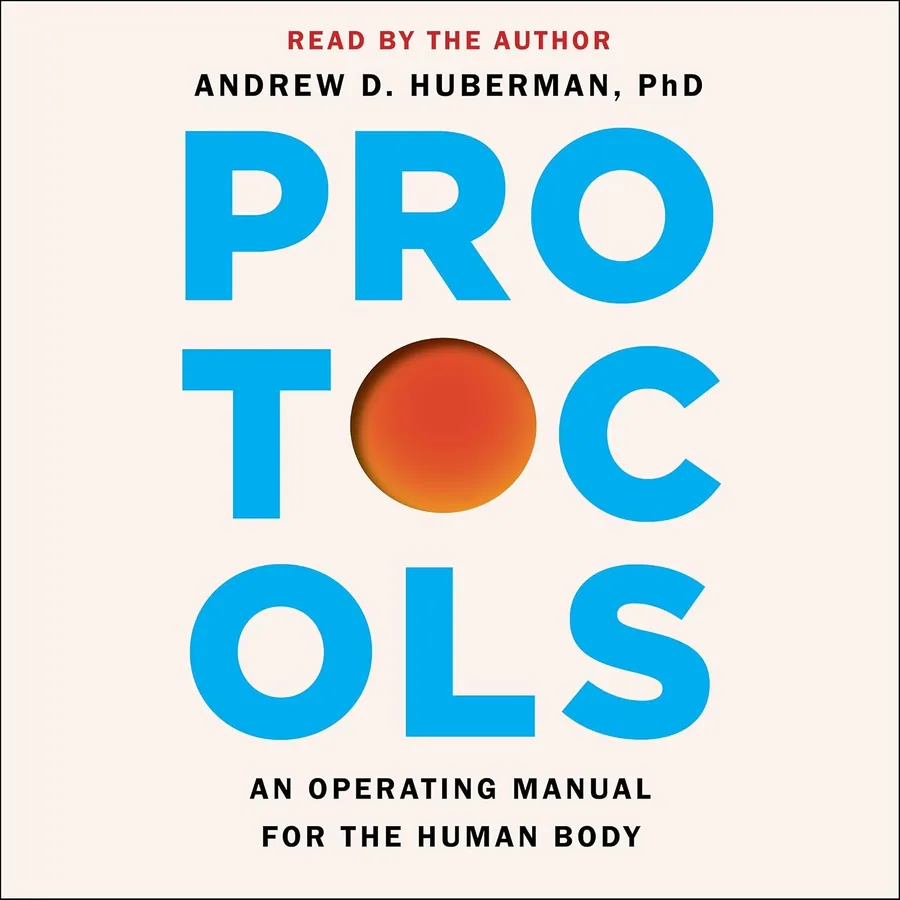
- Yes. Protocols: An Operating Manual for the Human Body has an Audible audiobook edition, narrated by Andrew D. Huberman Ph.D..Listen free with Audible
We earn from qualifying Amazon purchases.
- How long is the Protocols: An Operating Manual for the Human Body audiobook?
- The Protocols: An Operating Manual for the Human Body audiobook runs 18 hr 5 min.
- Is Protocols: An Operating Manual for the Human Body on Kindle+?
- No. Protocols: An Operating Manual for the Human Body was not included with Kindle+ when we last checked on October 25, 2026.
- What formats is Protocols: An Operating Manual for the Human Body available in?
- On Amazon, Protocols: An Operating Manual for the Human Body comes as a Kindle ebook and a hardcover.
Common questions
- What is Protocols: An Operating Manual for the Human Body about?
- Protocols doesn't ask to be read front to back, and that shapes the whole experience. Each protocol gets its own section with its own explanation, so a reader can open to sleep on Tuesday, stress on Friday, and skip whatever doesn't apply. The voice is easygoing and conversational, the way a good…
- Is Protocols: An Operating Manual for the Human Body worth reading?
- We scored Protocols: An Operating Manual for the Human Body 4.6 out of 5. Protocols: An Operating Manual for the Human Body is Andrew D. Huberman's practical health and science nonfiction, 688 pages of sleep, exercise, stress, nutrition, light and focus routines from the Huberman Lab host. It works as a reference you dip into, written for readers…
More like this
Related books

Why We Sleep: Unlocking the Power of Sleep and Dreams
Matthew Walker PhD

Spark: The Revolutionary New Science of Exercise and the Brain
John J. Ratey MD

Take Me to Your Leader: Perspectives on Your First Alien Encounter
Neil deGrasse Tyson

Hidden Valley Road
Robert Kolker

Thinking, Fast and Slow
Daniel Kahneman

Braiding Sweetgrass: Indigenous Wisdom, Scientific Knowledge and the Teachings of Plants
Robin Wall Kimmerer

The Sports Gene: Inside the Science of Extraordinary Athletic Performance
David Epstein

Outlive: The Science and Art of Longevity
Peter Attia MD

Born to Run: A Hidden Tribe, Superathletes, and the Greatest Race the World Has Never Seen
Christopher McDougall

In Defense of Food: An Eater's Manifesto
Michael Pollan