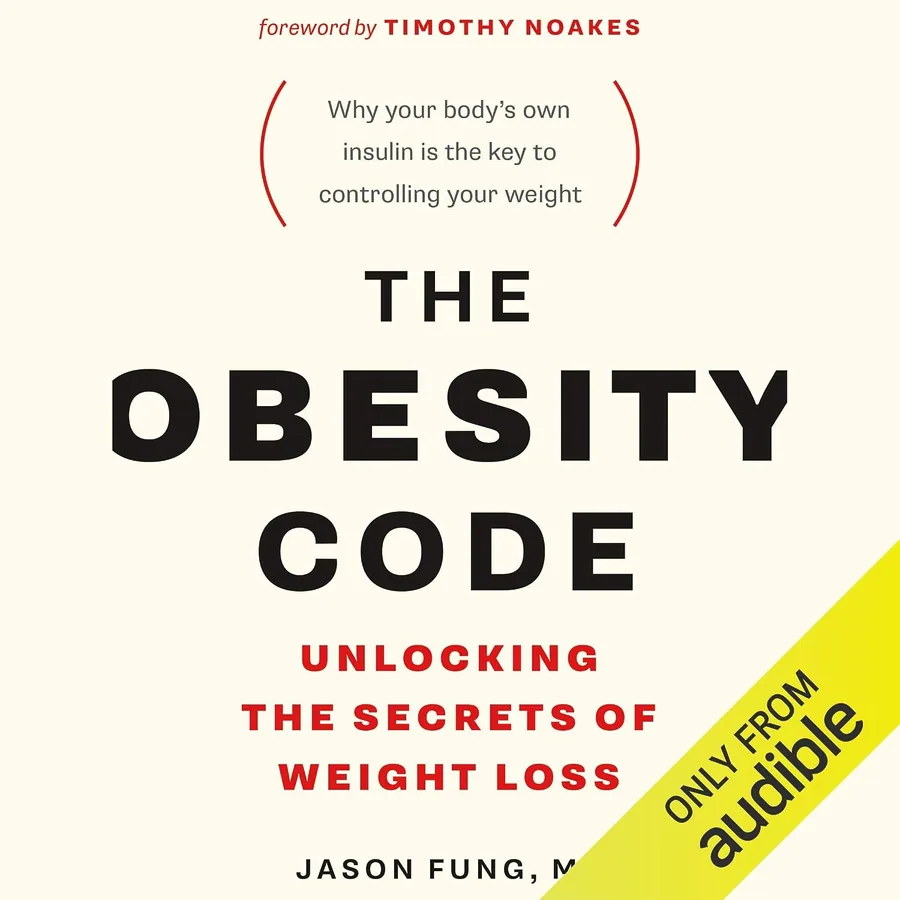
Where to read or listen
- Is there an audiobook of The Obesity Code: Unlocking the Secrets of Weight Loss?
- Yes. The Obesity Code: Unlocking the Secrets of Weight Loss has an Audible audiobook edition, narrated by Brian Nishii.Listen free with Audible
We earn from qualifying Amazon purchases.
- How long is the The Obesity Code: Unlocking the Secrets of Weight Loss audiobook?
- The The Obesity Code: Unlocking the Secrets of Weight Loss audiobook runs 10 hr 9 min.
- Is The Obesity Code: Unlocking the Secrets of Weight Loss on Kindle+?
- No. The Obesity Code: Unlocking the Secrets of Weight Loss was not included with Kindle+ when we last checked on November 23, 2026.
Common questions
- What is The Obesity Code: Unlocking the Secrets of Weight Loss about?
- The Obesity Code is stronger at explaining why diets fail than at telling you what to do next. That tension runs through the whole book. Dr. Jason Fung, a Canadian kidney specialist and practicing physician, starts by taking apart the standard advice: eat less, move more, keep your metabolism…
- Is The Obesity Code: Unlocking the Secrets of Weight Loss worth reading?
- We scored The Obesity Code: Unlocking the Secrets of Weight Loss 4.5 out of 5. Dr. Jason Fung's The Obesity Code is a weight loss and nutrition book arguing that insulin, not willpower or calorie counting, drives weight gain, and that intermittent fasting plus whole foods is the way to change it. It explains the why far better than the how.
More like this
Related books

Outlive: The Science and Art of Longevity
Peter Attia MD

Good Energy: The Surprising Connection Between Metabolism and Limitless Health
Casey Means MD

Fiber Fueled: The Plant-Based Gut Health Program
Will Bulsiewicz MD

The China Study
T. Colin Campbell

Glucose Revolution: The Life-Changing Power of Balancing Your Blood Sugar
Jessie Inchauspe

Salt Sugar Fat: How the Food Giants Hooked Us
Michael Moss

Breath: The New Science of a Lost Art
James Nestor

The 4-Hour Body
Timothy Ferriss

Fast Food Nation: The Dark Side of the All-American Meal
Eric Schlosser

Protocols: An Operating Manual for the Human Body
Andrew D. Huberman