Where to read or listen
- Is there an audiobook of Siblings Without Rivalry?
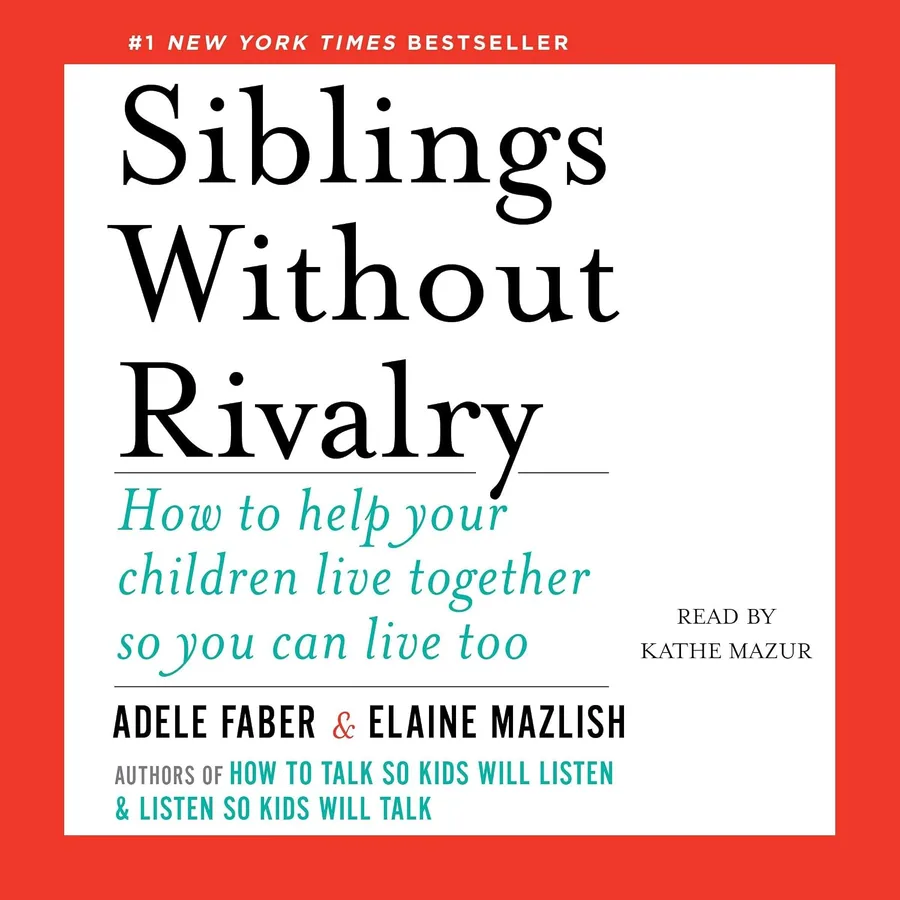
- Yes. Siblings Without Rivalry has an Audible audiobook edition, narrated by Kathe Mazur.Listen free with Audible
We earn from qualifying Amazon purchases.
- How long is the Siblings Without Rivalry audiobook?
- The Siblings Without Rivalry audiobook runs 6 hr 2 min.
- Is Siblings Without Rivalry on Kindle+?
- No. Siblings Without Rivalry was not included with Kindle+ when we last checked on November 23, 2026.
More by Adele FaberSee every Adele Faber book we've reviewed, with our scores.All Adele Faber books →
Common questions
- What is Siblings Without Rivalry: How to Help Your Children Live Together So You Can Live Too about?
- Most parenting books about fighting kids tell you how to win the fight. This one asks when you should be in it at all. That's the question Adele Faber and Elaine Mazlish keep coming back to, and it's a good one. They cover how and when to step into a fight, and one reader says the payoff is…
- Is Siblings Without Rivalry: How to Help Your Children Live Together So You Can Live Too worth reading?
- We scored Siblings Without Rivalry: How to Help Your Children Live Together So You Can Live Too 4.8 out of 5. Siblings Without Rivalry by Adele Faber and Elaine Mazlish is a practical parenting book about kids who fight. It shows parents when to step into a fight, how to drop the labels that set siblings against each other, and how to be fair without treating every child the same.
More like this
Related books

How to Talk So Kids Will Listen & Listen So Kids Will Talk
Adele Faber

The Anxious Generation: How the Great Rewiring of Childhood Is Causing an Epidemic of Mental Illness
Jonathan Haidt

Come As You Are: The Surprising New Science That Will Transform Your Sex Life
Emily Nagoski Ph.D.

Getting the Love You Want: A Guide for Couples
Harville Hendrix Ph.D.

The Mastery of Love: A Practical Guide to the Art of Relationship
Don Miguel Ruiz

The Explosive Child
Ross W. Greene PhD

Set Boundaries, Find Peace: A Guide to Reclaiming Yourself
Nedra Glover Tawwab

Raising Good Humans: A Mindful Guide to Breaking the Cycle of Reactive Parenting
Hunter Clarke-Fields MSAE

Nonviolent Communication: A Language of Life
Marshall B. Rosenberg

Why Does He Do That? Inside the Minds of Angry and Controlling Men
Lundy Bancroft