Where to read or listen
- Is there an audiobook of Getting the Love You Want: A Guide for Couples?
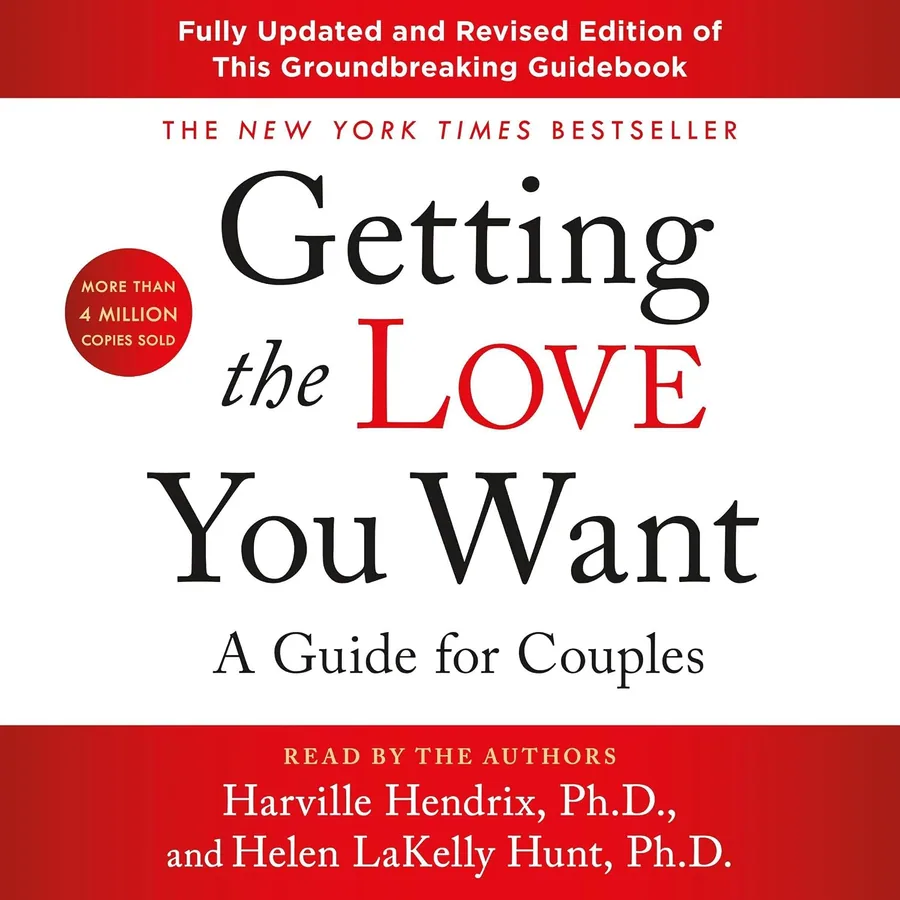
- Yes. Getting the Love You Want: A Guide for Couples has an Audible audiobook edition, narrated by Harville Hendrix Ph.D. and Helen LaKelly Hunt PhD.Listen free with Audible
We earn from qualifying Amazon purchases.
- How long is the Getting the Love You Want: A Guide for Couples audiobook?
- The Getting the Love You Want: A Guide for Couples audiobook runs 10 hr 11 min.
- Is Getting the Love You Want: A Guide for Couples on Kindle+?
- Yes. Getting the Love You Want: A Guide for Couples was included with Kindle+ when we last checked on November 23, 2026.
Common questions
- What is Getting the Love You Want: A Guide for Couples about?
- Picture a couple stuck in the same argument for the third year running. One partner overreacts. The other reads it as proof of bad character. Both dig in. Getting the Love You Want, a couples relationship book by Harville Hendrix with Helen LaKelly Hunt, starts from a different diagnosis: the…
- Is Getting the Love You Want: A Guide for Couples worth reading?
- We scored Getting the Love You Want: A Guide for Couples 4.8 out of 5. Getting the Love You Want by Harville Hendrix, written with Helen LaKelly Hunt, is a couples relationship book that explains why partners trigger each other and gives them exercises to do about it together. Practical, conversational, and demanding of both people.
More like this
Related books

Vibe: The Secrets of Strong Connections in a Lonely World
Adam Grant

Attached: The New Science of Adult Attachment and How It Can Help You Find--and Keep--Love
Amir Levine

Hold Me Tight: Seven Conversations for a Lifetime of Love
Dr. Sue Johnson EdD

Atomic Habits: An Easy & Proven Way to Build Good Habits & Break Bad Ones
James Clear

The Gifts of Imperfection: Let Go of Who You Think You're Supposed to Be and Embrace Who You Are
Brené Brown

Be Your Own Bestie: A No-Nonsense Guide to Changing the Way You Treat Yourself
Misha Brown

The 7 Habits of Highly Effective People
Stephen R. Covey

Deep Work: Rules for Focused Success in a Distracted World
Cal Newport

The Power of Habit: Why We Do What We Do in Life and Business
Charles Duhigg

Daring Greatly: How the Courage to Be Vulnerable Transforms the Way We Live, Love, Parent, and Lead
Brené Brown