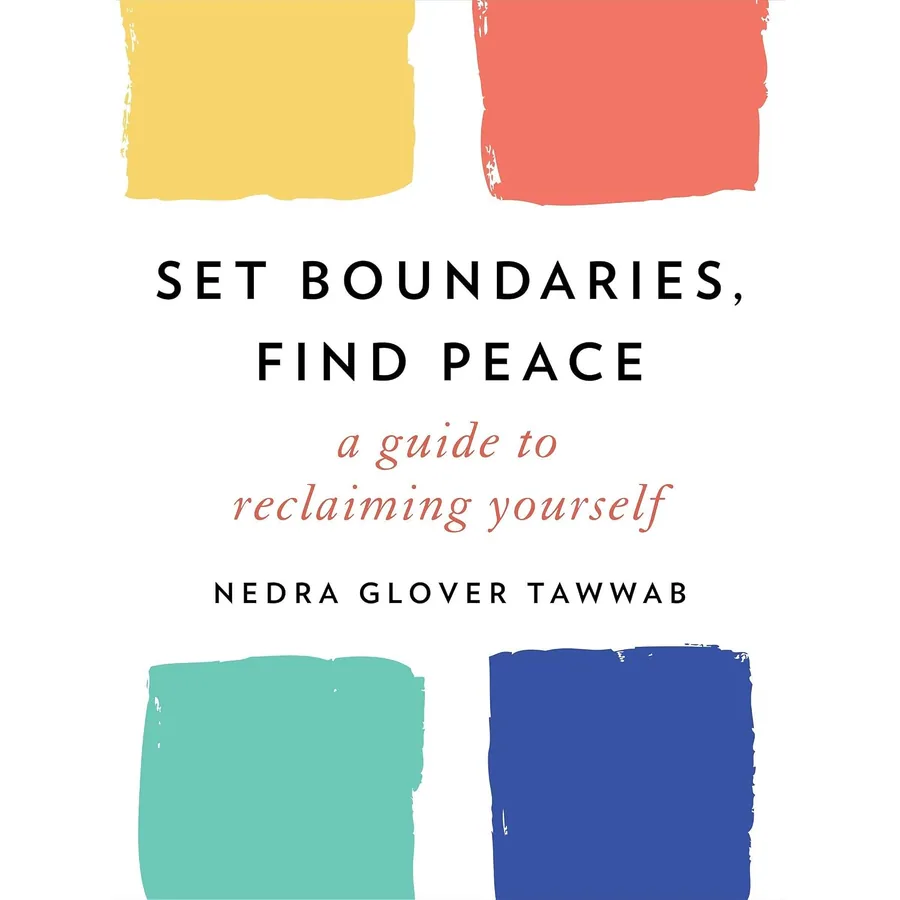
Where to read or listen
- Is there an audiobook of Set Boundaries, Find Peace: A Guide to Reclaiming Yourself?
- Yes. Set Boundaries, Find Peace: A Guide to Reclaiming Yourself has an Audible audiobook edition, narrated by Nedra Glover Tawwab.Listen free with Audible
We earn from qualifying Amazon purchases.
- How long is the Set Boundaries, Find Peace: A Guide to Reclaiming Yourself audiobook?
- The Set Boundaries, Find Peace: A Guide to Reclaiming Yourself audiobook runs 8 hr.
- Is Set Boundaries, Find Peace: A Guide to Reclaiming Yourself on Kindle+?
- No. Set Boundaries, Find Peace: A Guide to Reclaiming Yourself was not included with Kindle+ when we last checked on November 23, 2026.
Common questions
- What is Set Boundaries, Find Peace: A Guide to Reclaiming Yourself about?
- Someone says yes to a request they have no room for, again. They smile, take on the extra work, listen to the same complaint they have heard for years, and go home resentful. They want peace and they want to be liked, and they have been treating those as the same goal. Set Boundaries, Find Peace…
- Is Set Boundaries, Find Peace: A Guide to Reclaiming Yourself worth reading?
- We scored Set Boundaries, Find Peace: A Guide to Reclaiming Yourself 4.7 out of 5. Set Boundaries, Find Peace by Nedra Glover Tawwab is a self-help book on healthy boundaries, written by a licensed counselor and grounded in cognitive behavioral therapy. It shows how to say no, state your needs, and stop absorbing other people's problems, with examples and…
More like this
Related books

The Seven Principles for Making Marriage Work
John Gottman PhD

The 5 Love Languages: The Secret to Love that Lasts
Gary Chapman

How To Win Friends and Influence People
Dale Carnegie

Be Your Own Bestie: A No-Nonsense Guide to Changing the Way You Treat Yourself
Misha Brown

The 7 Habits of Highly Effective People
Stephen R. Covey

Deep Work: Rules for Focused Success in a Distracted World
Cal Newport

The Power of Habit: Why We Do What We Do in Life and Business
Charles Duhigg

Daring Greatly: How the Courage to Be Vulnerable Transforms the Way We Live, Love, Parent, and Lead
Brené Brown

The 48 Laws of Power
Robert Greene

Atomic Habits: An Easy & Proven Way to Build Good Habits & Break Bad Ones
James Clear