Where to read or listen
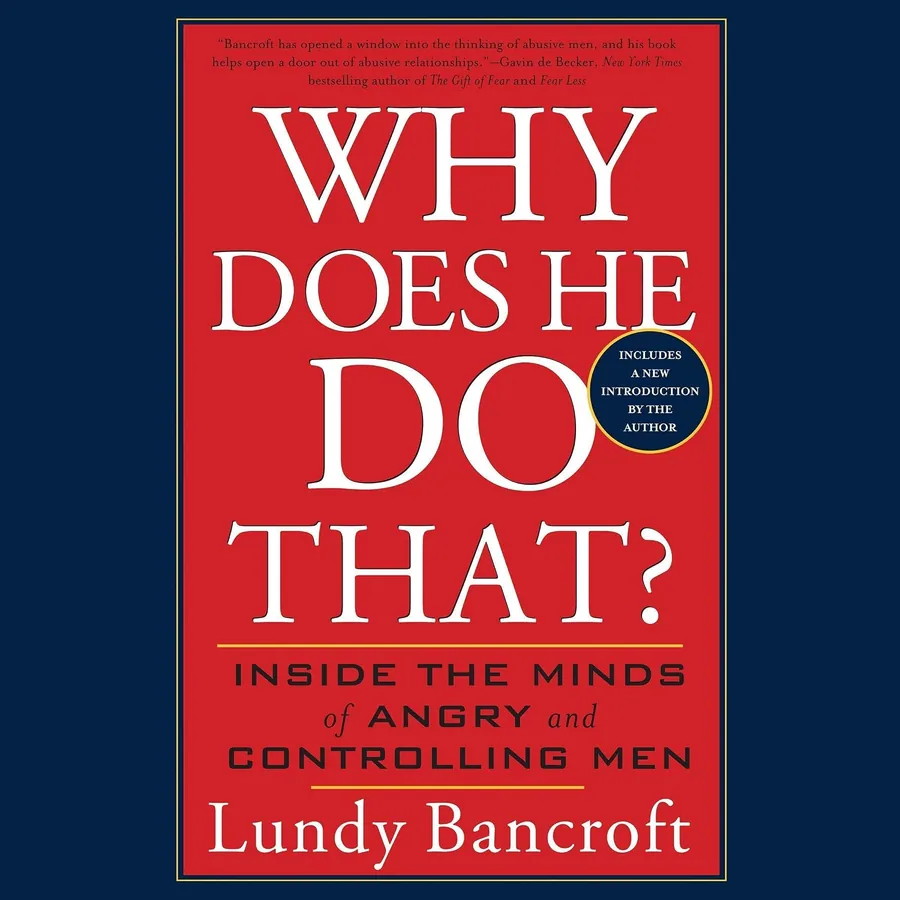
- Is there an audiobook of Why Does He Do That? Inside the Minds of Angry and Controlling Men?
- Yes. Why Does He Do That? Inside the Minds of Angry and Controlling Men has an Audible audiobook edition, narrated by Sean Patrick Hopkins, Beth Hicks, and Vas Eli.Listen free with Audible
We earn from qualifying Amazon purchases.
- How long is the Why Does He Do That? Inside the Minds of Angry and Controlling Men audiobook?
- The Why Does He Do That? Inside the Minds of Angry and Controlling Men audiobook runs 14 hr 21 min.
- Is Why Does He Do That? Inside the Minds of Angry and Controlling Men on Kindle+?
- No. Why Does He Do That? Inside the Minds of Angry and Controlling Men was not included with Kindle+ when we last checked on November 23, 2026.
Common questions
- What is Why Does He Do That? Inside the Minds of Angry and Controlling Men about?
- Abuse is not an anger problem. That is the claim Why Does He Do That? builds everything on, and it is the idea that changes how a reader sees the relationship in front of them. Lundy Bancroft argues that abusive behavior comes from what a man believes: that he is entitled, that his partner owes…
- Is Why Does He Do That? Inside the Minds of Angry and Controlling Men worth reading?
- We scored Why Does He Do That? Inside the Minds of Angry and Controlling Men 4.7 out of 5. Why Does He Do That? by Lundy Bancroft is a book on domestic abuse and controlling partners, written by a counselor who works with abusive men. It explains how they think, lists the warning signs of an abusive relationship, and covers what can change and what can't.
More like this
Related books

Vibe: The Secrets of Strong Connections in a Lonely World
Adam Grant

Attached: The New Science of Adult Attachment and How It Can Help You Find--and Keep--Love
Amir Levine

Hold Me Tight: Seven Conversations for a Lifetime of Love
Dr. Sue Johnson EdD

Be Your Own Bestie: A No-Nonsense Guide to Changing the Way You Treat Yourself
Misha Brown

The 7 Habits of Highly Effective People
Stephen R. Covey

Deep Work: Rules for Focused Success in a Distracted World
Cal Newport

The Power of Habit: Why We Do What We Do in Life and Business
Charles Duhigg

Daring Greatly: How the Courage to Be Vulnerable Transforms the Way We Live, Love, Parent, and Lead
Brené Brown

The 48 Laws of Power
Robert Greene

The Mastery of Love: A Practical Guide to the Art of Relationship
Don Miguel Ruiz