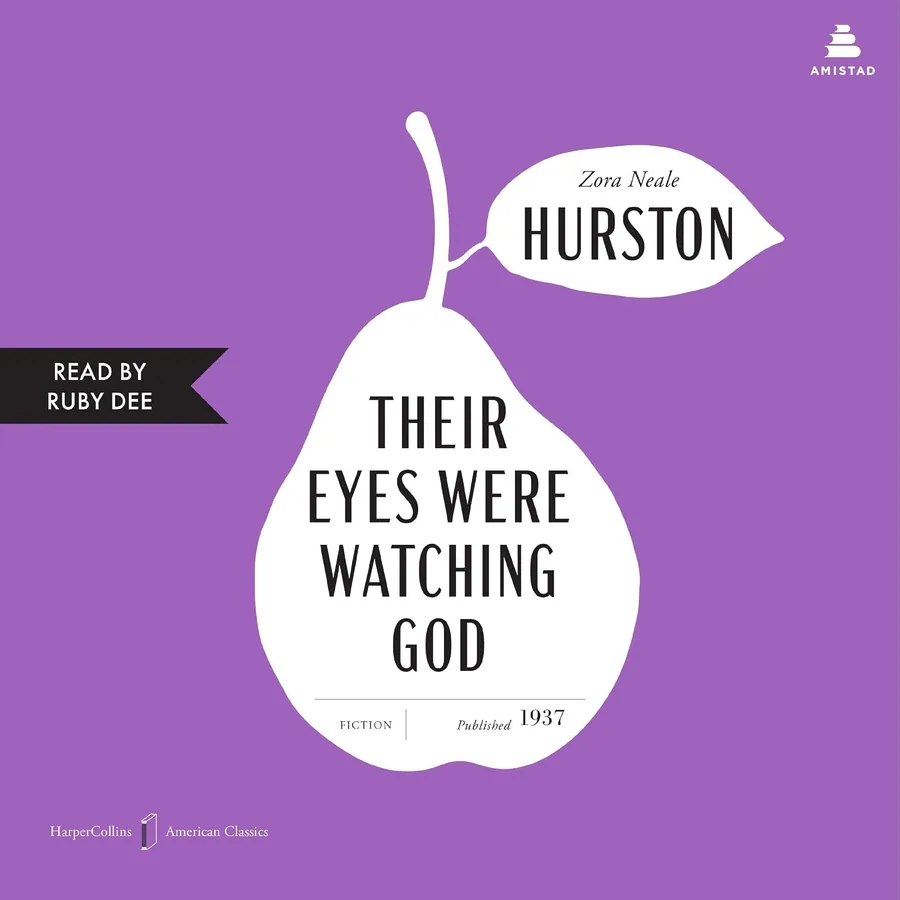
The first few pages ask for patience, and the book is generous about repaying it. Their Eyes Were Watching God opens slowly, with a woman walking back into her Florida hometown while the porch-sitters talk about her, and some readers find the early going hard to settle into. Then the pace changes. A little way in, the voices take hold, and you're no longer reading about Janie Crawford so much as listening to her, which is the whole trick of the book.
Hurston writes the characters' speech in the vernacular of the South and sets it against narration that turns lyrical, and the two registers rub against each other in a way that feels alive on the page. Dialogue is rough, funny and quick. The narrator is allowed to be beautiful. It is easy to see why the book was a problem for readers when it first appeared, and why it fell out of print for almost thirty years before the 1978 reissue brought it back. Read now, the dialect is the pleasure, and it rewards going slowly. Several readers say a second pass is better than the first.
Janie's story is told in marriages, and each one teaches her something about how much of herself she's willing to give up. At sixteen she sits under a pear tree and watches the bees go in and out of the blossoms, and she decides that love should look like that. What she gets is arranged. Her grandmother, Nanny, wants her safe and settled, and marries her off to Logan Killicks. Then Joe Starks arrives with big plans, becomes mayor of Eatonville, and puts Janie behind the counter of his store, where she is shown off, scolded and made to cover her hair. These are two different ways of being owned, and Hurston lets the contrast do the arguing.
Then comes Tea Cake, more than a decade younger than Janie, and the book opens up. With him Janie finally gets the kind of closeness she imagined under the pear tree, and the scenes have a looseness that the earlier chapters deliberately lack. He is not a clean romantic answer, though. Readers disagree about him, and the book lets them. He is flawed, there are moments with him that are painful, and the freedom Janie finds is real and still complicated. A hurricane crossing the Everglades and the Lake Okeechobee country arrives as the book's great set piece, and it is as vivid as anything in American fiction of its period. I won't say more. What follows costs Janie a great deal.
What the book does to a reader is accumulate. The frame matters here. We meet Janie coming home, and the porch gossips assume the worst about what she's lost. By the end, with her best friend Pheoby listening to the whole story, you know exactly how wrong they are, and the return reads differently the second time. She has had love, work, grief and a version of freedom, and nothing the town thinks of her can reach it. Readers describe the same swell of feeling at the close, a sorrow that it's over that surprises them given how patient they had to be at the start. The slow opening turns out to be part of the design: the book wants you to arrive at the end already invested in a woman you have spent many small moments with.
Why you should read
- Voice-driven classics about a woman finding her own life
- Southern fiction in rich, spoken dialect
- Love stories that don't tie up neatly
- Book club picks with plenty to argue about
What to expect
- A slow opening that pays off a little way in
- Dialogue in Southern vernacular with lyrical narration
- A story told in a frame, with Janie returning to Eatonville
- Painful moments inside the relationships
- A dramatic hurricane sequence
The novel also treats Black life in the South as ordinary and complete, with joy and everyday talk as well as hardship, instead of turning its people into symbols of suffering. That choice drew criticism once, and it may be the thing that now makes the book last. Janie is fierce, funny and, in the end, entirely her own, and Hurston never explains her away. The title comes from a passage about a night so dark that people sitting in their shacks seemed to be staring at nothing, while their eyes were watching God, and Janie's whole life has been that kind of watching, with something larger than the town in view.