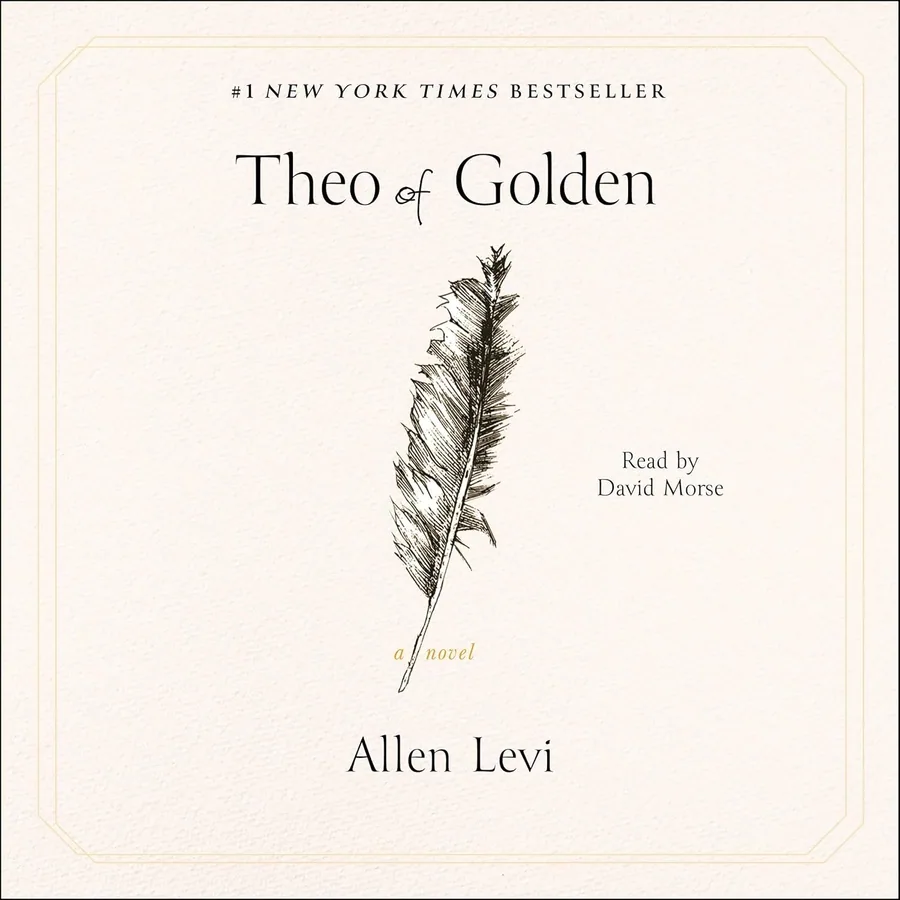
Theo of Golden asks you to slow down, and it's a little bossy about it. You read a chapter, then you sit there. Readers talk about going back over passages and rereading sentences just to hear them again, and the prose invites that: lyrical, unhurried, threaded with birds, music, art and garden plants that send some people off to look things up. This is a book to read slowly, and it knows it.
The setup is simple and a little strange. Theo, who is 86, turns up in the small Southern city of Golden with no last name and no explanation. In a coffeehouse covered in pencil portraits of local people, he starts buying the drawings and handing each one to the person it shows. He sends written invitations to meet him on a bench near the town fountain, and what he wants in return is their story. That's the engine, and it runs for a long time without needing another one.
What the book does to a reader is more interesting than what it contains. Regrets come out, secrets come out, and ordinary people find themselves being looked at properly for maybe the first time. The townspeople of Golden are suspicious of him, which is sensible, and so are we. A man this generous has to be hiding something, and I spent a good stretch braced for the dark reveal. It never arrives in the form you expect. What Theo carries is loss, and the book is more interested in what age and grief teach a person than in catching him out. Why he chose this particular town is held back until the very end, and it's worth the wait. There's humor too, wholesome and sometimes sharp, and a character named Ellen steals more than one scene.
Why you should read
- Book club fiction with real emotional pull
- Small-town ensembles with a mysterious newcomer
- Slow, lyrical prose worth rereading
- Heartfelt stories about kindness and grief
What to expect
- Unhurried pacing, best read in small doses
- Warm tone with real humor and real sadness
- Many townspeople, each with a story to tell
- A late answer to why Theo came to Golden
Levi's debut has real limits, and readers are fair to name them. The middle sags in places. The premise asks for a lot of goodwill, since a stranger collecting everyone's confessions would raise eyebrows in most real towns, and the book reads closer to a fable than to realism. Some readers hear a spiritual current underneath, though it comes across more as faith in people than as doctrine. The sweetness is steady, the characters have enough oddness to feel like neighbors, and saying goodbye to Golden at the end is harder than you'd guess.