Where to read or listen
- Is there an audiobook of The Self-Driven Child?
- Yes. The Self-Driven Child has an Audible audiobook edition, narrated by Kaleo Griffith.Listen free with Audible
We earn from qualifying Amazon purchases.
- How long is the The Self-Driven Child audiobook?
- The The Self-Driven Child audiobook runs 11 hr 35 min.
- Is The Self-Driven Child on Kindle+?
- No. The Self-Driven Child was not included with Kindle+ when we last checked on November 23, 2026.
Common questions
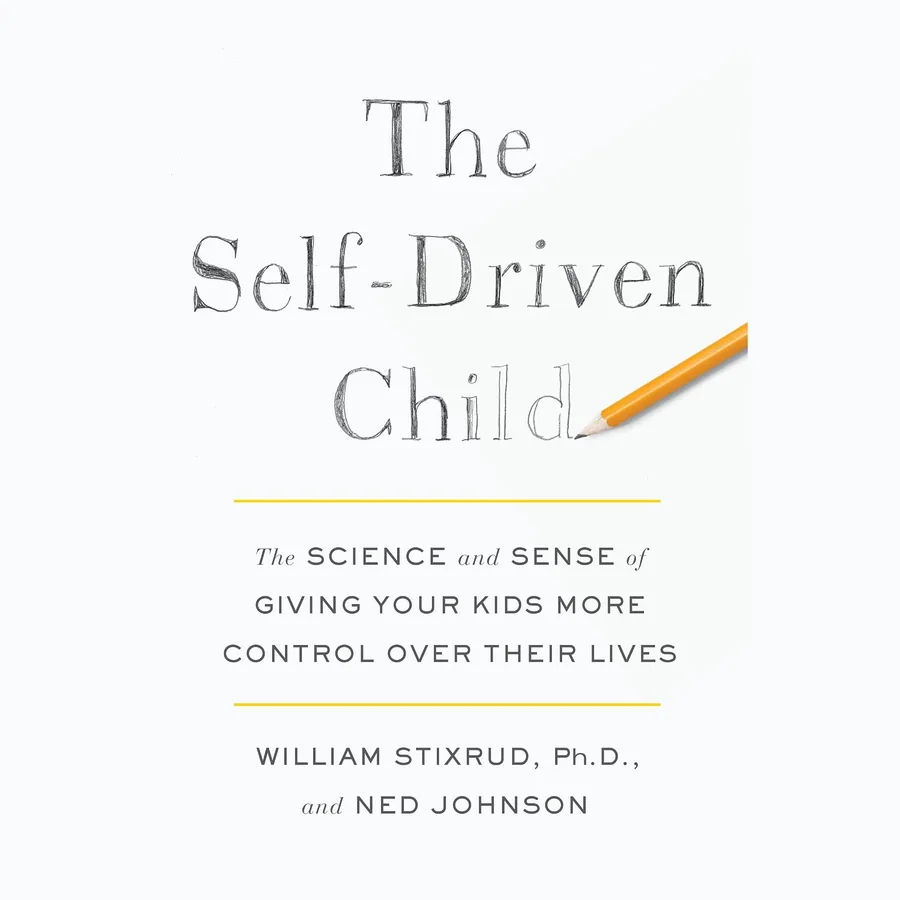
- What is The Self-Driven Child: The Science and Sense of Giving Your Kids More Control Over Their Lives about?
- The Self-Driven Child has one idea, and it is a hard one for parents to follow: back off. William Stixrud, a clinical neuropsychologist, and Ned Johnson, who runs a tutoring and test-prep business, saw the same pattern from two angles. Kids who looked successful on paper were stressed and…
- Is The Self-Driven Child: The Science and Sense of Giving Your Kids More Control Over Their Lives worth reading?
- We scored The Self-Driven Child: The Science and Sense of Giving Your Kids More Control Over Their Lives 4.6 out of 5. The Self-Driven Child by William Stixrud and Ned Johnson is a parenting book about giving kids real control over their own lives. A neuropsychologist and a test-prep coach lay out the brain science and tell parents how to act as a consultant instead of a manager.
More like this
Related books

The Whole-Brain Child: 12 Revolutionary Strategies to Nurture Your Child's Developing Mind
Daniel J. Siegel M.D.

The Gardener and the Carpenter: What the New Science of Child Development Tells Us About the Relationship Between Parents and Children
Alison Gopnik

The Explosive Child
Ross W. Greene PhD

Raising Good Humans: A Mindful Guide to Breaking the Cycle of Reactive Parenting
Hunter Clarke-Fields MSAE

The Philosophical Baby: What Children's Minds Tell Us About Truth, Love, and the Meaning of Life
Alison Gopnik

No-Drama Discipline: The Whole-Brain Way to Calm the Chaos and Nurture Your Child's Developing Mind
Daniel J. Siegel M.D.

Good Inside: A Guide to Becoming the Parent You Want to Be
Becky Kennedy

Vibe: The Secrets of Strong Connections in a Lonely World
Adam Grant

Tiny Habits: The Small Changes That Change Everything
BJ Fogg PhD

Range: Why Generalists Triumph in a Specialized World
David Epstein