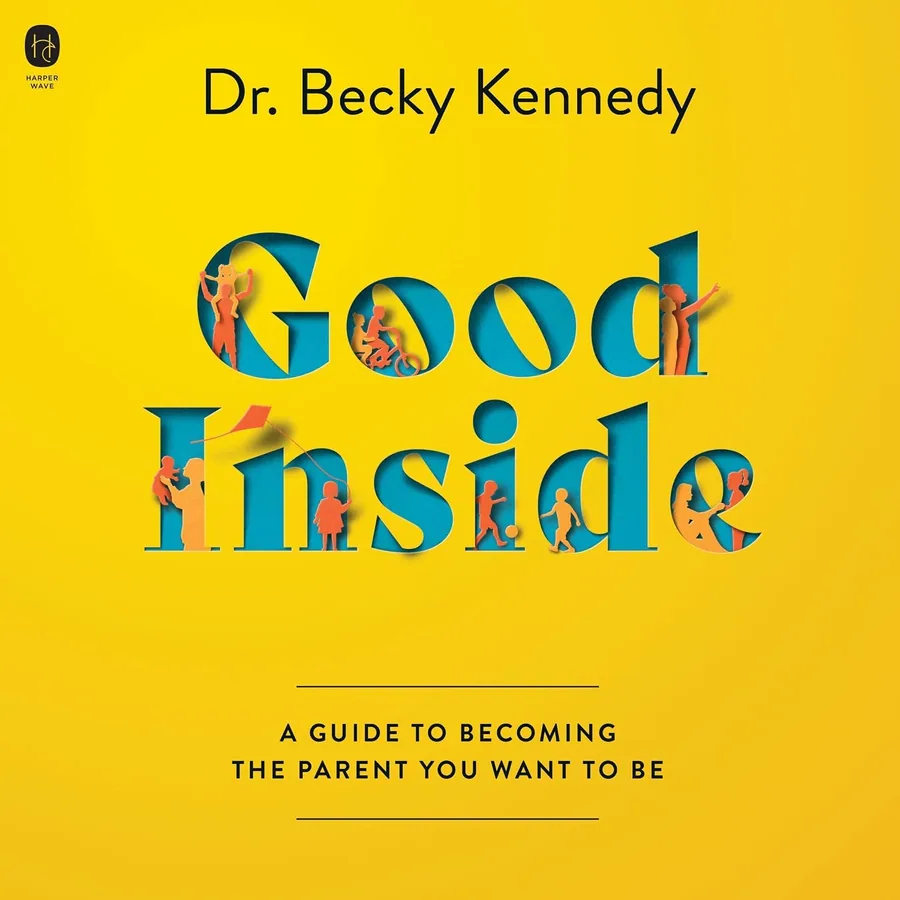
Where to read or listen
- Is there an audiobook of Good Inside: A Guide to Becoming the Parent You Want to Be?
- Yes. Good Inside: A Guide to Becoming the Parent You Want to Be has an Audible audiobook edition, narrated by Becky Kennedy.Listen free with Audible
We earn from qualifying Amazon purchases.
- How long is the Good Inside: A Guide to Becoming the Parent You Want to Be audiobook?
- The Good Inside: A Guide to Becoming the Parent You Want to Be audiobook runs 9 hr 55 min.
- Is Good Inside: A Guide to Becoming the Parent You Want to Be on Kindle+?
- No. Good Inside: A Guide to Becoming the Parent You Want to Be was not included with Kindle+ when we last checked on November 23, 2026.
Common questions
- What is Good Inside: A Guide to Becoming the Parent You Want to Be about?
- Read Good Inside a chapter at a time and it behaves like a coach more than a lecturer. Becky Kennedy explains what is going on inside a child during a hard moment and gives you words to use, and readers say each chapter leaves them something to try that same day. Nothing in it asks for a weekend…
- Is Good Inside: A Guide to Becoming the Parent You Want to Be worth reading?
- We scored Good Inside: A Guide to Becoming the Parent You Want to Be 4.9 out of 5. Good Inside by Becky Kennedy is a parenting book that trades reward charts and time-outs for connection and repair. Dr. Becky gives parents of toddlers and older kids a framework, scripts for the hard moments, and permission to stop treating every bad day as a verdict on them.
More like this
Related books

The Explosive Child
Ross W. Greene PhD

Raising Good Humans: A Mindful Guide to Breaking the Cycle of Reactive Parenting
Hunter Clarke-Fields MSAE

The Whole-Brain Child: 12 Revolutionary Strategies to Nurture Your Child's Developing Mind
Daniel J. Siegel M.D.

The Gardener and the Carpenter: What the New Science of Child Development Tells Us About the Relationship Between Parents and Children
Alison Gopnik

The Philosophical Baby: What Children's Minds Tell Us About Truth, Love, and the Meaning of Life
Alison Gopnik

No-Drama Discipline: The Whole-Brain Way to Calm the Chaos and Nurture Your Child's Developing Mind
Daniel J. Siegel M.D.

The Anxious Generation: How the Great Rewiring of Childhood Is Causing an Epidemic of Mental Illness
Jonathan Haidt

Atomic Habits: An Easy & Proven Way to Build Good Habits & Break Bad Ones
James Clear

The Gifts of Imperfection: Let Go of Who You Think You're Supposed to Be and Embrace Who You Are
Brené Brown

Come As You Are: The Surprising New Science That Will Transform Your Sex Life
Emily Nagoski Ph.D.