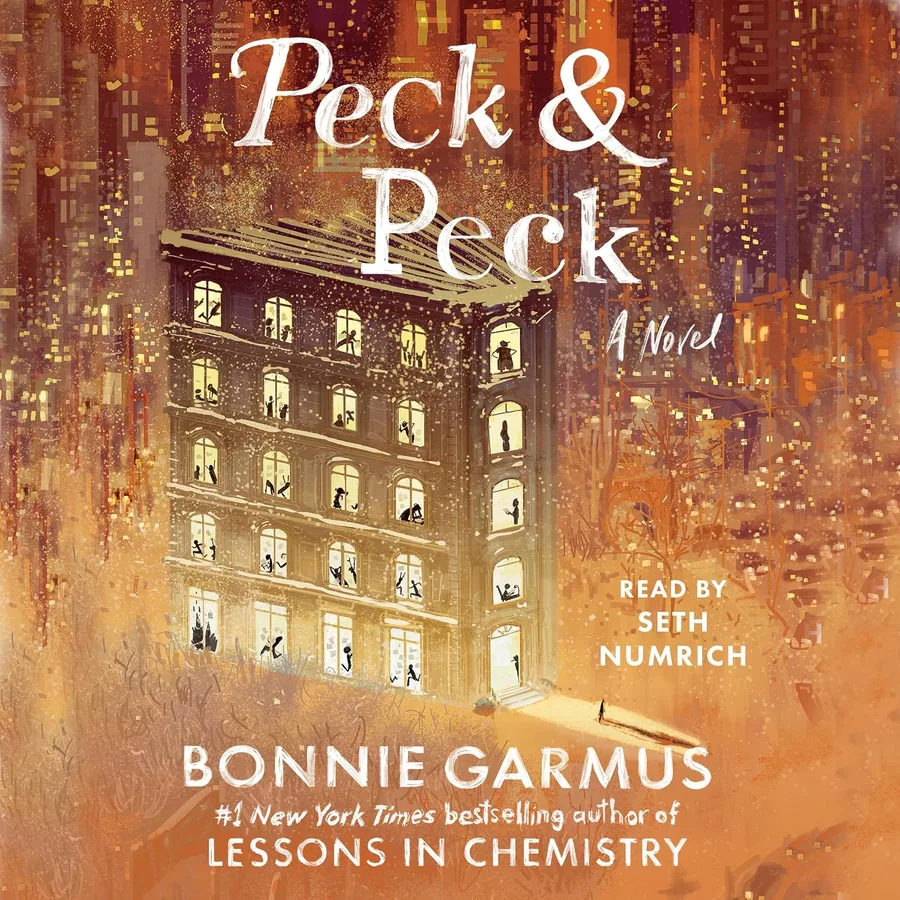
What do you do with an ear for poetry in 1982 New York, when the only job on offer is folding T-shirts at the Gap? That is Batter Gray's problem as Peck & Peck opens, and it is a funny one. He's a recent graduate whose most reliable correspondent is Sallie Mae, his love life is a blank, and then he gets hired at the most prestigious poetry quarterly in the world. Its editors live by a creed to prize the original and torch the rest, and Bonnie Garmus, in her second novel and first since Lessons in Chemistry, lets you suspect they might mean the torching.
Batter narrates, and his voice is the best thing in the book. He is earnest without being a pushover, bookish without being precious, and he reports on the madness around him with the slightly stunned politeness of a man who can't believe they hired him. The madness is considerable. The journal is run by twin brothers who are also enemies, there are thirty-nine editors with private lives to match, plagiarists are not welcome, and the mailroom is staffed by parolees. The building itself deserves a mention: the architecture is described so lovingly that it becomes one more eccentric member of the cast, and I wanted a desk there.
Then there is Batter's family, which at first looks like a detour. His mother, Rainey, designs typefaces for a living, his father, John, is a community college historian, and Batter is named after his mother's heroic dog. These threads feel unnecessary early on and then turn out to carry real weight, and the payoff involving the dog is the funniest stretch in the book. The passages about an attack hawk run a close second. Garmus is good at setting the absurd beside something that actually matters, and she does it again here, with typography and poetry as the unlikely raw material. You don't need to love either. A little curiosity is enough, though a reader who finds poetry dull will feel the book's enthusiasm happening on the other side of a window now and then.
I should say plainly that this is not a rerun of Lessons in Chemistry. The plot keeps adding things, from crime and heartbreak to a stretch in court and the question of how Batter ends up described as an inmate, and for a long stretch it is hard to see what it all adds up to. The middle sags. At 432 pages it asks for patience, and I ran short on it in the middle. The characters, who begin as hard to like, turn out to be more surprising than they look, and that kept me going. The comedy is dry and quick, the dialogue crackles, and the cast keeps rearranging your opinion of it. Rainey and Salton Peck get the fullest development, and they make the walk worth it.
Why you should read
- Loved the humor and warmth of Lessons in Chemistry
- Workplace comedies set in publishing
- Eccentric ensemble casts and absurd plots
- Period New York City settings
- Poetry or typography curiosity
What to expect
- First-person narration with a sweet, wry voice
- A sprawling, multi-layered plot with many twists
- A slower middle stretch
- Quirky comedy mixed with real feeling
- Different in tone and pace from Lessons in Chemistry
What holds it together is a conviction about work worth doing. Behind the farce sits a plain argument that originality, beauty and substance still matter, and that the people who defend them are often ridiculous and occasionally heroic. Peck & Peck makes that case with a straight face and a lot of jokes, which is a good way to make it.