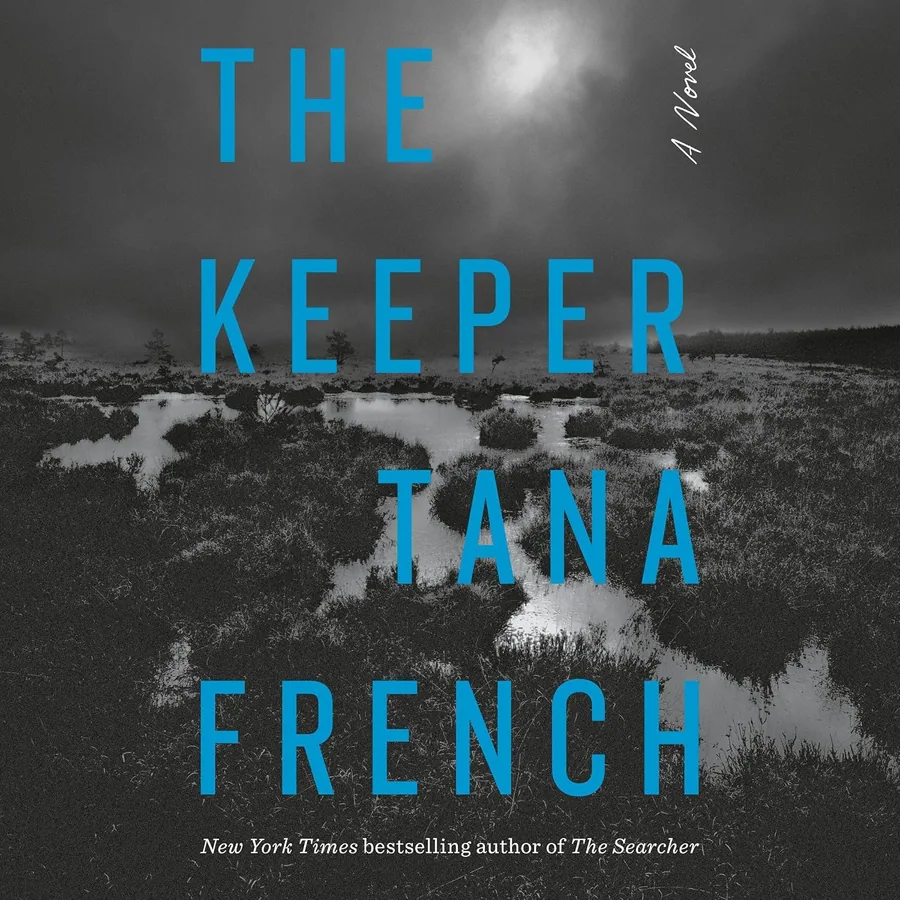
A body in the river changes what a small town is willing to say out loud, and in Ardnakelty, nobody was saying much to begin with. Rachel Holohan was supposed to be getting engaged. Instead she's dead in the water, and the reasons fan out in every direction: old money, older grudges, a development scheme that's been slowly reordering who owns what. Tana French doesn't open on a body for shock value. She opens on it to prove that a town this small can't have a secret without everyone owning a piece of it.
Cal Hooper, the retired Chicago cop who came to Ireland looking for quiet and got a second career in local trouble instead, is the reader's way in, but he's not fully inside anymore either. That's the sharpest thing French does with him here. Three books in, he's neither blow-in nor local, trusted enough to hear things and still foreign enough to be told only half of them. Every conversation in this book is a negotiation over how much truth a person actually owes their neighbor, and Cal keeps discovering the answer is less than he assumed. His detective instincts never fully retired either, and watching him try to keep them holstered, out of respect for people he now considers his own, adds a low hum of tension under every ordinary scene.
The pacing will frustrate anyone expecting a body-to-arrest sprint. French builds like she's laying a foundation, one long scene of a lock-in at the pub, one meandering walk across a field, before the ground gives way. It's a deliberate strategy: by the time the scheme underneath Rachel's death starts to surface, you've spent so long inside Ardnakelty's rhythms that every reveal lands like a betrayal by someone you know, not a stranger. Readers of the first two books will recognize the trick. It works better here, because the stakes have widened past one death to the whole townland's future.
Cal and Lena's relationship carries real weight through the investigation, and French uses it well. Lena wants no part of the feud tearing the town apart, and her resistance isn't written as a flaw to overcome. It's a genuine disagreement about what a good life in this place is supposed to cost. Trey, watching the adults around them lie by omission, gives the book its conscience. The three of them together turn what could've been a straightforward whodunit into something closer to a study of what loyalty demands and what it quietly takes back.
French's prose is doing serious work in every scene, not just the big ones. The land itself gets treated like a character with motives: the river that took Rachel, the fields that hide what people bury, the pub where information moves faster than the guards ever could. Dialogue carries most of the plot, and the local cadence, sly, evasive, funny in a way that's also a defense mechanism, never reads like dialect for its own sake. It reads like people who've spent generations learning to say less than they mean.
The mystery itself plays fair. Clues arrive in plain sight, disguised as small talk and gossip, and the solution rewards a reader who was tracking who avoided which question rather than who looked guiltiest. Some crime readers who prize forward momentum above all else have found the middle stretch slow going, and it's a fair complaint if pace is the only thing you're reading for. But the slowness is the method, not a lapse. French is teaching you to read a village the way Cal has to, by suspicion and inference, long before anyone hands you a fact.
Why you should read
- Readers who loved the first two Cal Hooper novels
- Fans of slow-burn, character-driven crime fiction
- Anyone drawn to strong sense of place in a mystery
- Readers who want fair-play clues over shock twists
What to expect
- A slow-building investigation that rewards patience
- Dense, atmospheric prose centered on rural Ireland
- Dialogue-heavy scenes carrying most of the plot
- A close focus on Cal, Lena, and Trey's relationships
By the time the scheme behind Rachel's death comes fully into view, it implicates the town's idea of itself as much as any one person, and the ending honors everything the book spent four hundred pages setting up. It doesn't resolve so much as settle, the way a real place does after something breaks it open. Ardnakelty gets to keep its secrets. The reader just finally understands the price of keeping them.