Where to read or listen
- Is there an audiobook of Money: Master the Game: 7 Simple Steps to Financial Freedom?
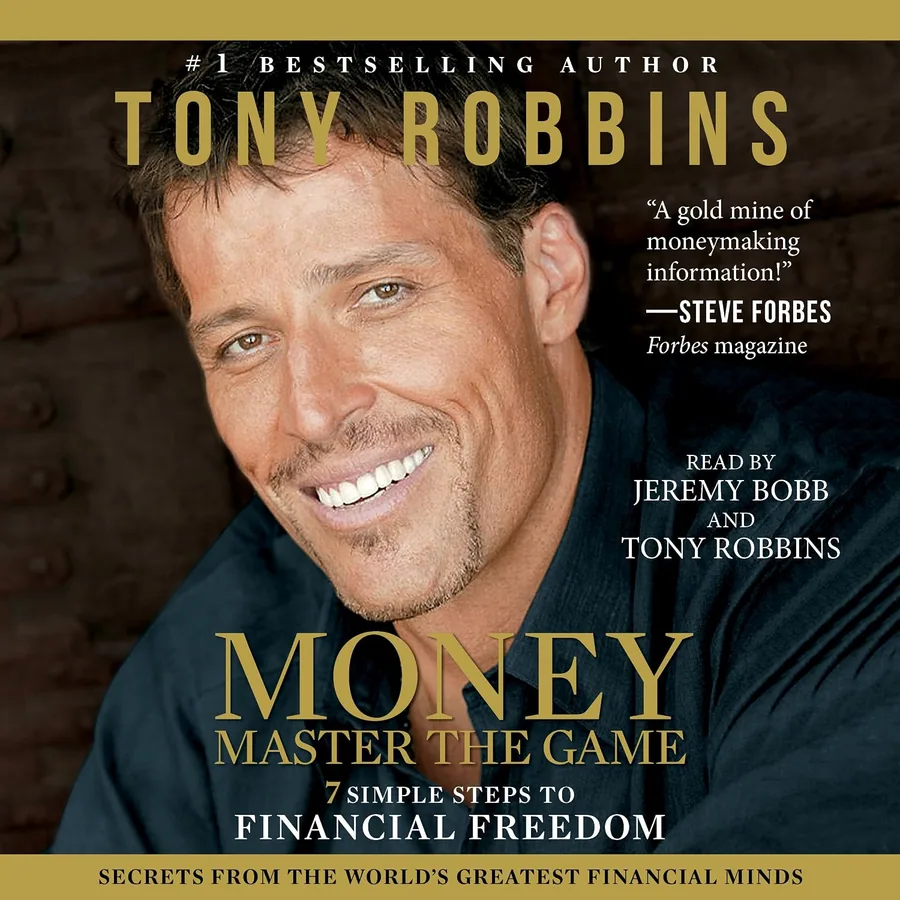
- Yes. Money: Master the Game: 7 Simple Steps to Financial Freedom has an Audible audiobook edition, narrated by Tony Robbins and Jeremy Bobb.Listen free with Audible
We earn from qualifying Amazon purchases.
- How long is the Money: Master the Game: 7 Simple Steps to Financial Freedom audiobook?
- The Money: Master the Game: 7 Simple Steps to Financial Freedom audiobook runs 21 hr 3 min.
- Is Money: Master the Game: 7 Simple Steps to Financial Freedom on Kindle+?
- No. Money: Master the Game: 7 Simple Steps to Financial Freedom was not included with Kindle+ when we last checked on November 23, 2026.
Common questions
- What is Money: Master the Game: 7 Simple Steps to Financial Freedom about?
- Plenty of people know they should be doing something about their money and cannot make themselves start. Tony Robbins' Money: Master the Game is built around that stall. It is a 7-step personal finance book, more than 600 pages in small print, and it sets out to move readers from understanding to…
- Is Money: Master the Game: 7 Simple Steps to Financial Freedom worth reading?
- We scored Money: Master the Game: 7 Simple Steps to Financial Freedom 4.5 out of 5. Tony Robbins' Money: Master the Game is a long personal finance book built on seven steps and interviews with famous investors, including John Bogle, Ray Dalio, and Carl Icahn. It pushes readers to act on what they learn, though some find its sales pitch hard to ignore.
More like this
Related books

The Simple Path to Wealth: Your Road Map to Financial Independence and a Rich, Free Life
JL Collins

I Will Teach You to Be Rich
Ramit Sethi

The Richest Man in Babylon
George S. Clason

The Psychology of Money
Morgan Housel

The Millionaire Next Door
Thomas J. Stanley and William D. Danko

Your Money or Your Life: 9 Steps to Transforming Your Relationship with Money and Achieving Financial Independence
Vicki Robin

The Intelligent Investor: The Definitive Book on Value Investing
Benjamin Graham

The Total Money Makeover: A Proven Plan for Financial Peace
Dave Ramsey

A Random Walk Down Wall Street
Burton G. Malkiel

Die with Zero: Getting All You Can from Your Money and Your Life
Bill Perkins