Where to read or listen
- Is there an audiobook of A Random Walk Down Wall Street?
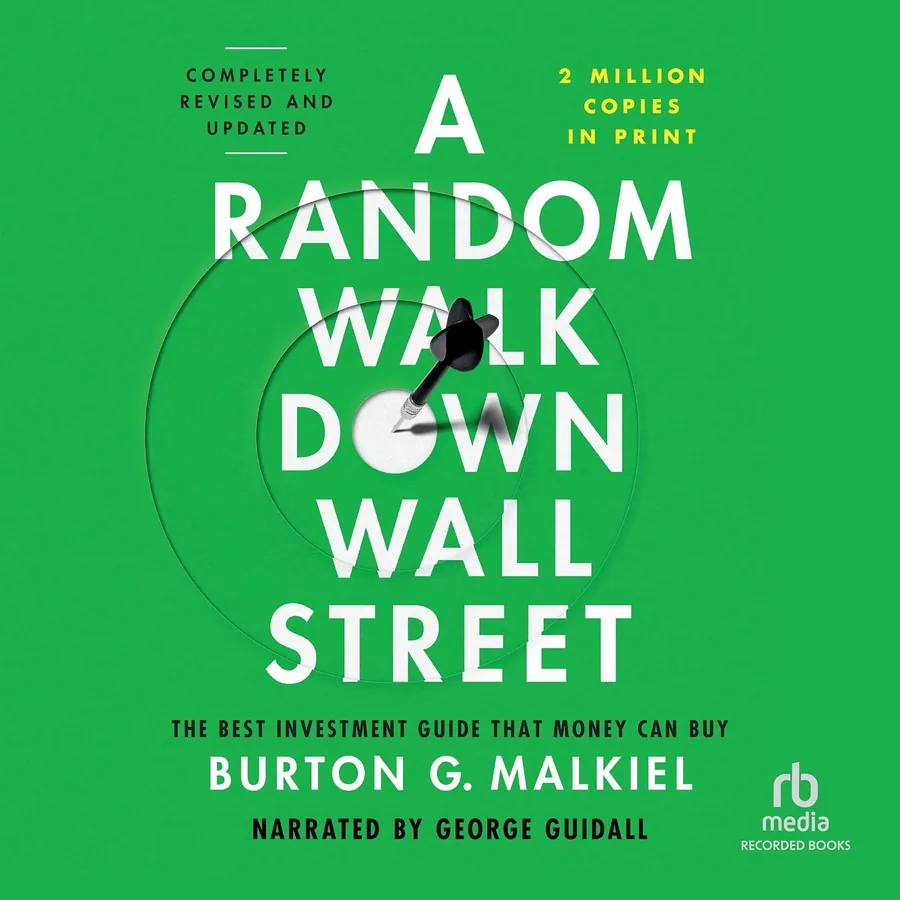
- Yes. A Random Walk Down Wall Street has an Audible audiobook edition, narrated by George Guidall.Listen free with Audible
We earn from qualifying Amazon purchases.
- How long is the A Random Walk Down Wall Street audiobook?
- The A Random Walk Down Wall Street audiobook runs 13 hr 14 min.
- Is A Random Walk Down Wall Street on Kindle+?
- No. A Random Walk Down Wall Street was not included with Kindle+ when we last checked on November 23, 2026.
Common questions
- What is A Random Walk Down Wall Street about?
- A Random Walk Down Wall Street reads more like a guided history of money and human folly than a manual. Burton G. Malkiel mixes economics, psychology, social science, and a sharp dose of humor, and readers who say they usually glaze over at investing charts report that the plain explanations and…
- Is A Random Walk Down Wall Street worth reading?
- We scored A Random Walk Down Wall Street 4.6 out of 5. Burton G. Malkiel's A Random Walk Down Wall Street is a long, readable investing book that argues for steady saving and broadly diversified index funds over market timing. This fiftieth anniversary edition adds crypto, NFTs, meme stocks, and newer fund strategies to the history…
More like this
Related books

The Intelligent Investor: The Definitive Book on Value Investing
Benjamin Graham

1929: Inside the Greatest Crash in Wall Street History
Andrew Ross Sorkin

Thinking, Fast and Slow
Daniel Kahneman

The Total Money Makeover: A Proven Plan for Financial Peace
Dave Ramsey

Predictably Irrational
Dan Ariely

The Simple Path to Wealth: Your Road Map to Financial Independence and a Rich, Free Life
JL Collins

I Will Teach You to Be Rich
Ramit Sethi

The Richest Man in Babylon
George S. Clason

The Psychology of Money
Morgan Housel

Money: Master the Game: 7 Simple Steps to Financial Freedom
Tony Robbins