Where to read or listen
- Is there an audiobook of The Psychology of Money?
- Yes. The Psychology of Money has an Audible audiobook edition, narrated by Chris Hill.Listen free with Audible
We earn from qualifying Amazon purchases.
- How long is the The Psychology of Money audiobook?
- The The Psychology of Money audiobook runs 5 hr 54 min.
Common questions
- What is The Psychology of Money about?
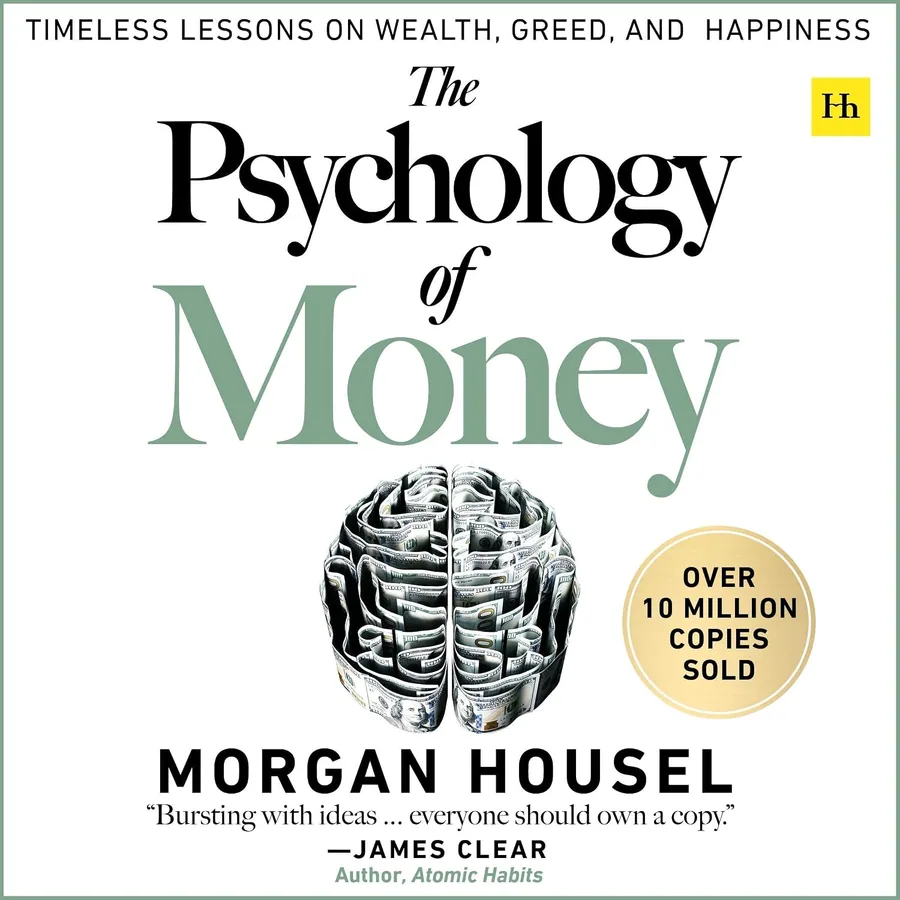
- Plenty of people know exactly what they should do with their money and don't do it. The Psychology of Money starts from that gap. Morgan Housel's claim is that financial outcomes depend more on how you behave than on what you know, and that good behavior resists being taught. The book is built to…
- Is The Psychology of Money worth reading?
- We scored The Psychology of Money 4.5 out of 5. Morgan Housel's The Psychology of Money is a personal finance book about behavior, told through short stories about how people actually act with money. It suits anyone who knows the textbook advice and still can't follow it, and it asks little of you beyond attention.
More like this
Related books

The Subtle Art of Not Giving a F*ck: A Counterintuitive Approach to Living a Good Life (Mark Manson Collection Book 1)
Mark Manson

The Simple Path to Wealth: Your Road Map to Financial Independence and a Rich, Free Life
JL Collins

I Will Teach You to Be Rich: No Guilt. No Excuses. Just a 6-Week Program That Works (Second Edition)
Ramit Sethi

Grit: The Power of Passion and Perseverance
Angela Duckworth

The Gardener and the Carpenter: What the New Science of Child Development Tells Us About the Relationship Between Parents and Children
Alison Gopnik

The Millionaire Next Door
Thomas J. Stanley and William D. Danko

Your Money or Your Life: 9 Steps to Transforming Your Relationship with Money and Achieving Financial Independence: Fully Revised and Updated for 2018
Vicki Robin

The Intelligent Investor: The Definitive Book on Value Investing
Benjamin Graham

Tiny Habits: The Small Changes That Change Everything
BJ Fogg PhD

Range: Why Generalists Triumph in a Specialized World
David Epstein