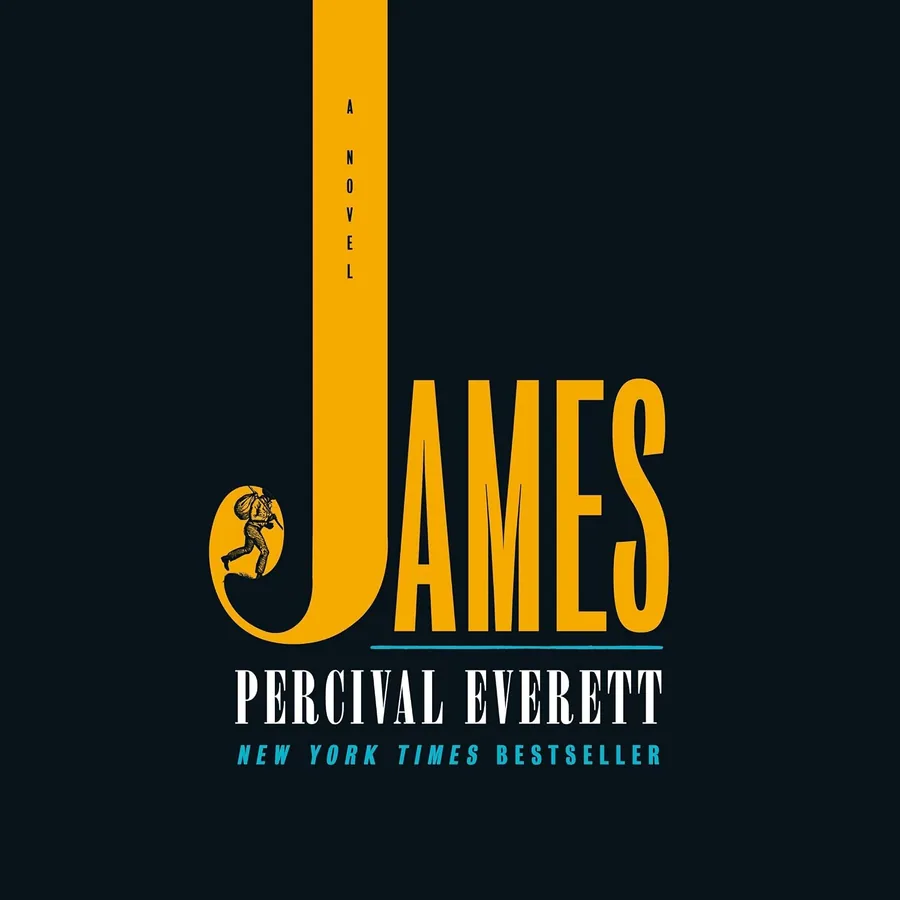
We have known Jim for well over a century, and always through someone else's eyes. James hands him the narration. Percival Everett follows the old journey down the Mississippi on a raft, with Huck at Jim's side, but the man at the center is now the one doing the telling, and the book begins to wonder how much of the familiar version was a performance.
The setup is simple and urgent. Jim overhears that he is about to be sold to a man in New Orleans, which would separate him from his wife and daughter for good, so he runs. Huck, meanwhile, has faked his own death to get away from a violent father. Two runaways, one raft, a river that promises freedom and doesn't deliver it on any schedule. Readers who know Twain will feel the structure under their feet. Readers who never opened Huckleberry Finn say they had no trouble at all.
What holds it together is Jim's voice. This is an intelligent, observant, literate man who has learned that looking intelligent is dangerous. Among other enslaved people he speaks with ease, and in front of white people he flattens his speech into the shape they expect. Everett plays that split for pain and for humor, and the code-switching alone gave one book group a full session's worth of conversation. The humor matters. Without it the book would be a long wince, and instead the jokes keep the reader moving and make the cruelty land harder when it comes. It does come. The second half in particular turns graphic and disturbing, though readers see it as true to the period, and some say they read through tears.
Everett also takes real liberties with Twain, and the best sign that this works is that readers who loved the original and readers who barely remembered it both say the departures felt necessary. Jim gets what the old book mostly withheld: agency, an inner life, and the drive to reunite his family. Huck stays in the story, and some readers come away with a new regard for him too. It moves at a clip. People call it action-packed and say there is never a slow stretch, which is a surprising thing to say about a novel this heavy.
Why you should read
- Retellings that give a silenced character the narration
- Historical fiction with humor and weight
- Book clubs that want plenty to argue about
- Readers curious about Huckleberry Finn from another angle
What to expect
- First-person narration by Jim
- A river journey that moves at a steady clip
- Humor alongside graphic violence
- A story that departs from Twain in the second half
It is a demanding book, but the difficulty comes from the subject and not from the prose. Be ready for violence and for cruelty written plainly. In return you get a novel that reads fast, laughs when it can, and leaves a character you thought you understood standing entirely on his own.