Where to read or listen
- Is there an audiobook of Endure?
- Yes. Endure has an Audible audiobook edition, narrated by Robert G. Slade.Listen free with Audible
We earn from qualifying Amazon purchases.
- How long is the Endure audiobook?
- The Endure audiobook runs 11 hr 9 min.
- Is Endure on Kindle+?
- No. Endure was not included with Kindle+ when we last checked on November 23, 2026.
Common questions
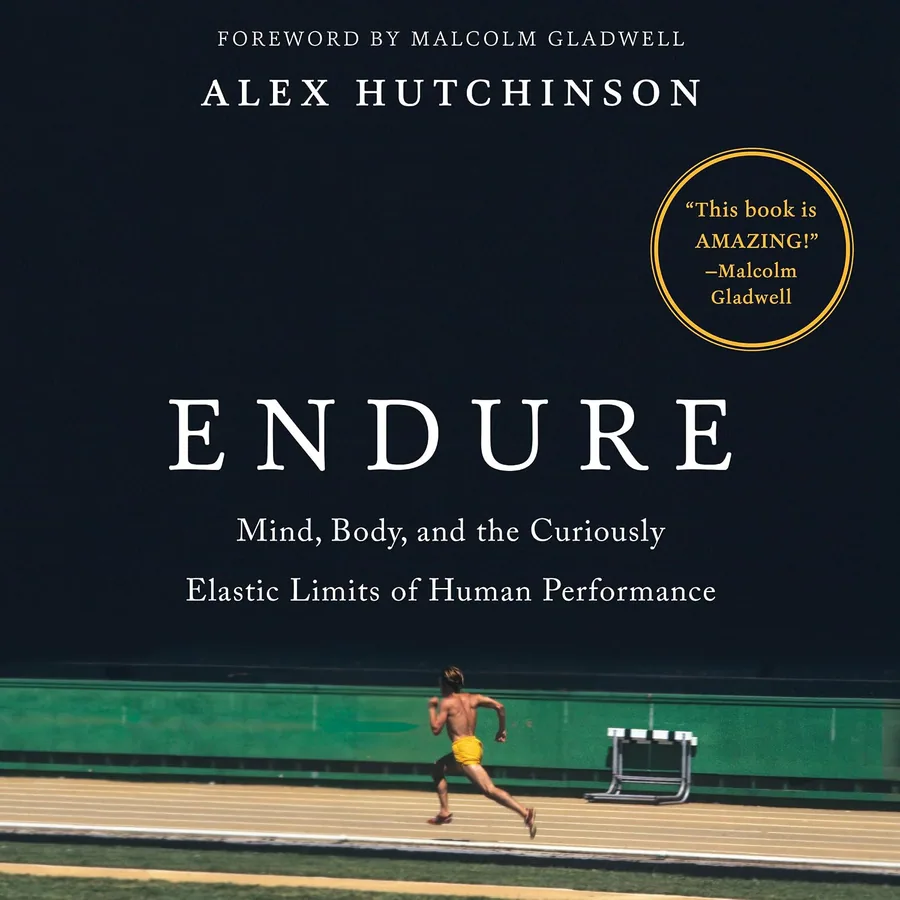
- What is Endure: Mind, Body, and the Curiously Elastic Limits of Human Performance about?
- When a runner slows late in a race, is the body failing or the brain deciding it has had enough? That question runs through Endure, and Alex Hutchinson's answer is more interesting than the usual "it's all in your head." The limits we hit are set by the mind and the body together, and the line…
- Is Endure: Mind, Body, and the Curiously Elastic Limits of Human Performance worth reading?
- We scored Endure: Mind, Body, and the Curiously Elastic Limits of Human Performance 4.4 out of 5. Endure: Mind, Body, and the Curiously Elastic Limits of Human Performance is Alex Hutchinson's science book on why athletes quit when they do, and how much of that limit sits in the brain. It's a reported look at endurance sports, built around the chase for a two-hour marathon.
More like this
Related books

A World Appears: A Journey into Consciousness
Michael Pollan

This Is Your Brain on Music: The Science of a Human Obsession
Daniel J. Levitin

Cribsheet: A Data-Driven Guide to Better, More Relaxed Parenting, from Birth to Preschool
Emily Oster

Homo Deus: A Brief History of Tomorrow
Yuval Noah Harari

Eleven Rings: The Soul of Success
Phil Jackson

Expensive Basketball
Shea Serrano

Replaceable You: Adventures in Human Anatomy
Mary Roach

A Short History of Nearly Everything
Bill Bryson

The Hidden Life of Trees: What They Feel, How They Communicate
Peter Wohlleben

The Boys in the Boat: Nine Americans and Their Epic Quest for Gold at the 1936 Berlin Olympics
Daniel James Brown