Where to read or listen
- Is there an audiobook of Cribsheet?
- Yes. Cribsheet has an Audible audiobook edition, narrated by Emily Oster.Listen free with Audible
We earn from qualifying Amazon purchases.
- How long is the Cribsheet audiobook?
- The Cribsheet audiobook runs 10 hr 25 min.
- Is Cribsheet on Kindle+?
- No. Cribsheet was not included with Kindle+ when we last checked on November 23, 2026.
Common questions
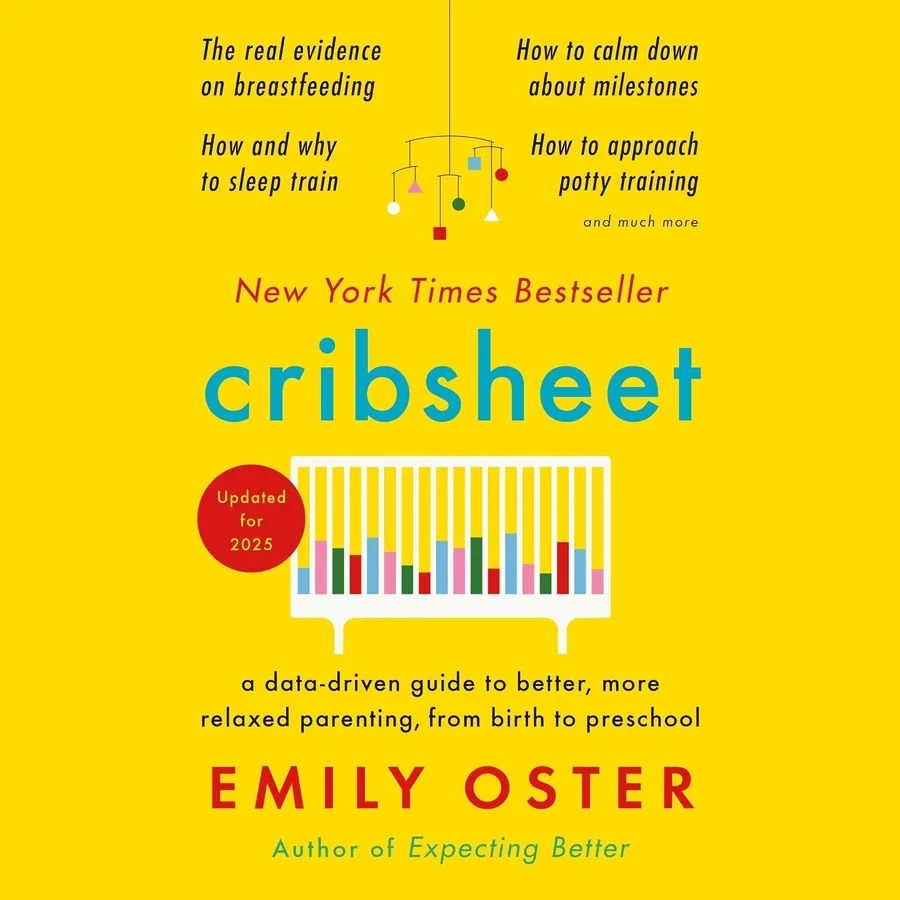
- What is Cribsheet: A Data-Driven Guide to Better, More Relaxed Parenting, from Birth to Preschool about?
- Every new parent hears the same message in a dozen voices: pick the right option on sleep, feeding and schedule, or pay for it later. Emily Oster's Cribsheet asks how much those choices really matter, and the answer is often less than you were told. She is an economist, and she treats each…
- Is Cribsheet: A Data-Driven Guide to Better, More Relaxed Parenting, from Birth to Preschool worth reading?
- We scored Cribsheet: A Data-Driven Guide to Better, More Relaxed Parenting, from Birth to Preschool 4.4 out of 5. Cribsheet by Emily Oster is a data-driven parenting book for the years from birth to preschool. An economist weighs the research behind sleep, feeding, work and discipline, then hands the decision back to you.
More like this
Related books

A World Appears: A Journey into Consciousness
Michael Pollan

This Is Your Brain on Music: The Science of a Human Obsession
Daniel J. Levitin

Endure: Mind, Body, and the Curiously Elastic Limits of Human Performance
Alex Hutchinson

Replaceable You: Adventures in Human Anatomy
Mary Roach

A Short History of Nearly Everything
Bill Bryson

The Hidden Life of Trees: What They Feel, How They Communicate
Peter Wohlleben

How to Raise an Adult
Julie Lythcott-Haims

The Gardener and the Carpenter: What the New Science of Child Development Tells Us About the Relationship Between Parents and Children
Alison Gopnik

Breath: The New Science of a Lost Art
James Nestor

The Philosophical Baby: What Children's Minds Tell Us About Truth, Love, and the Meaning of Life
Alison Gopnik