Where to read or listen
- Is there an audiobook of Expensive Basketball?
- Yes. Expensive Basketball has an Audible audiobook edition, narrated by Cary Hite.Listen free with Audible
We earn from qualifying Amazon purchases.
- How long is the Expensive Basketball audiobook?
- The Expensive Basketball audiobook runs 9 hr 57 min.
- Is Expensive Basketball on Kindle+?
- No. Expensive Basketball was not included with Kindle+ when we last checked on October 26, 2026.
- What formats is Expensive Basketball available in?
- On Amazon, Expensive Basketball comes as a Kindle ebook and a hardcover.
Common questions
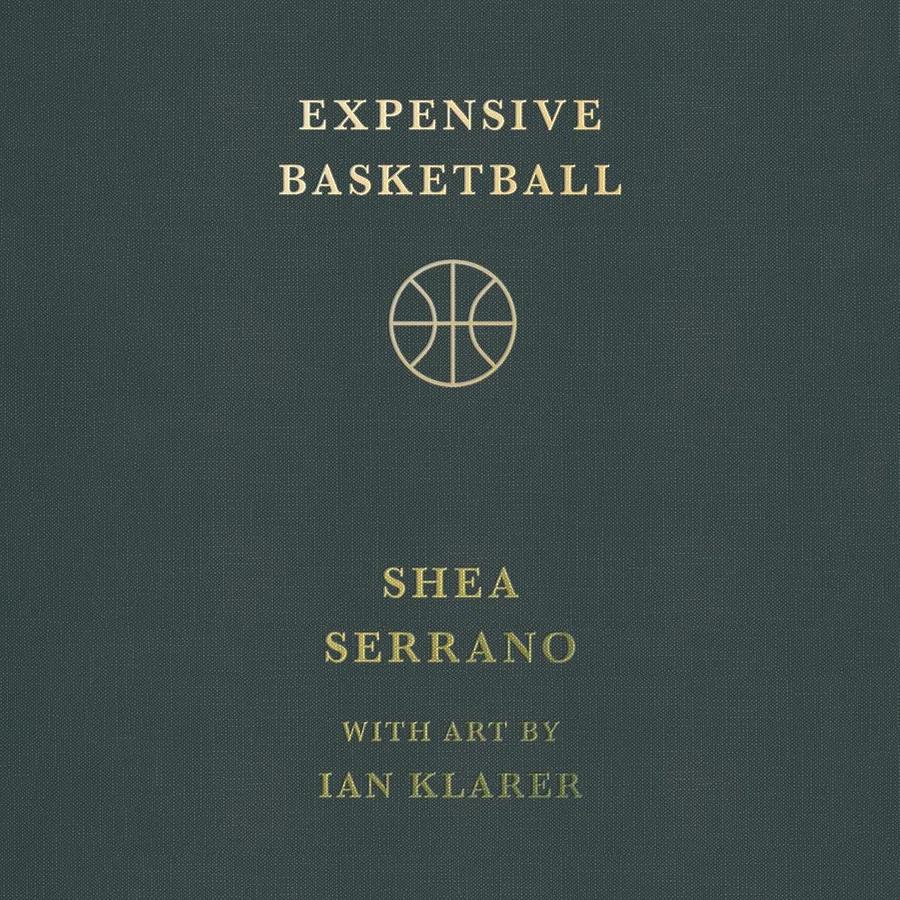
- What is Expensive Basketball about?
- Basketball is the most counted game going, and Shea Serrano's argument in Expensive Basketball is that the counting misses the best of it. Some moments, he says, are worth more than their numbers, and the book sets out to price them by feeling. It's an essay collection about the players, games and…
- Is Expensive Basketball worth reading?
- We scored Expensive Basketball 4.5 out of 5. Expensive Basketball by Shea Serrano is a funny, nostalgic sports book of essays on the players, games and moments that no box score can fully hold, from Kobe Bryant's final 196 seconds to the Sue Bird backpedal. Good company for any NBA fan.
More like this
Related books

Consider the Lobster: And Other Essays
David Foster Wallace

The Souls of Black Folk
W. E. B. Du Bois

The Boys in the Boat: Nine Americans and Their Epic Quest for Gold at the 1936 Berlin Olympics
Daniel James Brown

Actually, Nevermind
Taylor Tomlinson

The Land and Its People: Essays
David Sedaris

The Fire Next Time (Vintage International)
James Baldwin

Friday Night Lights (25th Anniversary Edition): A Town, a Team, and a Dream
H. G. Bissinger

Moneyball: The Art of Winning an Unfair Game
Michael Lewis

The Sports Gene: Inside the Science of Extraordinary Athletic Performance
David Epstein

Born to Run: A Hidden Tribe, Superathletes, and the Greatest Race the World Has Never Seen
Christopher McDougall