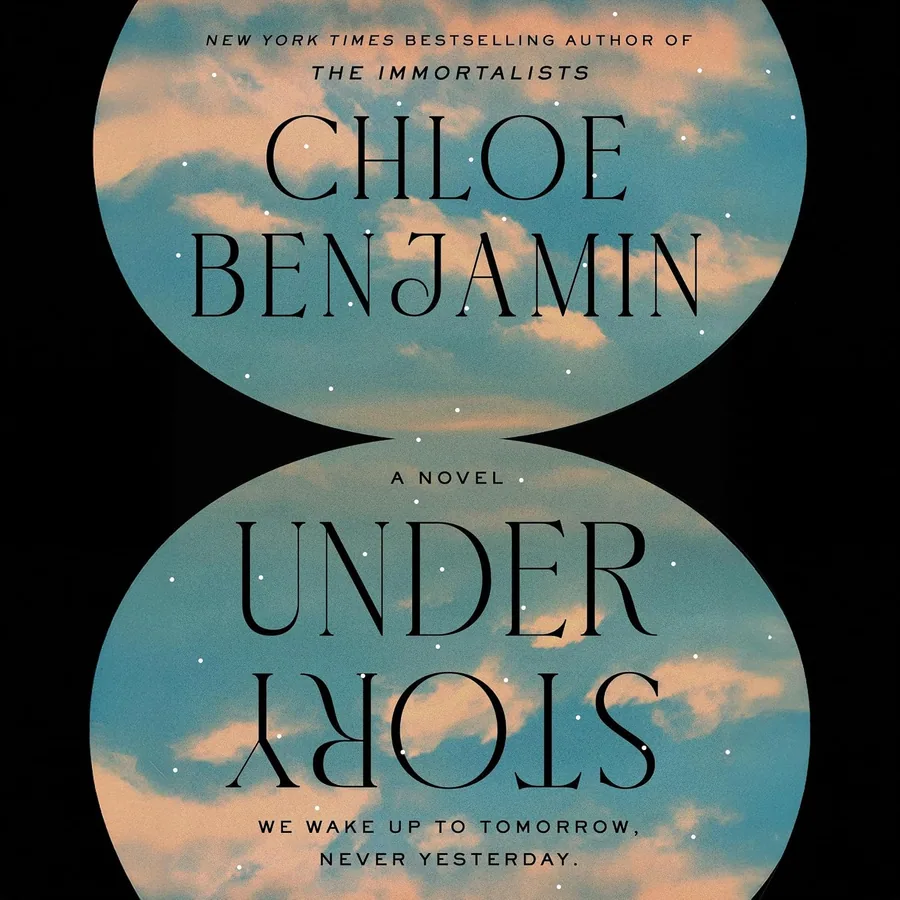
McMurdo Station runs on people who came south to do exactly one job, and Laurel Salter chose the one that lets her disappear inside it. Ten hours in the dish pit, six days a week, hands in gray water, the same trays circling back. Nobody on base knows she used to be a biologist whose work mattered. She likes it that way. Chloe Benjamin gives those early chapters real room, and the patience pays off, because by the time anything strange happens on the ice you already know the exact shape of the life Laurel is hiding from.
The strange thing is a light. It appears across the ice and it does not behave, and within weeks McMurdo has filled with physicists who want to measure it. Laurel watches the Arc the way a biologist watches an animal she cannot classify, which is to say she assumes it is alive well before she can prove it. Then Eli arrives. Benjamin writes their first scene together as pure logistics, two people arranging schedules around each other while everything either of them actually means stays under the table. It is one of the best passages in the book, and nothing in it is about the marriage except all of it.
What Laurel believes the Arc is takes a while to say out loud, and Benjamin is smart about the delay. This is where Under Story stops being an Antarctic novel and becomes a science fiction one, without ever fully giving up the first to get the second. There is a universe on the other side running the other direction, where a life opens at death and works its way back toward birth. Benjamin refuses to treat that as a gadget. She treats it as a moral problem. If you could walk into a world where the order of a life reverses, what would you actually be going there to repair, and would repairing it be a mercy or the most selfish thing you have ever done?
The loss underneath all of this stays offstage for a long stretch, named the way people name the thing they cannot look at head-on. I found the withholding effective rather than coy. Laurel's competence is the tell. She can be exact about anything that is not herself, and the distance between those two registers is where the emotional charge of the novel lives. Eli gets the same care. He is the one who wants to slow down, run the numbers again, refuse the wild theory, and the book never lets his caution read as cowardice.
At 508 pages the novel does ask something of you. The middle stretch, where the physics has to be explained well enough for the plot to move, runs cooler than the chapters on either side of it, and the antiuniverse arrives more fully imagined as a concept than as a place you can smell and stand in. Readers who came for the Antarctic realism, the diesel smell and the strict social order of a research base, may feel the ground shift under them around the halfway mark. Benjamin has always been willing to break her own register. In The Immortalists it was a fortune teller and four siblings walking away with an expiration date each. Here it is the ice, and then whatever sits behind the ice.
The prose is warm and unshowy, the right call for material this large. Benjamin resists the sentence that announces its own importance. She writes weather well, and she writes work better: the particular exhaustion of physical labor chosen as penance, the way a station full of scientists keeps talking about funding cycles while a miracle sits out on the ice. The attention to the natural world never hardens into a lecture, and the climate dread threaded through the book is felt instead of argued.
Why you should read
- Readers who loved The Immortalists
- Literary fiction that takes a speculative turn
- Antarctic settings and research-station claustrophobia
- Second-chance marriage stories with real stakes
What to expect
- A patient first act before the science arrives
- 508 pages, with a cooler explanatory middle
- Warm, unshowy prose that avoids grand statements
- Emotional weight carried by what stays unsaid
The final act puts a straight question to Laurel and Eli about time and what they are owed by it, and Benjamin declines to make the answer painless. What stayed with me is smaller than the cosmology. A woman at a sink, wrist-deep in other people's dinner plates, choosing that over a life she was good at, because the version of herself who was good at it is the one she cannot forgive.