Where to read or listen
- Is there an audiobook of Ultra-Processed People?
- Yes. Ultra-Processed People has an Audible audiobook edition, narrated by Chris van Tulleken and Xand van Tulleken.Listen free with Audible
We earn from qualifying Amazon purchases.
- How long is the Ultra-Processed People audiobook?
- The Ultra-Processed People audiobook runs 11 hr 35 min.
- Is Ultra-Processed People on Kindle+?
- No. Ultra-Processed People was not included with Kindle+ when we last checked on November 23, 2026.
Common questions
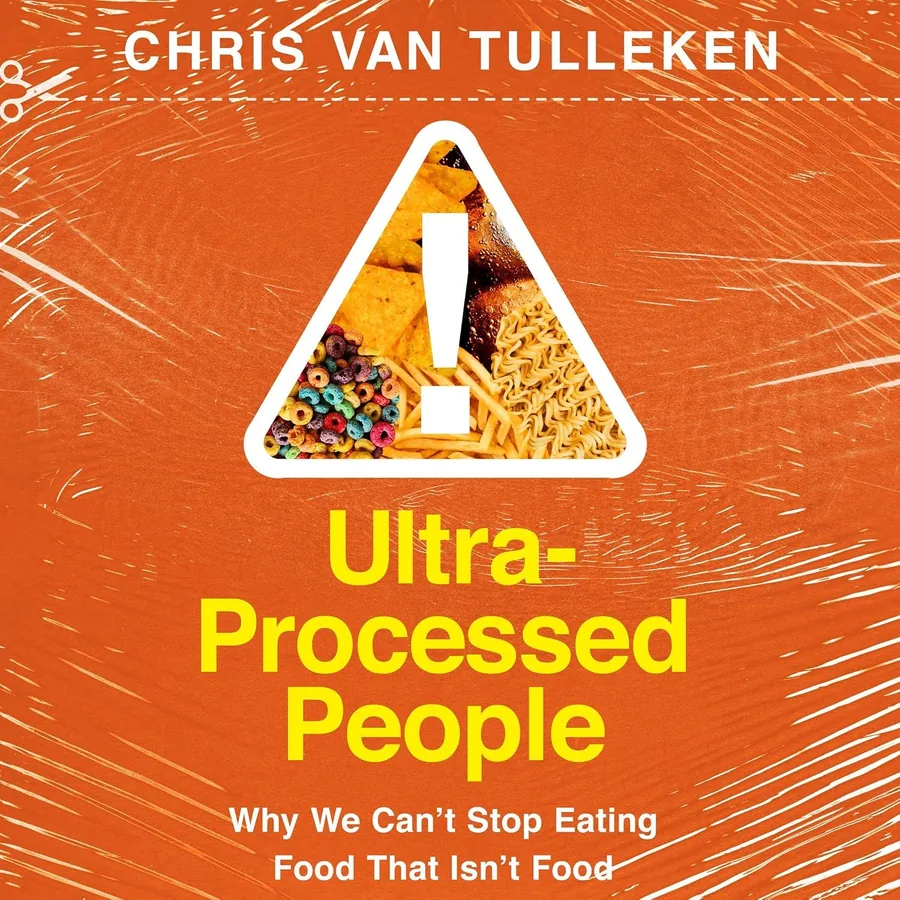
- What is Ultra-Processed People: Why We Can't Stop Eating Food That Isn't Food about?
- Ultra-Processed People is more persuasive about the food system than it is graceful as writing. Van Tulleken, a doctor, scientist, and BBC broadcaster, argues that much of what many people eat is a manufactured product built to be eaten in excess, and that the fault lies with the food, not with…
- Is Ultra-Processed People: Why We Can't Stop Eating Food That Isn't Food worth reading?
- We scored Ultra-Processed People: Why We Can't Stop Eating Food That Isn't Food 4.6 out of 5. Chris van Tulleken's Ultra-Processed People is a science-driven look at how industrial, ultra-processed food took over the modern diet and why, in his telling, it is so hard to stop eating. It is a nutrition and food-industry book with a doctor's self-experiment at its center…
More like this
Related books

In Defense of Food: An Eater's Manifesto
Michael Pollan

The Omnivore's Dilemma: A Natural History of Four Meals
Michael Pollan

The Vanishing Family: Love, Fate, and the Quest to End Dementia
Robert Kolker

Protocols: An Operating Manual for the Human Body
Andrew D. Huberman

Take Me to Your Leader: Perspectives on Your First Alien Encounter
Neil deGrasse Tyson

Hidden Valley Road
Robert Kolker

Thinking, Fast and Slow
Daniel Kahneman

Braiding Sweetgrass: Indigenous Wisdom, Scientific Knowledge and the Teachings of Plants
Robin Wall Kimmerer

Why We Sleep: Unlocking the Power of Sleep and Dreams
Matthew Walker PhD

Outlive: The Science and Art of Longevity
Peter Attia MD