Where to read or listen
- Is there an audiobook of The Remains of the Day?
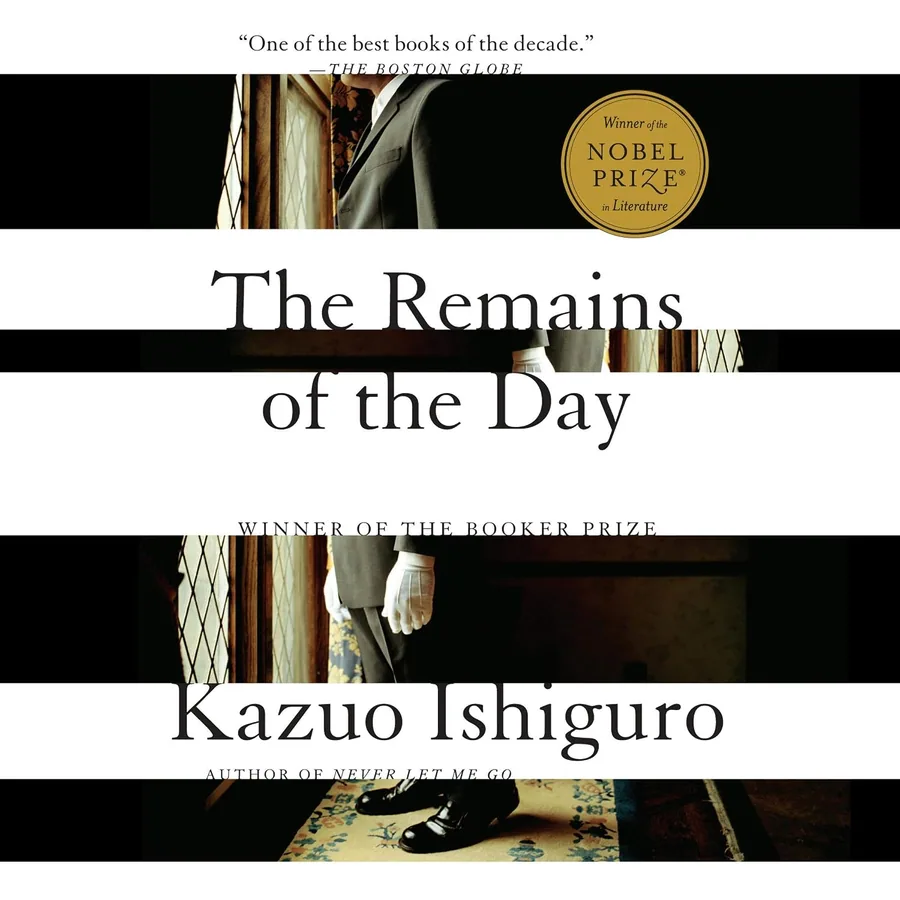
- Yes. The Remains of the Day has an Audible audiobook edition, narrated by Nicholas Guy Smith.Listen free with Audible
We earn from qualifying Amazon purchases.
- How long is the The Remains of the Day audiobook?
- The The Remains of the Day audiobook runs 9 hr 23 min.
More by Kazuo IshiguroSee every Kazuo Ishiguro book we've reviewed, with our scores.All Kazuo Ishiguro books →
Common questions
- What is The Remains of the Day about?
- Stevens has spent three decades at Darlington Hall, and he has never once asked himself what it cost. Then his new employer, an American named Mr. Farraday, suggests a drive through the countryside, and the question arrives anyway. The road trip frames the whole novel. As the miles pass, Stevens…
- Is The Remains of the Day worth reading?
- We scored The Remains of the Day 4.5 out of 5. Kazuo Ishiguro's Booker Prize-winning The Remains of the Day follows Stevens, an English butler on a country drive who starts to doubt the lord he served and the life he built around that service. A restrained literary novel about dignity, memory and what we refuse to say.
More like this
Related books

Theo of Golden
Allen Levi

Exit Party
Emily St. John Mandel

Keeper of Lost Children
Sadeqa Johnson

Cool Machine
Colson Whitehead

We Burned So Bright
TJ Klune

John of John: A Novel
Douglas Stuart

Into the Blue: A Love Story
Emma Brodie

Land
Maggie O'Farrell

The Bright Sword: A Novel of King Arthur
Lev Grossman

The Things We Never Say
Elizabeth Strout