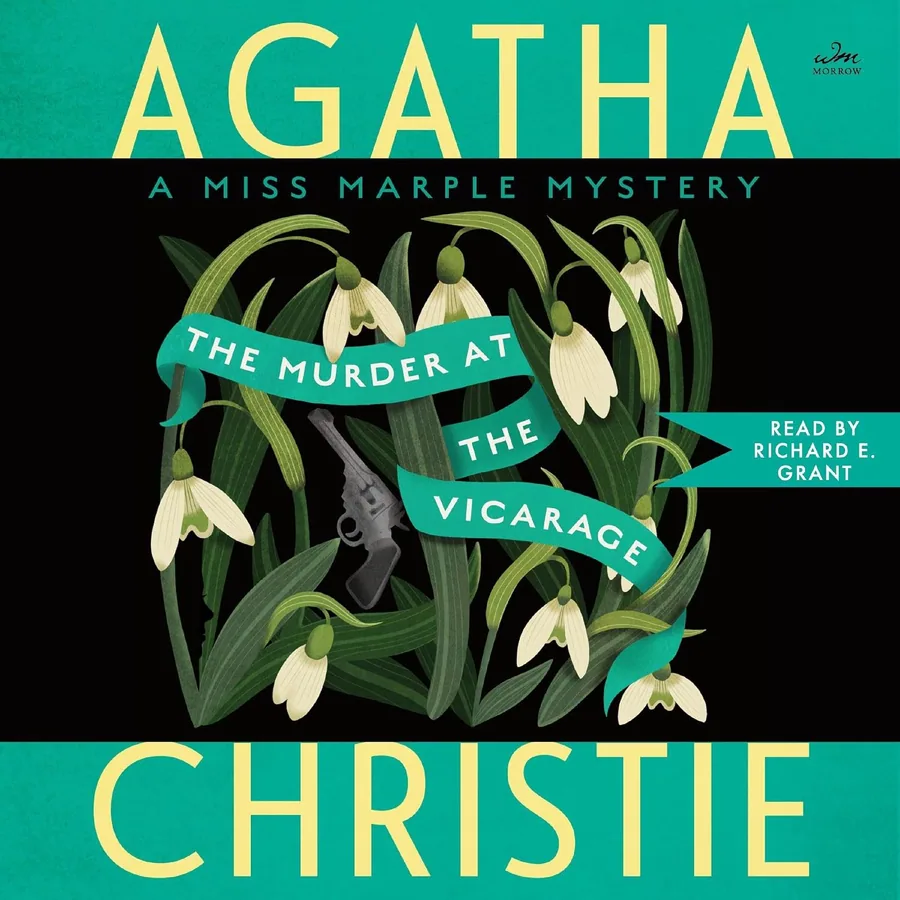
Reading The Murder at the Vicarage is like being handed the village gossip, one door at a time. You walk, you knock, you listen, and everyone has something to say about everyone else. The vicar who narrates spends so much of the book on his feet that one reader joked about his aching legs, and that restless footwork is the book's rhythm. A conversation, a new theory, a clue that seems to matter, and then somebody's neighbor adds a detail that changes it.
The setup is quick to state. Colonel Protheroe, the local magistrate and an overbearing landowner, is the most disliked man in the village of St. Mary Mead. Even the vicar wishes him gone. Then he's dead, shot in the vicar's own study, and nobody in the parish is in a hurry to mourn. Two people come forward to confess almost at once, which would settle most books. Here it settles nothing, because neither the vicar nor Miss Marple is satisfied. Colonel Melchett and Inspector Slack run the official investigation, while the vicar runs his own.
The narrator is the book's first smart choice. We follow the vicar, who is a sympathetic man and a decidedly un-saintly one. He means to behave well and still thinks uncharitable things about plenty of the people he meets, which makes him funny company. His mild, sideways view of the case keeps the tone light, and the cast around him is large. Villagers, the dead man's family, an archaeologist and an assistant, the police, and a good many subplots pull the suspicion in several directions at once. One reader settled on a suspect, couldn't find a motive, and got turned around anyway, though another called the culprit correctly.
Then there's Miss Marple, and here the book surprises people who know her from television. In the TV version she leads. In the novel she's present but mostly off to the side, dropping observations and nudging the men toward what matters, while the vicar holds the camera. She is still the one holding the key, and at least one reader who came for her wished for more of her. What they get instead is her first appearance, an early version of the sharp, observant spinster who sees what the professionals miss. It's a pleasure to meet her before she's famous.
The gossip is worth a mention because it is not filler. Village chatter is how information moves, and it works as a plot device as much as local color. You're meant to enjoy it and to listen closely. Christie also manages this without shock scenes or heavy violence, which is part of why it reads easily. Readers who enjoy the period vocabulary find it a small game of its own. And readers who know the TV versions say the novel makes more sense and holds more intrigue, with characters the adaptations dropped.
The weak points are real, if small. The opening takes some time to set the scene, and one reader who came to the novel after loving the others in the re-released series felt it dragged and suggested falling for Marple first. One subplot leans on coincidence in a way that feels thin. Another reader notes it isn't as complex as the later Marple mysteries. Fair enough. This is an origin story, and it behaves like one.
Why you should read
- Golden Age mystery fans
- Readers who want Miss Marple's first appearance
- Cozy readers who like clever, low-violence puzzles
- Anyone who prefers village gossip to gore
What to expect
- A vicar narrates, and Miss Marple works at the edges
- A slow opening, then a faster pace after the murder
- Many suspects and several competing subplots
- Period language and a classic English village setting
Still, the pieces fit together well. It's a cozy-adjacent village mystery with a classic Golden Age shape, a narrator you want to follow, and a cast of suspects who all seem to have a reason. Anyone looking for a smart, humane mystery from an author who knew how to misdirect will find it here, and readers who first met it decades ago still enjoy going back to St. Mary Mead.