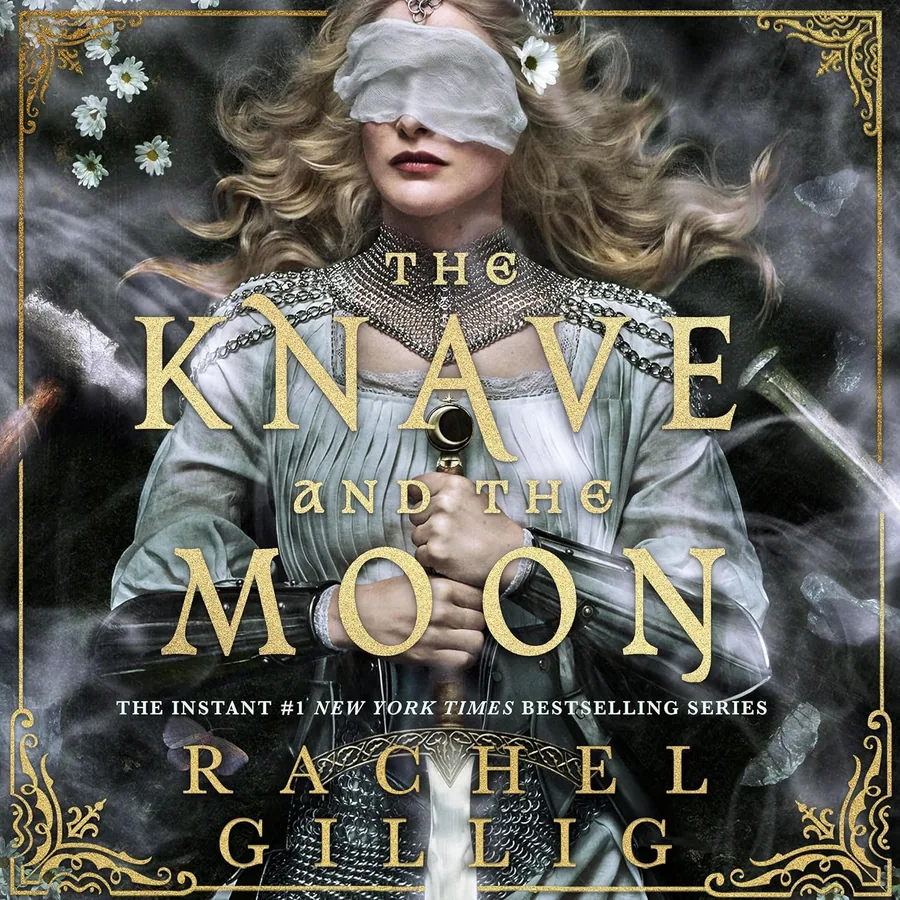
Most of this book lives somewhere cold and bruised, and then Bartholomew shows up and you laugh out loud. That's the reading experience in a sentence. Bartholomew is a bat-like gargoyle who is slowly coming apart, and he's the funniest and most heartbreaking thing in a story that otherwise leans lyrical, atmospheric, and steeped in folklore. The violence is real and it arrives early. Some readers will find the whole thing bleaker than they bargained for, and I understand that. It's dark. It's also, over the long run, kind.
The setup is pure gothic. Aisling Cathedral is in ruins, and Rory, Bartholomew, and Maude are rumored dead. Meanwhile Sybil Delling has been made queen to Benji, the boy king, in a ceremony that's more theater than wedding. He sends tournaments through the hamlets of Traum to show off the union and lock down his power, and Sybil goes along drugged and captive, still set on bringing him down, even if the price is the kingdom's faith and herself. She's in pain, too, with her body turning to limestone. Then a knave who can't remember anything, not even his own name, starts climbing the tournament lists, and anyone who read the first book can guess who might be worth watching.
No prize for guessing who the knave is, and giving Rory the point of view this time is the smartest choice the sequel makes. In book one he stayed mysterious, and the mystery worked. Here we get inside his head, and what's in there is a godless, heretical yearner with excellent eyeliner who is clawing his way back to himself while being very, very down bad for Sybil. Readers keep calling him underrated, and I'd back them. The memory loss does real work for the romance, too. Love between these two has to survive loss, loyalty, power, and betrayal, and the book treats that as a test instead of a given. Longing is the fuel, and Rory has it in bulk.
Sybil, meanwhile, remains one of the better heroines in current fantasy. She's a seer and a knight with stone-eyed resolve, empathetic and stubborn, and she holds on to her optimism through plenty that should have killed it. Her friendship with Bartholomew is what pulls her back when she starts to lose her way, and that friendship matters as much to the book's emotional pull as the romance does. The sprites, the Omens from the first book, and a road trip through the kingdoms with Maude and the gargoyle give the middle of the story its shape.
The thinking underneath is sharper than the genre usually bothers with. Book one was about religion. This one turns toward a corrupt social order and a ruler whose pride won't let him admit he's in over his head, a king who can be as cruel as any god. Questions about memory, identity, and who gets to be valued come along with that, and so does the sense that history in this kingdom keeps repeating itself. Faith and responsibility get taken apart and rebuilt, and the book keeps finding hope in the rubble without sounding naive about it.
It isn't flawless. One honest complaint is that the plot can feel tangled, and some of the rules, like why Rory's blood sometimes heals Sybil, get fuzzy if you don't have book one fresh. There's also a stretch around the middle's end where the pacing wobbles. Newcomers should start with The Knight and the Moth. This picks up right where that one stops, the central relationship began there, and the whole Omen business gets its setup there. The sequel won't hold your hand through it.
Why you should read
- Gothic romantasy with a slow, aching love story
- Sequels that pick up right where the first book ends
- Banter and heart from a decomposing gargoyle sidekick
- Fantasy that questions faith, power, and a king's pride
What to expect
- Second and final book of the Stonewater Kingdom duology
- Dark, lyrical, folklore-heavy tone with early violence
- Rory's point of view finally on the page
- A tangled plot and some uneven pacing late in the middle
- An ending most readers found tearful and satisfying
What holds it all together is the ending, and I'll say only that it landed for most readers with tears and a rare feeling of contentment, enough to send people straight back to page one. Gillig bets that someone stripped of a name and a memory can be rebuilt, and that a kingdom might be too. The book makes that bet look good.