Where to read or listen
- Is there an audiobook of Onyx Storm?
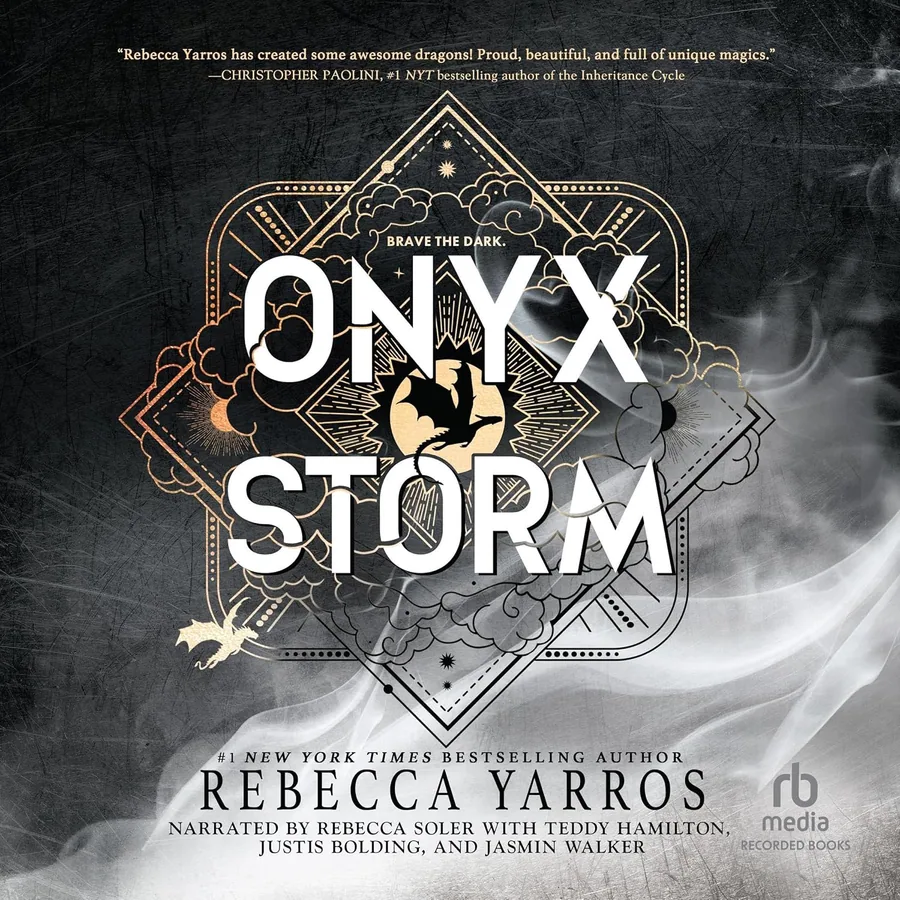
- Yes. Onyx Storm has an Audible audiobook edition, narrated by Jasmin Walker, Justis Bolding, Teddy Hamilton, and Rebecca Soler.Listen free with Audible
We earn from qualifying Amazon purchases.
- How long is the Onyx Storm audiobook?
- The Onyx Storm audiobook runs 23 hr 52 min.
- Is Onyx Storm on Kindle Unlimited?
- Yes. Onyx Storm was included with Kindle Unlimited when we last checked on October 1, 2026.
- What formats is Onyx Storm available in?
- On Amazon, Onyx Storm comes as a Kindle ebook, a paperback and a hardcover.
More by Rebecca YarrosSee every Rebecca Yarros book we've reviewed, with our scores.All Rebecca Yarros books →
Common questions
- What is Onyx Storm about?
- Reading this one feels like being handed a map and told to run. Yarros clears away the war-college scaffolding that shaped the first two books and replaces it with motion: ships, unfamiliar courts, negotiations that curdle, a rotating cast of island nobles whose names you'll want to write down…
- Is Onyx Storm worth reading?
- We scored Onyx Storm 4.6 out of 5. Rebecca Yarros sends Violet Sorrengail off the map in Onyx Storm, the third Empyrean novel, trading Basgiath's war-college politics for an island-hopping hunt for allies. It's maximalist romantasy: dragons, brittle treaties, an ache between Violet and Xaden that has stopped…
Advertisement
More like this
Related books

The Lion and the Deathless Dark
Carissa Broadbent

Fourth Wing
Rebecca Yarros

The Ballad of Falling Dragons
Sarah A. Parker

Starside
Alex Aster

Spark of the Everflame
Penn Cole

Divine Rivals
Rebecca Ross

Reign
Bethan Croome

Threshing Day
Rebecca Yarros

The Bright Sword: A Novel of King Arthur
Lev Grossman

A Game of Thrones
George R. R. Martin