Where to read or listen
- Is there an audiobook of The American Way of Killing: The Invention of an Epidemic?
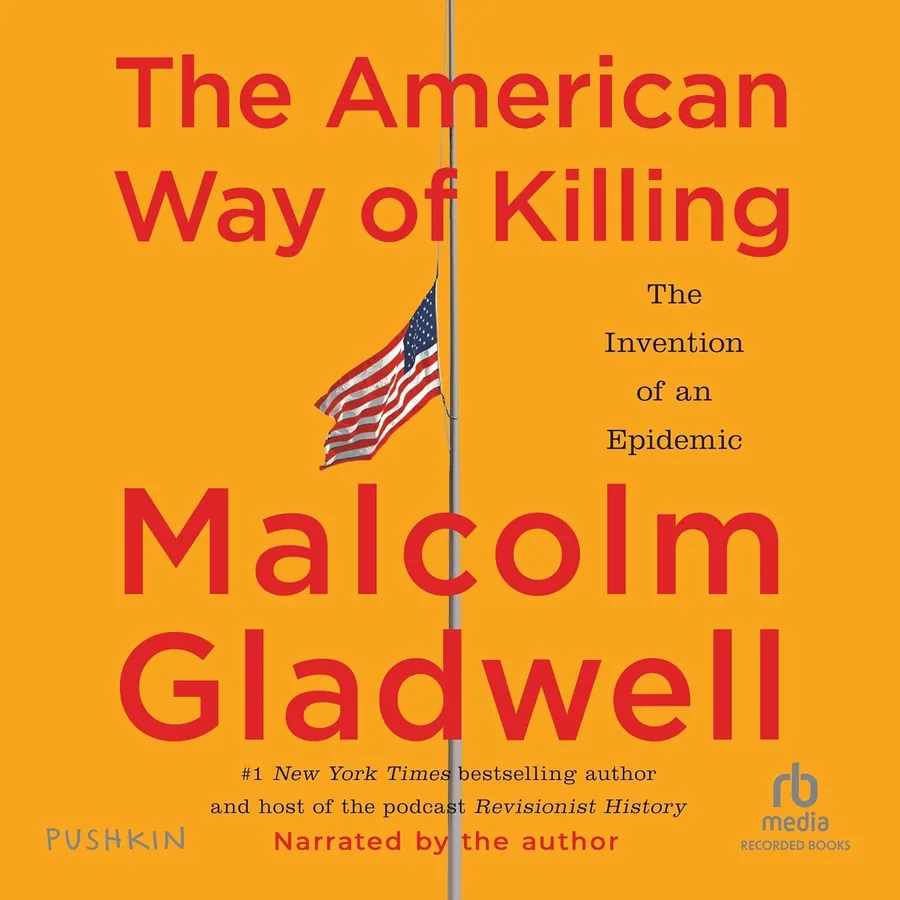
- Yes. The American Way of Killing: The Invention of an Epidemic has an Audible audiobook edition, narrated by Malcolm Gladwell.Listen free with Audible
We earn from qualifying Amazon purchases.
- How long is the The American Way of Killing: The Invention of an Epidemic audiobook?
- The The American Way of Killing: The Invention of an Epidemic audiobook runs 5 hr 18 min.
- Is The American Way of Killing: The Invention of an Epidemic on Kindle+?
- No. The American Way of Killing: The Invention of an Epidemic was not included with Kindle+ when we last checked on November 16, 2026.
- What formats is The American Way of Killing: The Invention of an Epidemic available in?
- On Amazon, The American Way of Killing: The Invention of an Epidemic comes as a Kindle ebook, a paperback and a hardcover.
More by Malcolm GladwellSee every Malcolm Gladwell book we've reviewed, with our scores.All Malcolm Gladwell books →
Common questions
- What is The American Way of Killing: The Invention of an Epidemic about?
- Malcolm Gladwell goes looking for an answer to a question most Americans stopped asking out loud: why does the richest country on earth kill its own people at a rate you would expect from the poorest? He doesn't start with a statistic. He opens with a young man shot in Washington, D.C., who…
- Is The American Way of Killing: The Invention of an Epidemic worth reading?
- We scored The American Way of Killing: The Invention of an Epidemic 4.6 out of 5. Malcolm Gladwell's The American Way of Killing is a nonfiction investigation into why the United States has so many more homicides than its wealthy peers. It reads as a string of odd, well-chosen stories on guns, policing and history, and it will change how you think about gun…
More like this
Related books

The Warmth of Other Suns: The Epic Story of America's Great Migration
Isabel Wilkerson

1929: Inside the Greatest Crash in Wall Street History
Andrew Ross Sorkin

The Wager: A Tale of Shipwreck, Mutiny and Murder
David Grann

The New Jim Crow: Mass Incarceration in the Age of Colorblindness
Michelle Alexander

Team of Rivals: The Political Genius of Abraham Lincoln
Doris Kearns Goodwin

Outliers: The Story of Success
Malcolm Gladwell

The Story of Art
E. H. Gombrich

Redwood: The Untold Story of the Cold War's Most Extraordinary Spy
Ben Macintyre

The Gales of November: The Untold Story of the Edmund Fitzgerald
John U. Bacon

Sapiens
Yuval Noah Harari