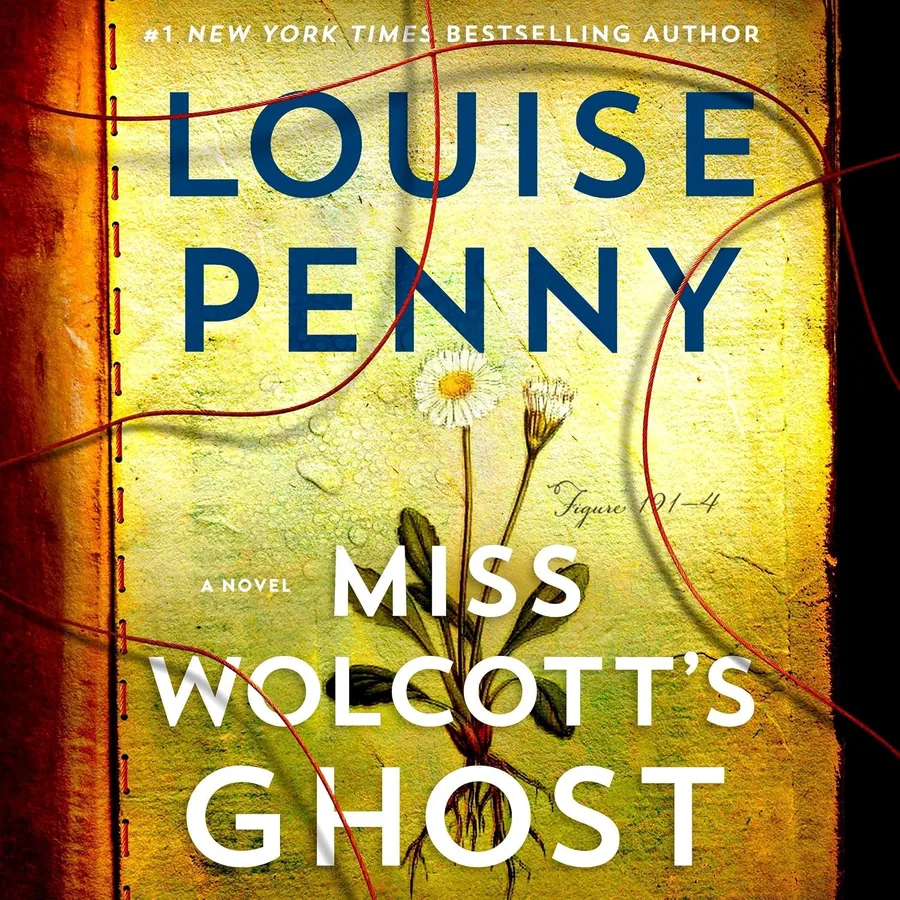
Where to read or listen
- Is there an audiobook of Miss Wolcott's Ghost?
- Yes. Miss Wolcott's Ghost has an Audible audiobook edition, narrated by Alfred Molina.Listen free with Audible
We earn from qualifying Amazon purchases.
- How long is the Miss Wolcott's Ghost audiobook?
- The Miss Wolcott's Ghost audiobook runs 13 hr 42 min.
- Is Miss Wolcott's Ghost on Kindle+?
- No. Miss Wolcott's Ghost was not included with Kindle+ when we last checked on November 17, 2026.
- What formats is Miss Wolcott's Ghost available in?
- On Amazon, Miss Wolcott's Ghost comes as a Kindle ebook, a paperback and a hardcover.
More by Louise PennySee every Louise Penny book we've reviewed, with our scores.All Louise Penny books →
Common questions
- What is Miss Wolcott's Ghost about?
- Armand Gamache wakes in the dark to a terrified voice saying there's a body in Lost Nation, and the line dies before he can ask where that is. He doesn't know. Neither do Jean-Guy Beauvoir or Isabelle Lacoste. Nobody on the team has ever heard of the place, which is a strange thing to confess…
- Is Miss Wolcott's Ghost worth reading?
- We scored Miss Wolcott's Ghost 4.5 out of 5. Miss Wolcott's Ghost is a Louise Penny Chief Inspector Gamache mystery that sends the Sûreté du Québec's head of homicide after a century-old corpse, a lost ship and a vanished plant. It brings the series back to Three Pines and its cast, with a layered, history-soaked puzzle…
More like this
Related books

The Daughter of Time (Inspector Alan Grant Book 5)
Josephine Tey

We Chase Shadows
Richard Osman

We Solve Murders
Richard Osman

Green City Wars
Adrian Tchaikovsky

My Husband's Wife
Alice Feeney

Seeking Glory
Patricia Hamilton Shook

The Granddaughters: Always
Margaret Belle

The Hound of the Baskervilles
Arthur Conan Doyle

Mad Mabel
Sally Hepworth

Dead Beat
Leigh Bardugo