Where to read or listen
- Is there an audiobook of Mating in Captivity: Reconciling the Erotic and the Domestic?
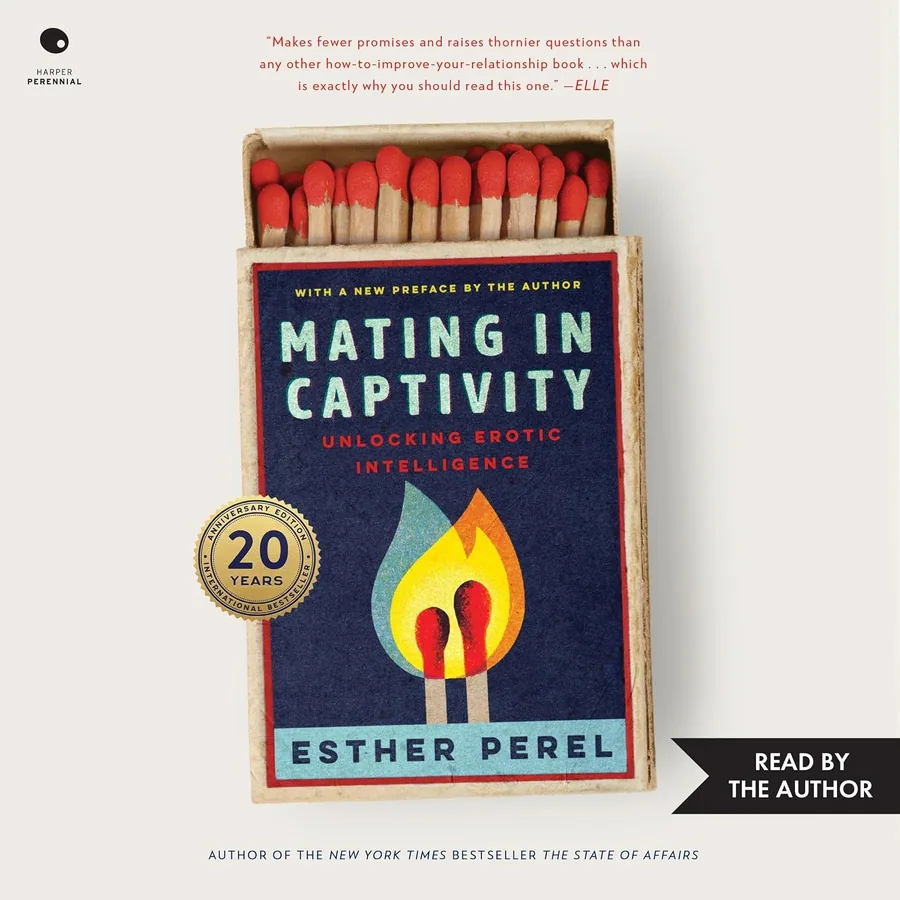
- Yes. Mating in Captivity: Reconciling the Erotic and the Domestic has an Audible audiobook edition, narrated by Esther Perel.Listen free with Audible
We earn from qualifying Amazon purchases.
- How long is the Mating in Captivity: Reconciling the Erotic and the Domestic audiobook?
- The Mating in Captivity: Reconciling the Erotic and the Domestic audiobook runs 8 hr 34 min.
- Is Mating in Captivity: Reconciling the Erotic and the Domestic on Kindle+?
- Yes. Mating in Captivity: Reconciling the Erotic and the Domestic was included with Kindle+ when we last checked on November 23, 2026.
More by Esther PerelSee every Esther Perel book we've reviewed, with our scores.All Esther Perel books →
Common questions
- What is Mating in Captivity: Reconciling the Erotic and the Domestic about?
- The central claim of Mating in Captivity is that love and desire do not run on the same fuel. Security, familiarity, and closeness feed one. Freedom, mystery, and distance feed the other. Esther Perel, a psychotherapist who works with couples, builds her book on that tension, and it explains…
- Is Mating in Captivity: Reconciling the Erotic and the Domestic worth reading?
- We scored Mating in Captivity: Reconciling the Erotic and the Domestic 4.6 out of 5. Mating in Captivity by Esther Perel is a relationship psychology book on why desire fades in long-term couples who still love each other. Perel, a couples therapist, argues that closeness and passion pull in different directions, and she draws on cases from her practice to show…
More like this
Related books

Vibe: The Secrets of Strong Connections in a Lonely World
Adam Grant

Attached: The New Science of Adult Attachment and How It Can Help You Find--and Keep--Love
Amir Levine

Hold Me Tight: Seven Conversations for a Lifetime of Love
Dr. Sue Johnson EdD

Tiny Habits: The Small Changes That Change Everything
BJ Fogg PhD

Range: Why Generalists Triumph in a Specialized World
David Epstein

Outliers: The Story of Success
Malcolm Gladwell

Mindset: The New Psychology of Success
Carol S. Dweck

The Body Keeps the Score: Brain, Mind, and Body in the Healing of Trauma
Bessel van der Kolk M.D.

Lost Connections
Johann Hari

How to Talk So Kids Will Listen & Listen So Kids Will Talk
Adele Faber