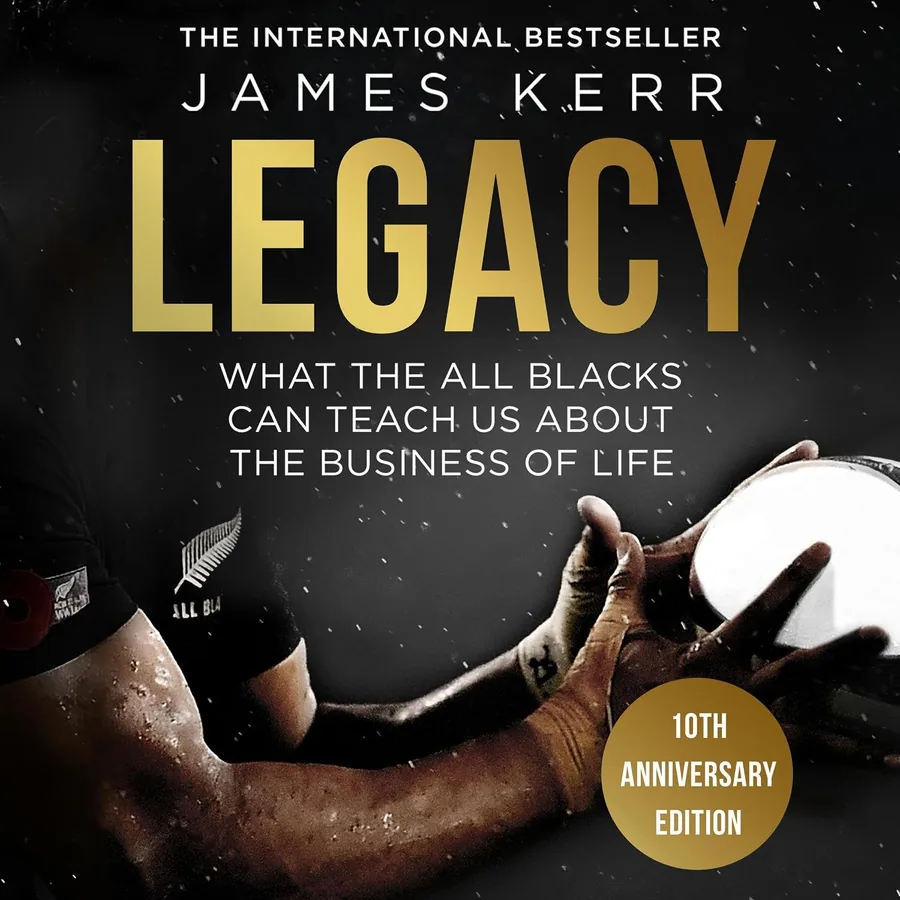
Where to read or listen
- Is there an audiobook of Legacy?
- Yes. Legacy has an Audible audiobook edition, narrated by James Kerr.Listen free with Audible
We earn from qualifying Amazon purchases.
- How long is the Legacy audiobook?
- The Legacy audiobook runs 4 hr 41 min.
- Is Legacy on Kindle+?
- No. Legacy was not included with Kindle+ when we last checked on November 23, 2026.
Common questions
- What is Legacy about?
- The argument of Legacy is simple to state: a team wins for longer when it works on the character of its people before it works on the scoreboard. James Kerr takes the All Blacks of New Zealand as his case study and draws 15 lessons from how they build and keep a culture. The team motto at its…
- Is Legacy worth reading?
- We scored Legacy 4.5 out of 5. Legacy by James Kerr is a leadership book built around the New Zealand All Blacks, organized as 15 lessons about culture, humility, and sustained excellence. A sports book in setting and a business book in purpose, it suits managers and coaches who want ideas more than rugby…
More like this
Related books

Moneyball: The Art of Winning an Unfair Game
Michael Lewis

Expensive Basketball
Shea Serrano

The Reverse Centaur's Guide to Life After AI: How to Think About Artificial Intelligence—Before It's Too Late
Cory Doctorow

Billion Dollar Whale: The Man Who Fooled Wall Street, Hollywood, and the World
Bradley Hope & Tom Wright

The 4-Hour Workweek
Timothy Ferriss

The Simple Path to Wealth: Your Road Map to Financial Independence and a Rich, Free Life
JL Collins

I Will Teach You to Be Rich
Ramit Sethi

The Soul of A New Machine
Tracy Kidder

The Boys in the Boat: Nine Americans and Their Epic Quest for Gold at the 1936 Berlin Olympics
Daniel James Brown

Salt Sugar Fat: How the Food Giants Hooked Us
Michael Moss