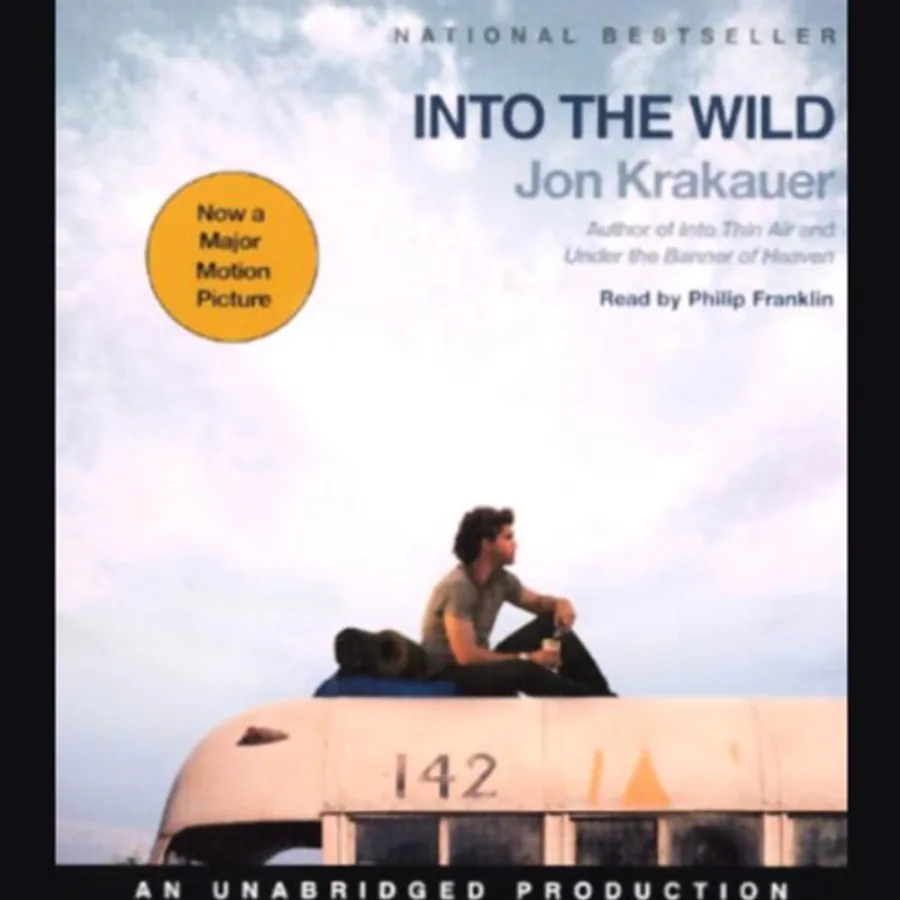
Everyone knows how this one ends, and the book tells you in its opening pages, so the question it keeps asking is why. Why would a young man with a college degree and a family that loved him hand $25,000 to charity, abandon his car, burn his cash and walk off the map into Alaska? Jon Krakauer's answer, built from interviews, postcards, journals and the passages McCandless underlined in the books he carried, is that McCandless was neither a fool nor a man in search of death. He was a seeker who made fatal mistakes.
That is the claim, and the evidence holds up better than it first appears to. After graduating in 1991, McCandless spent a stretch wandering the West and Southwest, hitchhiking and camping and meeting people who liked him enough to try to turn him around. One of them, a woman named Jan, pressed him to contact his parents and take a few supplies, and he declined. Krakauer assembles these encounters carefully, and they do the real work, because they show a charming, intelligent and stubborn young man who could be warm with strangers and impossible with his own family. The tensions with his father, Walt, and the family's own complications supply the other thread. The picture that emerges is of someone chasing a pure life by the lights of Jack London, Thoreau and Tolstoy. One highlighted passage, from Pasternak, is about the need to commit yourself to something absolute once the old rules are gone, and it reads like a note to himself.
What gives the book its edge is that Krakauer doesn't stay neutral. He admits his interest in McCandless borders on obsession, and he sets his own youthful climb up Devil's Thumb beside the story, along with the accounts of other young men who walked into the wild to test themselves. Those digressions are the book's boldest move and its most debated one. They explain why a reckless act can feel like a calling to the person making it, and they let him argue that wanting to look over the edge is not wanting to die. They also make the book as much about Krakauer as about McCandless. A reader who finds that self-regard excessive will find it here.
The other complaint is simpler. Many readers see McCandless as a man who did too little preparation, ignored the people trying to help him and learned too late what the country can do to the unprepared. Krakauer knows this is the popular verdict, since Krakauer first told the story as a magazine article and Alaskans wrote in to call McCandless foolish and underprepared. He doesn't dodge it so much as complicate it, though a skeptical reader may feel he is more generous than the facts require. Krakauer treats the death itself as a mystery to be worked out, not a verdict to be handed down.
Why you should read
- Narrative nonfiction that works like a mystery
- True stories of wilderness and solo adventure
- Character studies of young seekers
- Readers who enjoy a writer arguing with his subject
What to expect
- The ending is told up front
- Author's own climbing story woven through
- Interviews, journals and postcards as evidence
- Debatable sympathy for a controversial subject
What stays is the structure of loss. The ending is never in doubt, yet the final stretch, with his parents at the place where he died, still lands hard. It is a book that argues with itself, and it is better for it.