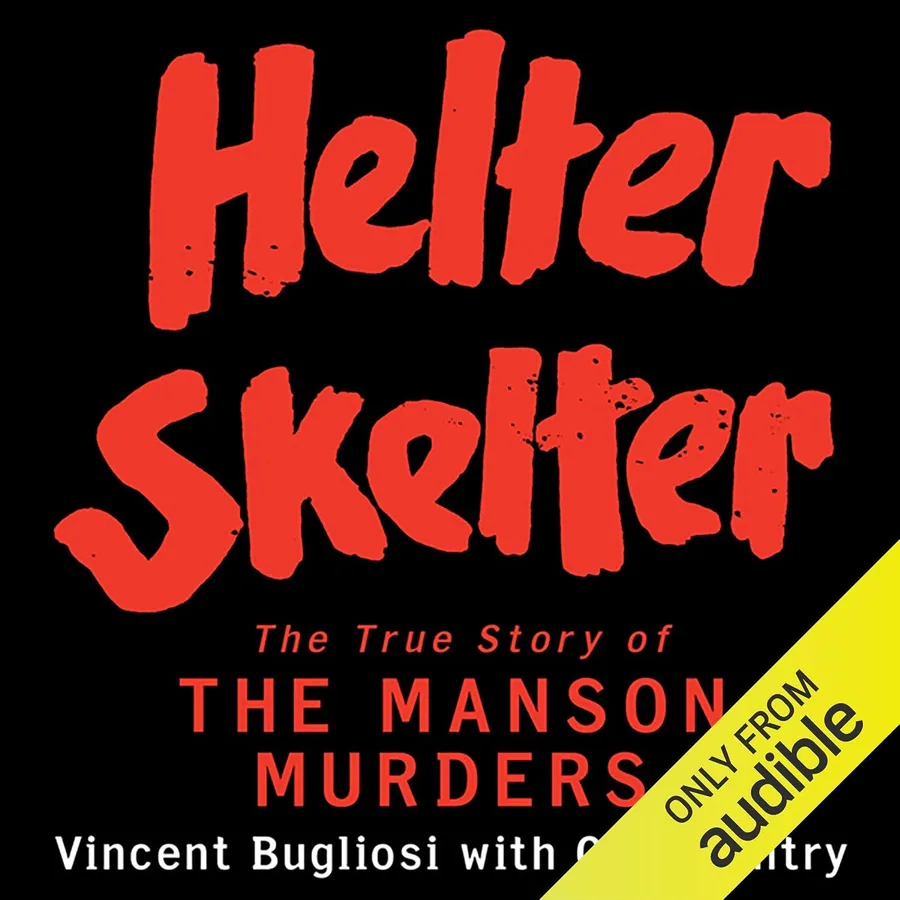
Where to read or listen
- Is there an audiobook of Helter Skelter: The True Story of the Manson Murders?
- Yes. Helter Skelter: The True Story of the Manson Murders has an Audible audiobook edition, narrated by Scott Brick.Listen free with Audible
We earn from qualifying Amazon purchases.
- How long is the Helter Skelter: The True Story of the Manson Murders audiobook?
- The Helter Skelter: The True Story of the Manson Murders audiobook runs 26 hr 29 min.
- Is Helter Skelter: The True Story of the Manson Murders on Kindle+?
- No. Helter Skelter: The True Story of the Manson Murders was not included with Kindle+ when we last checked on November 23, 2026.
Common questions
- What is Helter Skelter: The True Story of the Manson Murders about?
- Vincent Bugliosi had a problem that looked unsolvable. Seven people were dead in Los Angeles in the summer of 1969, the killings seemed random, and the slim chain of circumstances pointing toward Charles Manson had to be turned into a case a jury would believe. Bugliosi was the prosecutor who did…
- Is Helter Skelter: The True Story of the Manson Murders worth reading?
- We scored Helter Skelter: The True Story of the Manson Murders 4.7 out of 5. Helter Skelter: The True Story of the Manson Murders is Vincent Bugliosi's account of the 1969 Tate-LaBianca killings, told by the prosecutor who built the case. A long, exacting true crime classic about Charles Manson, his followers, and a Los Angeles trial.
More like this
Related books

Catch the Devil: A True Story of Murder, Deception, and Injustice on the Gulf Coast
Pamela Colloff

I'll Be Gone in the Dark: One Woman's Obsessive Search for the Golden State Killer
Michelle McNamara

Know My Name
Chanel Miller

The Wager: A Tale of Shipwreck, Mutiny and Murder
David Grann

Mindhunter: Inside the FBI's Elite Serial Crime Unit
John Douglas

In Cold Blood
Truman Capote

The Stranger Beside Me
Ann Rule

Billion Dollar Whale: The Man Who Fooled Wall Street, Hollywood, and the World
Bradley Hope & Tom Wright

Chaos: Charles Manson, the CIA, and the Secret History of the Sixties
Tom O'Neill

Say Nothing: A True Story of Murder and Memory in Northern Ireland
Patrick Radden Keefe