Where to read or listen
- Is there an audiobook of Chaos?
- Yes. Chaos has an Audible audiobook edition, narrated by Kevin Stillwell.Listen free with Audible
We earn from qualifying Amazon purchases.
- How long is the Chaos audiobook?
- The Chaos audiobook runs 16 hr 15 min.
- Is Chaos on Kindle+?
- No. Chaos was not included with Kindle+ when we last checked on November 23, 2026.
Common questions
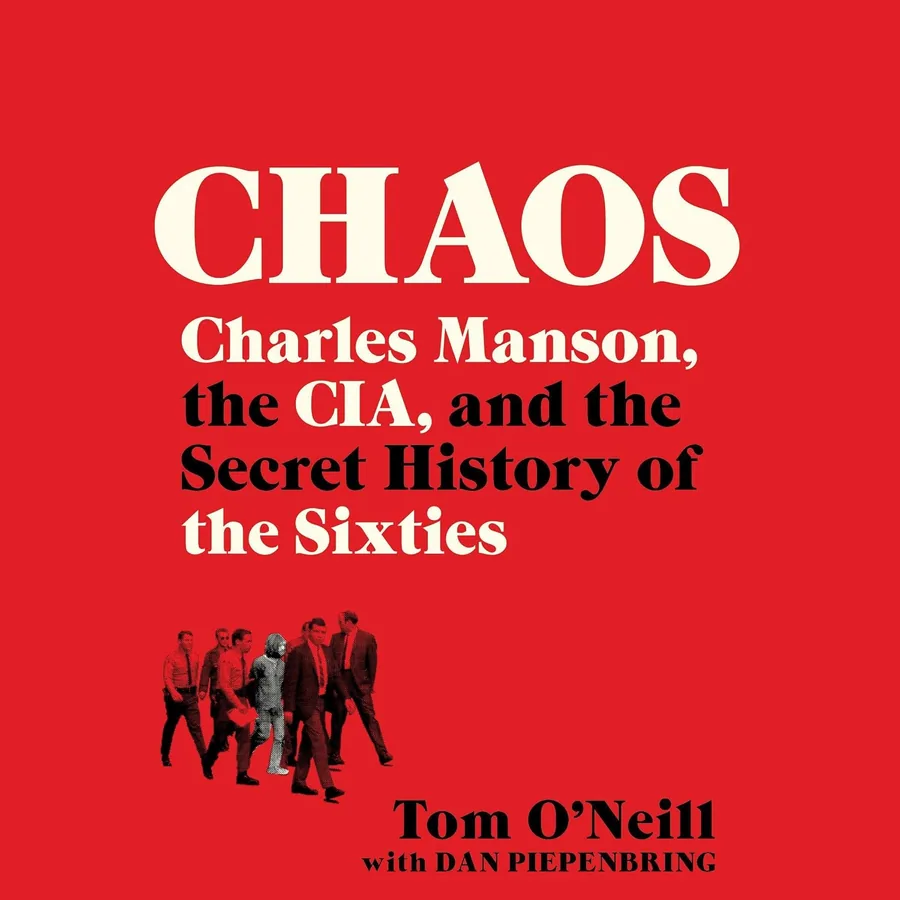
- What is Chaos: Charles Manson, the CIA, and the Secret History of the Sixties about?
- Chaos is about as thorough as a Manson book gets, and also one of the most frustrating. Both things are true at once. Tom O'Neill started with a magazine assignment and a worry that the story had nothing left to give. Two nights in Los Angeles, seven dead, Sharon Tate among them. Everyone knew the…
- Is Chaos: Charles Manson, the CIA, and the Secret History of the Sixties worth reading?
- We scored Chaos: Charles Manson, the CIA, and the Secret History of the Sixties 4.5 out of 5. Chaos by Tom O'Neill is a Manson murders book built on twenty years of reporting, and it challenges the official story with questions about police, prosecutors, and the CIA. A dense, obsessive true crime investigation that does not hand you a tidy answer.
More like this
Related books

The Wager: A Tale of Shipwreck, Mutiny and Murder
David Grann

Killers of the Flower Moon: The Osage Murders and the Birth of the FBI
David Grann

Redwood: The Untold Story of the Cold War's Most Extraordinary Spy
Ben Macintyre

The Gales of November: The Untold Story of the Edmund Fitzgerald
John U. Bacon

Sapiens
Yuval Noah Harari

In Cold Blood
Truman Capote

The Stranger Beside Me
Ann Rule

Billion Dollar Whale: The Man Who Fooled Wall Street, Hollywood, and the World
Bradley Hope & Tom Wright

Kissinger: A Biography
Walter Isaacson

A Short History of Nearly Everything
Bill Bryson