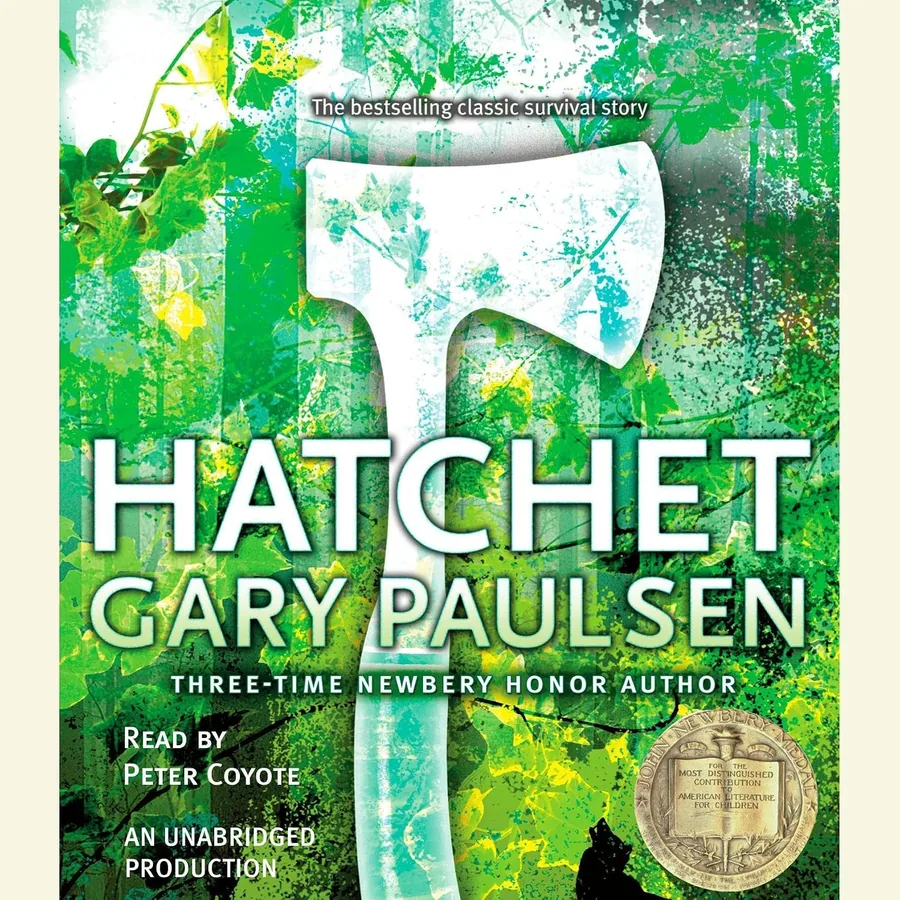
How long can a thirteen-year-old last when every comfort he has ever relied on is gone? Hatchet answers that question one painful, practical day at a time, and I can't think of a better way to feel the stakes of survival than to watch Brian Robeson get things wrong first.
The setup is brutal and quick. Brian is flying north in a small plane to see his father for the first time since the divorce when the pilot has a heart attack. Early in the book, the boy is alone with a radio, calling for help he has no idea how to get, and then the plane goes down in a lake. He walks away from the wreck with a windbreaker, the clothes on his back, and the hatchet his mother gave him as a gift. That is the entire toolkit. There is no map, no rescue party, no clever gadget waiting in a pocket, and the Canadian wilderness doesn't care how old he is.
What makes the book work is that the wilderness has rules, and Brian learns each one by paying for it. A shelter, a fire, food from the water and the brush: none of it comes easily, and his early attempts are clumsy in the way real first attempts are. He starts out scared and sorry for himself, and Paulsen doesn't hurry him past it. The skills are the plot. When a tornado rips through the camp he has painstakingly built, Brian has to find the nerve to start again from scratch, and that moment hits harder than any monster could. The cost of a mistake is always on the page, so every small win carries real relief. Paulsen never pretends survival is easy. Brian blunders, gets discouraged, and has to keep going anyway, and that honesty is what makes the stretches where he gets something right feel so good. You find yourself reading with your shoulders up, hoping the next try holds.
Running underneath is what Brian carries with him: a secret about his mother that he can't stop turning over, and a question about whether to tell his father. In the woods that knot slowly loosens, and he turns into someone more patient and more capable. The survival story and the emotional story mirror each other without the book ever pointing at the connection, and I found the pairing more affecting than I expected from something this short. Some readers first met it around age eleven and say it changed how they saw the world, and the reason is easy to feel: the book trusts a young reader with real fear, real loss, and real hope.
Why you should read
- Wilderness survival stories with real problem-solving
- Middle-grade readers ready for something intense
- Reluctant readers who want fast chapters
- Adults revisiting a childhood favorite
What to expect
- A fast, short survival story with clear prose
- Trial-and-error learning shown in believable detail
- A grounded emotional thread about divorce and family
- A tense early crash followed by a slower, steadier stretch
The prose is clear and direct, the chapters are short, and the pacing never sags, which makes it a natural fit for younger or reluctant readers at 192 pages. It is just as satisfying for adults. Plenty of grown readers come away having picked up a few survival ideas and surprised by how hard it is to put down. The problem-solving is the pleasure: watching a frightened kid figure out, mistake by mistake, that he can handle far more than he thought.