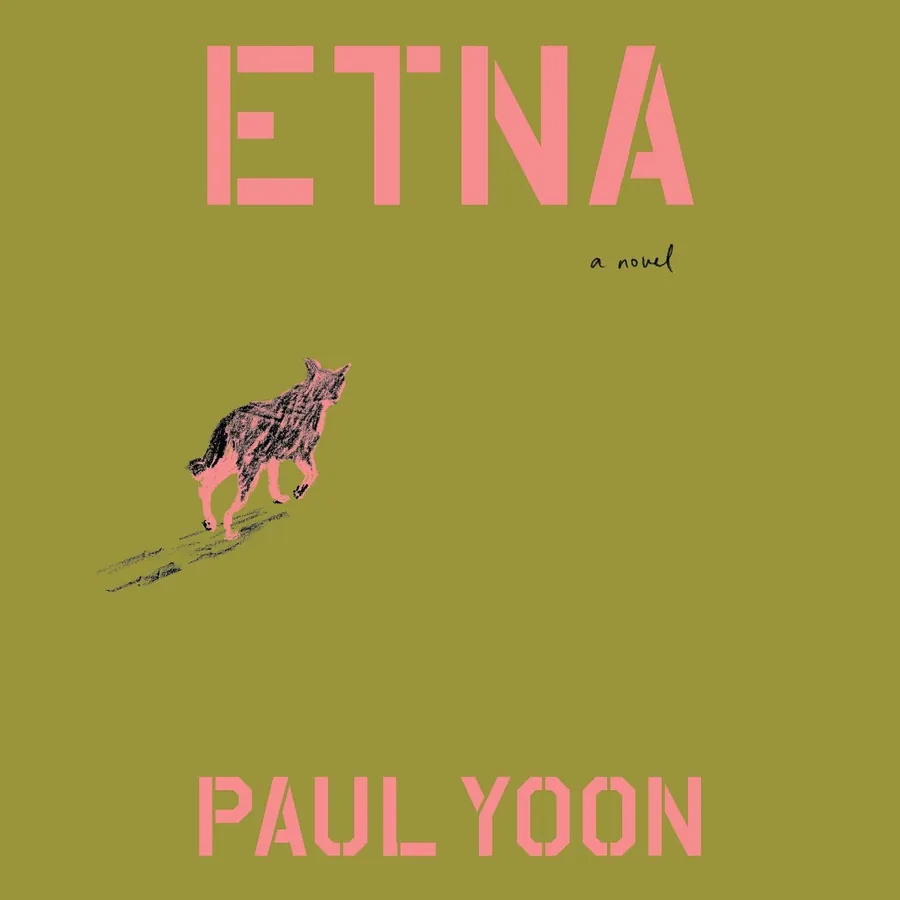
Where to read or listen
- Is there an audiobook of Etna?
- Yes. Etna has an Audible audiobook edition, narrated by Shrader Thomas.Listen free with Audible
We earn from qualifying Amazon purchases.
- How long is the Etna audiobook?
- The Etna audiobook runs 3 hr 12 min.
- Is Etna on Kindle Unlimited?
- No. Etna was not included with Kindle Unlimited when we last checked on October 3, 2026.
- What formats is Etna available in?
- On Amazon, Etna comes as a Kindle ebook and a hardcover.
Common questions
- What is Etna about?
- Etna recalls what has happened to him the way a dog truly would: he worked, traveled, killed, men died, and then there were more men and the work began again. Yoon lets that list run flat intentionally, never raising his voice, and that's the entire point. At first glance it appears simplistic…
- Is Etna worth reading?
- We scored Etna 4.7 out of 5. Paul Yoon's Etna is a war novel narrated by a bomb-sniffing dog making the long walk back to the coastal farm he was taken from as a puppy. It runs barely 200 pages, told in flat, unadorned sentences and lands harder than novels three times its length. Literary fiction about…
Advertisement
More like this
Related books

Whistler
Ann Patchett

The Queen's Gambit
Walter Tevis

The Poet Empress
Shen Tao

The Things We Never Say
Elizabeth Strout

The Correspondent
Virginia Evans

The Hero Next Door: Stories of Patriotism and Purpose
Martha Raddatz

Lessons in Chemistry
Bonnie Garmus

Exit Party
Emily St. John Mandel

Cool Machine
Colson Whitehead

We Burned So Bright
TJ Klune