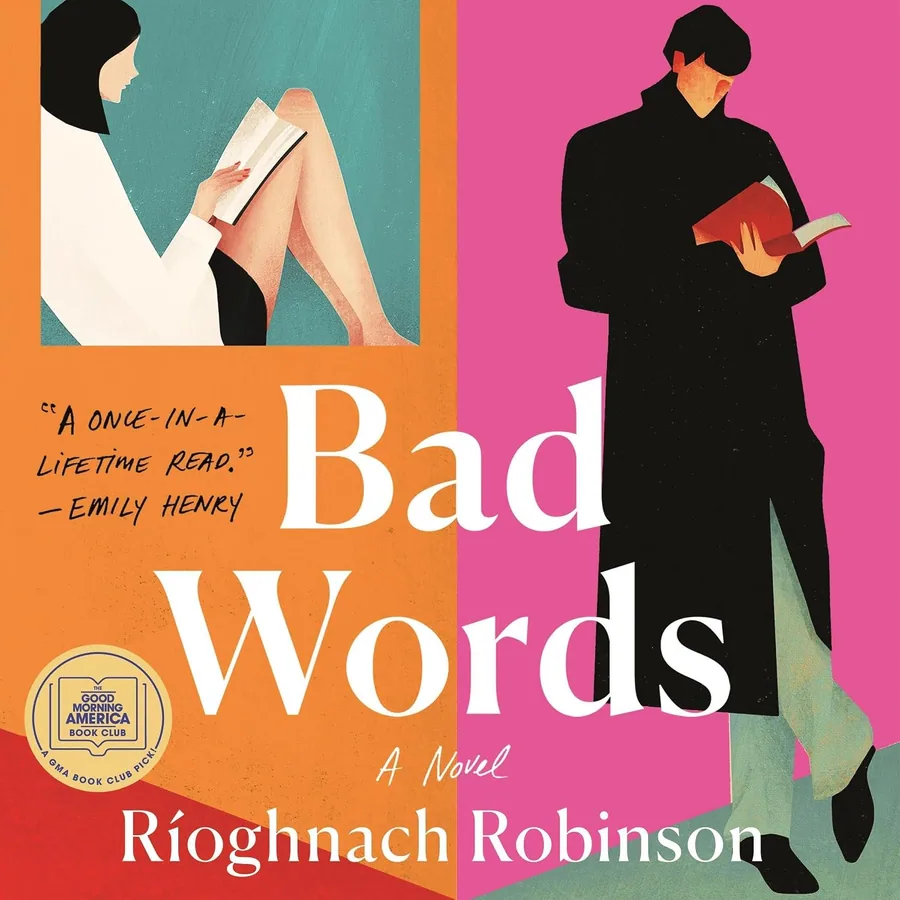
The enemies half of Bad Words is vicious, and the romance only works because the author lets it be.
Parker Navarro's debut novel was supposed to make him. Critic Selina Chan's review flattened it instead. Four years on, his second book gets the same treatment from the same pen, and this time Parker confronts her in public, where someone is filming. The clip goes viral. His publisher and her employer, City Magazine, both discover that a feud sells, so neither side has much reason to cool things down. Robinson builds that machinery with real relish: the tit-for-tat posts, the crowd picking sides, the way two people get cast as a villain and a victim and then start performing the parts.
The thaw happens off camera. Parker and Selina start trading messages, first Venmo notes, then emails, then texts, and the holiday stretch around Christmas and New Year's is where the hostility starts to wear thin. The messages begin as jabs and stay blunt even as they warm up. Each of them says something the other can't wave away. If you like your slow burn to run on conversation and mutual curiosity before anyone so much as touches a hand, this is built for you. Heat is low. There's one open-door scene late in the book, around the 83% mark, and it's easy to skim if that's your preference. A third-act breakup arrives right on schedule, and a bonus chapter follows it.
The leads carry all of this. Selina is guarded and proud of it, estranged from her parents, with a small circle of friends (Jacob, Cassie and Lyra) and a talent for keeping everyone else at arm's length. Parker is the reverse, a people-pleaser so busy being liked that he's buried his own depression, with his roommate Arthur the only person who sees any of it. Because the story moves between their heads, you watch each one misread the other and misread themselves. Their families get real page time too, and Parker's holiday tug-of-war between home and his own space in New York makes him easier to love. The best stretch is Parker finally saying what he actually thinks, to her, of all people.
Now the fair complaints. The first stretch is slow, spent documenting what a bad review does to a career and how the fallout spreads, and it leans on a lot of literary names that some readers won't recognize. A good chunk of the story runs through emails, texts and posts, which gives it texture but keeps the pace deliberate. It's also not a sunny read. A few readers stall because they can't believe these two get past what they did to each other, and I understand the doubt. For me the book answers it by making the damage specific before it asks anyone to forgive.
Why you should read
- Slow-burn enemies to lovers built on conversation
- Romance with a book-world and publishing setting
- Banter that starts out sharp and stays honest
- Readers who like dual perspective and flawed leads
- Low-heat romance with one late open-door scene
What to expect
- A slow first third before the pace lifts
- Story told partly through emails, texts and posts
- Heavy on literary references and big ideas
- A third-act breakup and a bonus chapter
- Depression and loneliness shape both leads
Underneath the romance sits a sharp look at publishing, online pile-ons and what it costs to put work in front of strangers, and the argument is fair to both the writer who bleeds into the page and the critic who has to say it didn't work. The title keeps changing meaning as you go. By the end, the cruelest things these two said about each other are the least interesting things they said.