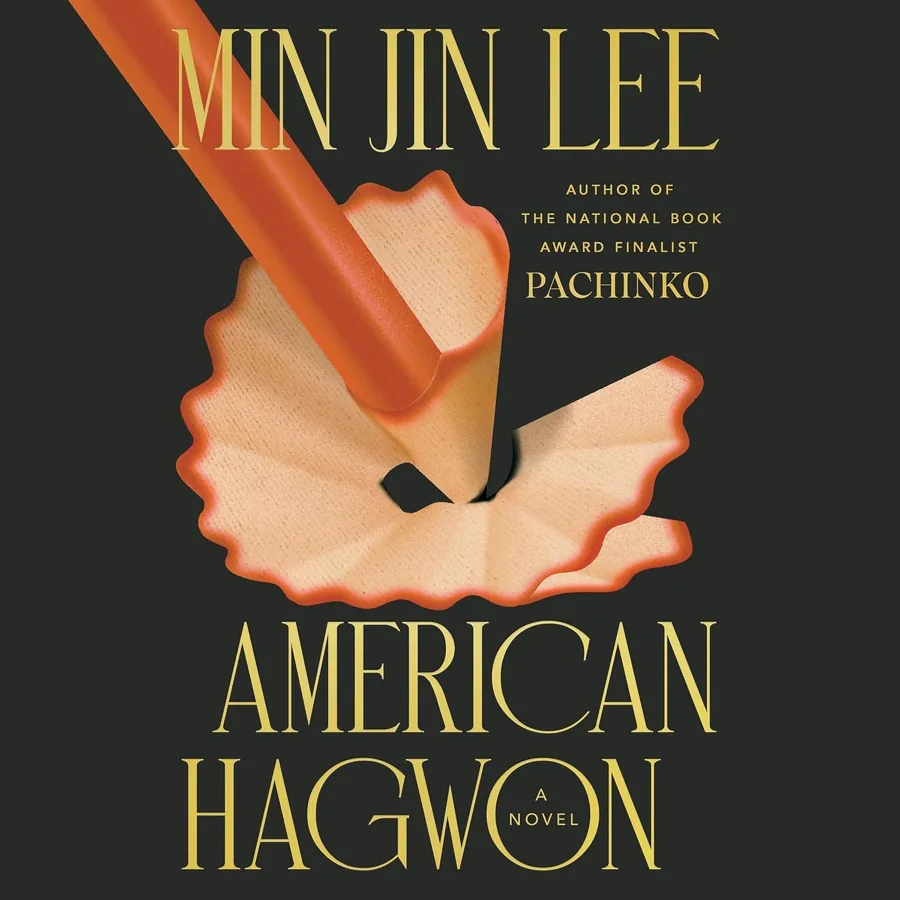
John Koh has one job left, and it is to get his family back to where they were. The Kohs were comfortably middle class in Seoul until John's oldest friend betrayed him, and then the 1997 Asian financial crisis finished what the betrayal started. John and his wife, Helen, take their three children, Bo, DH, and Mido, first to Sydney and eventually to Southern California, where everything the parents know and every credential they hold suddenly counts for very little.
That is the engine of American Hagwon, and Min Jin Lee, the author of Pachinko, drives it for 644 pages. This is a contemporary immigrant novel in the old panoramic style, moving through the workplaces, congregations, and homes where a family in free fall tries to find its feet. Friends, relatives, and enemies drift in and out of the Kohs' orbit across the years, and Lee gives each of them room to matter. The prose is plain and direct, with none of the ornament you might expect from a book this size, and it moves at a steady clip. The pull is closer to a very good family drama than to a history lecture.
What the book does to you, if it works, is make you feel the weight of one belief. The Kohs, and the Korean-American church community and scattered relatives who prop them up, are certain that education will carry the next generation to safety, and the novel follows what that certainty costs everyone who holds it. The pressure of getting children into top colleges is shown from the parents' side and the children's side alike. Small gestures set off large consequences. Sacrifice here is routine, almost domestic, and I found it hard to watch Helen and John give up so much without wanting to hand them something back.
The devotion is also where the book is most open to argument. The characters can seem too good for their own sake, so hardworking and self-denying that they stop feeling like people with wants and flaws, and the long stretches of daily detail can repeat themselves enough to drag. Some scenes of Korean school life may strike a reader who knows that world as pitched too high, and in places the book leans toward a history lesson. These are fair notes. They land hardest in the middle of a very long book, and they are why it may not become everyone's favorite Lee. Anyone arriving with Pachinko as the yardstick should know this is a different animal: a new cast, a modern setting, and a family story in place of a generational epic. It stands alone completely.
Why you should read
- Pachinko readers who want another family saga
- Immigrant stories about ambition and sacrifice
- Long, character-rich literary fiction
- Korean and Korean American family drama
What to expect
- A long, panoramic read at 644 pages
- Plain, direct prose that moves briskly
- Settings running from Seoul and Sydney to Southern California
- Characters who can read as saintly to some
And still the length pays off. The strength sits in the long view, in watching one family's lives unfold over years until you care about them more than you planned to, and in the way minor choices keep coming due decades later. The question underneath it all is simple and not at all easy: what should a parent give up for a child's future, and how much of the self can be spent before nothing is left to inherit it?