Social Commentary Books
Explore our curated collection of social commentary books—top picks, hidden gems, and recent favorites.
Filters
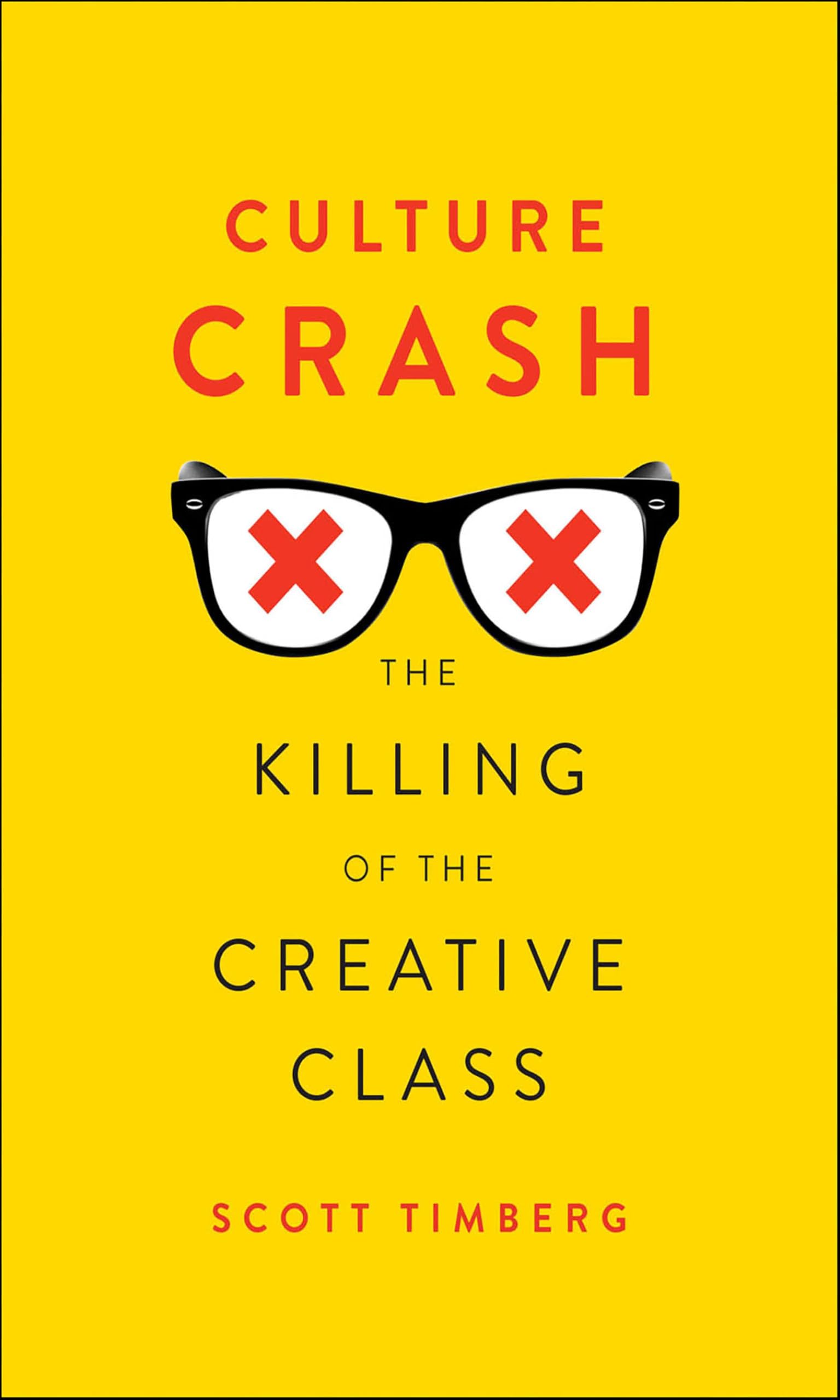
Culture Crash: The Killing of the Creative Class
by Scott Timberg
I picked up this book expecting a straightforward economic argument, but what Timberg delivers is something more human and unsettling. He traces how the last couple of decades have systematically eroded the ability of working artists to sustain themselves—not through one catastrophic event, but through a cascade of overlapping pressures. The collapse of record stores, the hollowing out of local newspapers, the normalization of free digital content, the shift in how people consume music and design and architecture—it all adds up to something that feels less like creative disruption and more like a slow suffocation of an entire ecosystem.
What makes this book resonate is that Timberg doesn't just catalog the problems in the abstract. He grounds his argument in real stories and real consequences, exploring not just the economics but the psychological weight of watching your profession become unsustainable. There's genuine empathy here for people trying to keep making art while the ground shifts beneath them. The book also does something valuable by naming the contradictions we all participate in—we love artists and creators, yet we've collectively decided their work should be free or nearly free. That tension runs through everything.
That said, the book works best for readers who already care about this question or work in creative fields themselves. If you're looking for solutions or a hopeful roadmap forward, you might find yourself wanting more. Timberg is better at diagnosis than prescription, which is honest but can feel incomplete. Still, if you're interested in understanding the cultural and economic forces reshaping how we create and support creativity, this is a thoughtful, grounded place to start. It's the kind of book that stays with you, especially if you know someone trying to make a living doing something they love.
Culture Crash: The Killing of the Creative Class
by Scott Timberg
I picked up this book expecting a straightforward economic argument, but what Timberg delivers is something more human and unsettling. He traces how the last couple of decades have systematically eroded the ability of working artists to sustain themselves—not through one catastrophic event, but through a cascade of overlapping pressures. The collapse of record stores, the hollowing out of local newspapers, the normalization of free digital content, the shift in how people consume music and design and architecture—it all adds up to something that feels less like creative disruption and more like a slow suffocation of an entire ecosystem.
What makes this book resonate is that Timberg doesn't just catalog the problems in the abstract. He grounds his argument in real stories and real consequences, exploring not just the economics but the psychological weight of watching your profession become unsustainable. There's genuine empathy here for people trying to keep making art while the ground shifts beneath them. The book also does something valuable by naming the contradictions we all participate in—we love artists and creators, yet we've collectively decided their work should be free or nearly free. That tension runs through everything.
That said, the book works best for readers who already care about this question or work in creative fields themselves. If you're looking for solutions or a hopeful roadmap forward, you might find yourself wanting more. Timberg is better at diagnosis than prescription, which is honest but can feel incomplete. Still, if you're interested in understanding the cultural and economic forces reshaping how we create and support creativity, this is a thoughtful, grounded place to start. It's the kind of book that stays with you, especially if you know someone trying to make a living doing something they love.

Half His Age: A Novel
by Jennette McCurdy
I finished Half His Age in two sittings, which tells you something about how hard it is to look away from Waldo's story. McCurdy has written a protagonist who is messy and contradictory in ways that feel genuinely alive—she's self-aware enough to question her own motivations, yet still driven by desire and longing in ways she can't fully understand or control. The novel doesn't shy away from the uncomfortable aspects of her obsession with her teacher; instead, it sits with that discomfort and asks you to hold multiple truths at once about desire, power, and what it means to want something you shouldn't.
What struck me most was how the book balances its darker psychological elements with sharp social observation. McCurdy weaves in commentary on consumerism, class anxiety, and the particular loneliness of being young and connected to everyone and no one simultaneously. The pacing is genuinely thrilling—there's a momentum to Waldo's choices that keeps you reading even when you're cringing or frustrated with her. The writing has a confessional intimacy that makes you feel like you're inside her head, which is sometimes exhilarating and sometimes unsettling, exactly as intended.
I'll be honest: this book isn't for everyone. If you're looking for a protagonist to root for unambiguously, or if you prefer narratives that neatly resolve moral questions, you might find this challenging. The story doesn't judge Waldo so much as illuminate her, which requires a reader willing to sit with complexity and discomfort. But if you're drawn to character-driven fiction that examines desire and self-destruction with intelligence and dark humor, this is absolutely worth your time. It's the kind of book that stays with you and makes you think differently about the stories we tell about young women and what they want.
Half His Age: A Novel
by Jennette McCurdy
I finished Half His Age in two sittings, which tells you something about how hard it is to look away from Waldo's story. McCurdy has written a protagonist who is messy and contradictory in ways that feel genuinely alive—she's self-aware enough to question her own motivations, yet still driven by desire and longing in ways she can't fully understand or control. The novel doesn't shy away from the uncomfortable aspects of her obsession with her teacher; instead, it sits with that discomfort and asks you to hold multiple truths at once about desire, power, and what it means to want something you shouldn't.
What struck me most was how the book balances its darker psychological elements with sharp social observation. McCurdy weaves in commentary on consumerism, class anxiety, and the particular loneliness of being young and connected to everyone and no one simultaneously. The pacing is genuinely thrilling—there's a momentum to Waldo's choices that keeps you reading even when you're cringing or frustrated with her. The writing has a confessional intimacy that makes you feel like you're inside her head, which is sometimes exhilarating and sometimes unsettling, exactly as intended.
I'll be honest: this book isn't for everyone. If you're looking for a protagonist to root for unambiguously, or if you prefer narratives that neatly resolve moral questions, you might find this challenging. The story doesn't judge Waldo so much as illuminate her, which requires a reader willing to sit with complexity and discomfort. But if you're drawn to character-driven fiction that examines desire and self-destruction with intelligence and dark humor, this is absolutely worth your time. It's the kind of book that stays with you and makes you think differently about the stories we tell about young women and what they want.
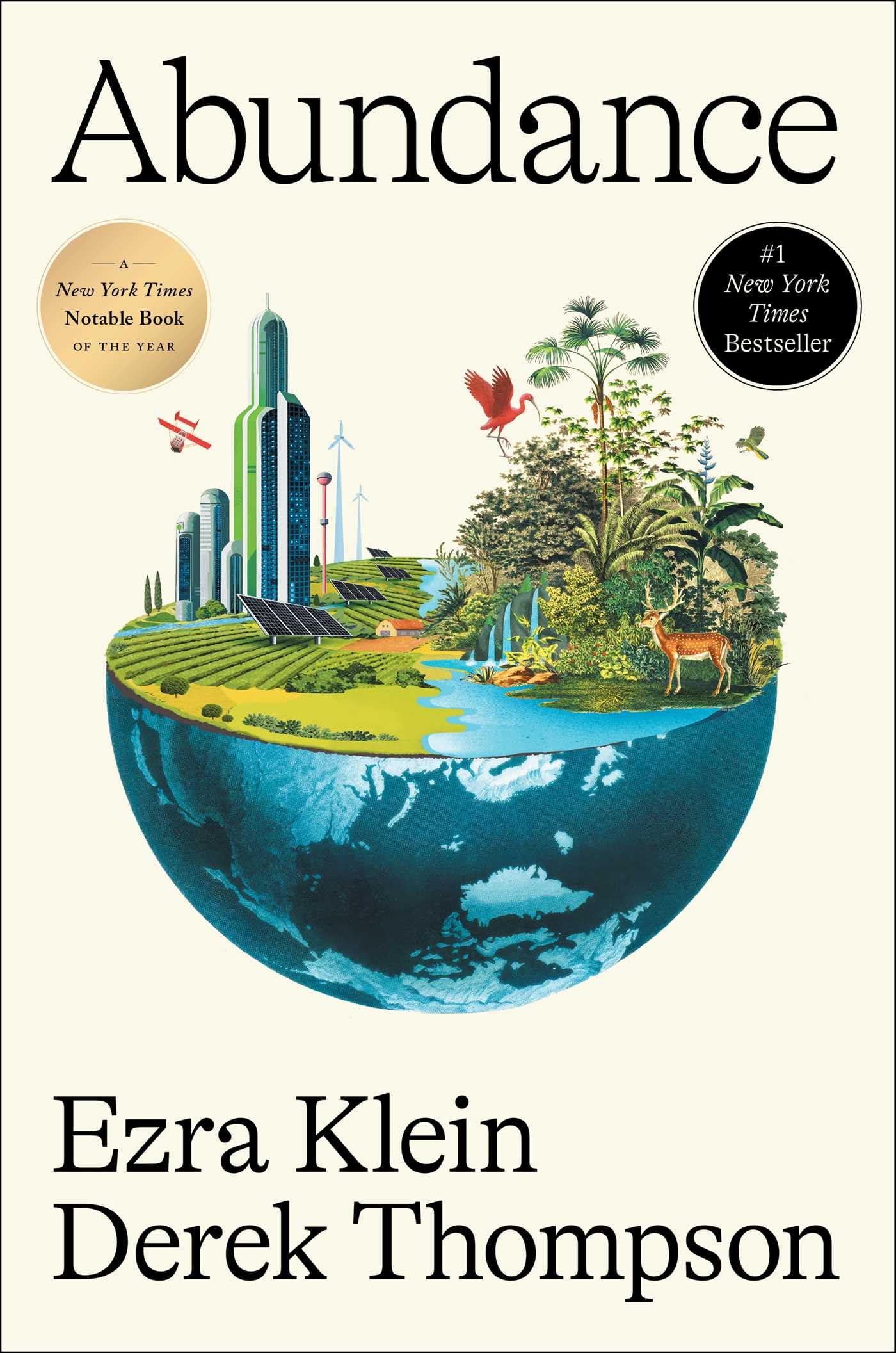
Abundance
by Ezra Klein and Derek Thompson
Ezra Klein and Derek Thompson's "Abundance" offers a penetrating examination of contemporary societal gridlock, challenging readers to reconsider how institutional frameworks impede progress. The authors deftly navigate complex policy landscapes, revealing how well-intentioned regulations from previous decades have calcified into obstacles for innovation and problem-solving. Their analysis moves beyond simplistic blame narratives, instead presenting a nuanced understanding of how systemic inertia constrains our collective capacity to address pressing challenges.
The book's intellectual rigor is matched by its accessible prose, which transforms potentially dry policy discussions into engaging narrative. Klein and Thompson demonstrate a remarkable ability to connect macro-level structural issues with tangible human experiences, making abstract concepts comprehensible without sacrificing analytical depth. Their writing synthesizes economic theory, political analysis, and cultural critique into a cohesive argument about the fundamental mechanisms preventing meaningful societal transformation.
Scholars, policy makers, urban planners, and engaged citizens interested in systemic change will find this work particularly compelling. The text speaks directly to those frustrated by seemingly intractable problems in housing, energy infrastructure, immigration, and healthcare, offering not just critique but constructive pathways toward reimagining institutional design. By emphasizing a mindset of possibility over limitation, the authors provide a refreshing alternative to the pervasive narratives of decline and impossibility that often dominate contemporary discourse.
While the book's prescriptions might challenge established ideological positions, its intellectual honesty and rigorous research make it a crucial contribution to contemporary social thought. Klein and Thompson have crafted a work that is simultaneously diagnostic and aspirational, mapping the contours of our current systemic challenges while illuminating potential strategies for meaningful progress. "Abundance" represents an important intervention in ongoing conversations about institutional adaptation and societal renewal.
Abundance
by Ezra Klein and Derek Thompson
Ezra Klein and Derek Thompson's "Abundance" offers a penetrating examination of contemporary societal gridlock, challenging readers to reconsider how institutional frameworks impede progress. The authors deftly navigate complex policy landscapes, revealing how well-intentioned regulations from previous decades have calcified into obstacles for innovation and problem-solving. Their analysis moves beyond simplistic blame narratives, instead presenting a nuanced understanding of how systemic inertia constrains our collective capacity to address pressing challenges.
The book's intellectual rigor is matched by its accessible prose, which transforms potentially dry policy discussions into engaging narrative. Klein and Thompson demonstrate a remarkable ability to connect macro-level structural issues with tangible human experiences, making abstract concepts comprehensible without sacrificing analytical depth. Their writing synthesizes economic theory, political analysis, and cultural critique into a cohesive argument about the fundamental mechanisms preventing meaningful societal transformation.
Scholars, policy makers, urban planners, and engaged citizens interested in systemic change will find this work particularly compelling. The text speaks directly to those frustrated by seemingly intractable problems in housing, energy infrastructure, immigration, and healthcare, offering not just critique but constructive pathways toward reimagining institutional design. By emphasizing a mindset of possibility over limitation, the authors provide a refreshing alternative to the pervasive narratives of decline and impossibility that often dominate contemporary discourse.
While the book's prescriptions might challenge established ideological positions, its intellectual honesty and rigorous research make it a crucial contribution to contemporary social thought. Klein and Thompson have crafted a work that is simultaneously diagnostic and aspirational, mapping the contours of our current systemic challenges while illuminating potential strategies for meaningful progress. "Abundance" represents an important intervention in ongoing conversations about institutional adaptation and societal renewal.
Couldn't find a book you wanted?
Check out what's trending across all genres!
See What's Trending NowAs an Amazon Associate we earn from qualifying purchases.