Our score:
4.0 / 5
As an Amazon Associate we earn from qualifying purchases.
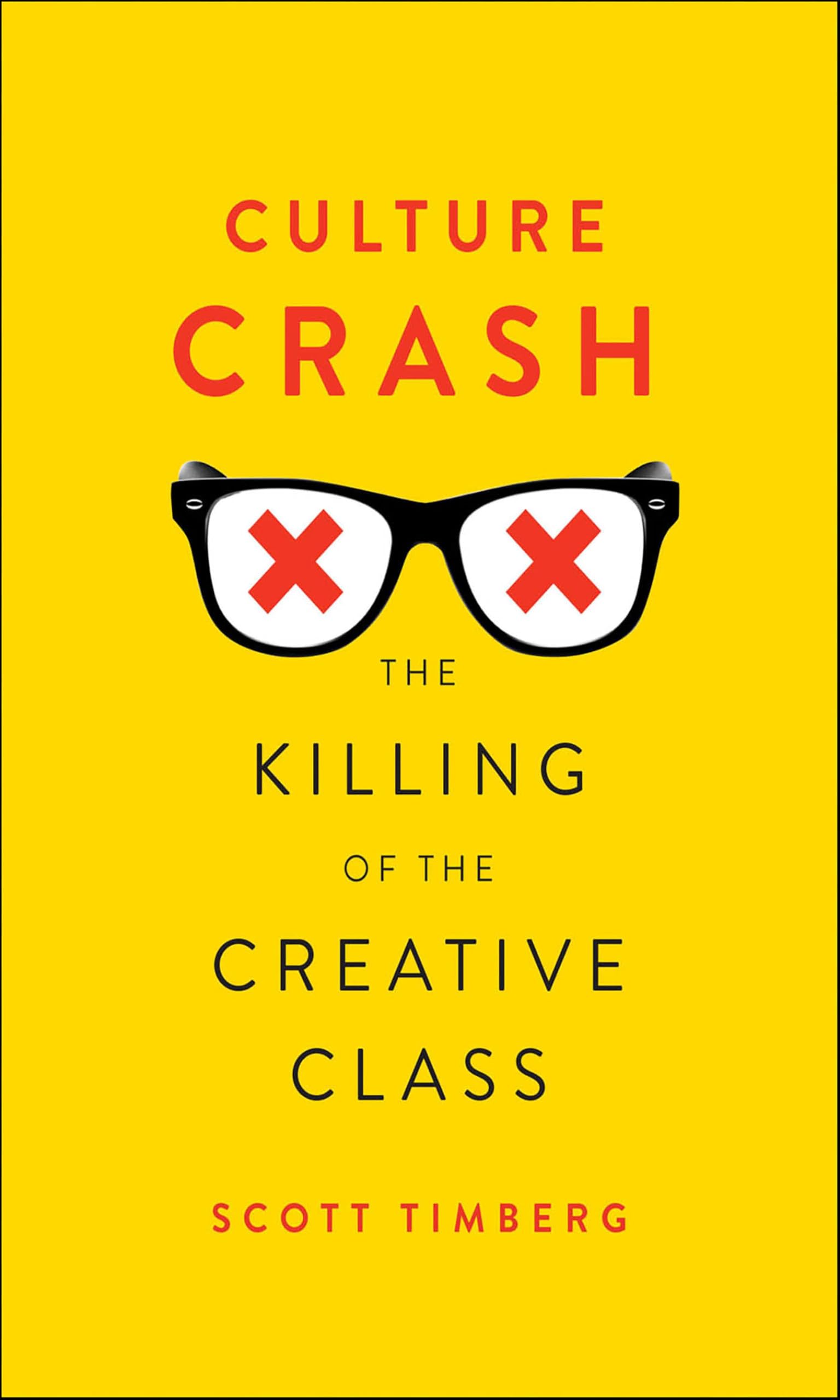
Culture Crash: The Killing of the Creative Class
Scott Timberg
Our Review
I picked up this book expecting a straightforward economic argument, but what Timberg delivers is something more human and unsettling. He traces how the last couple of decades have systematically eroded the ability of working artists to sustain themselves—not through one catastrophic event, but through a cascade of overlapping pressures. The collapse of record stores, the hollowing out of local newspapers, the normalization of free digital content, the shift in how people consume music and design and architecture—it all adds up to something that feels less like creative disruption and more like a slow suffocation of an entire ecosystem.
What makes this book resonate is that Timberg doesn't just catalog the problems in the abstract. He grounds his argument in real stories and real consequences, exploring not just the economics but the psychological weight of watching your profession become unsustainable. There's genuine empathy here for people trying to keep making art while the ground shifts beneath them. The book also does something valuable by naming the contradictions we all participate in—we love artists and creators, yet we've collectively decided their work should be free or nearly free. That tension runs through everything.
Why you should read
- Reveals how structural shifts, not just technology, have destabilized creative careers.
- Moves beyond tech-utopian narratives to examine real human costs of cultural change.
- Connects seemingly separate industry collapses into a coherent, troubling pattern.
- Grounded in interviews and on-the-ground reporting, not abstract theory alone.
What to expect
- Investigative tone that balances data with personal narrative and anecdote.
- Measured pacing that builds a cumulative case rather than rushing to conclusions.
- Accessible writing on complex economic and cultural shifts; no specialized knowledge required.
- Sobering mood—expect discomfort alongside clarity about systemic problems.
That said, the book works best for readers who already care about this question or work in creative fields themselves. If you're looking for solutions or a hopeful roadmap forward, you might find yourself wanting more. Timberg is better at diagnosis than prescription, which is honest but can feel incomplete. Still, if you're interested in understanding the cultural and economic forces reshaping how we create and support creativity, this is a thoughtful, grounded place to start. It's the kind of book that stays with you, especially if you know someone trying to make a living doing something they love.
In a nutshell
Timberg moves beyond simple economic critique to expose how creative professionals have been systematically squeezed out of viability over recent decades. Rather than pointing to a single rupture, he maps the interconnected collapse of institutions—record retail, local journalism, traditional media—that once sustained artists. The result reads less like disruption and more like the slow erosion of an entire creative ecosystem, grounded in the lived experiences of those struggling within it.
Best for
Readers concerned with cultural economics, creative professionals navigating industry change, and anyone questioning what we lose when artistic work becomes unsustainable.
Content notes
- Heavy themes around economic precarity and professional decline.
- Focuses on systemic problems rather than offering prescriptive solutions.
If you liked this, try
- The Death and Life of Great American Cities — Jane Jacobs
- Bowling Alone: The Collapse and Revival of American Community — Robert Putnam
- The Sum of Small Things: A Theory of the Aspirational Class — Elizabeth Currid-Halkett
- Strangers in Their Own Land: Anger and Mourning in American Politics — Arlie Russell Hochschild
Reviewed by Book of the Day Editorial Team • Updated 1/29/2026
Related books
More picks that share genres with this book.