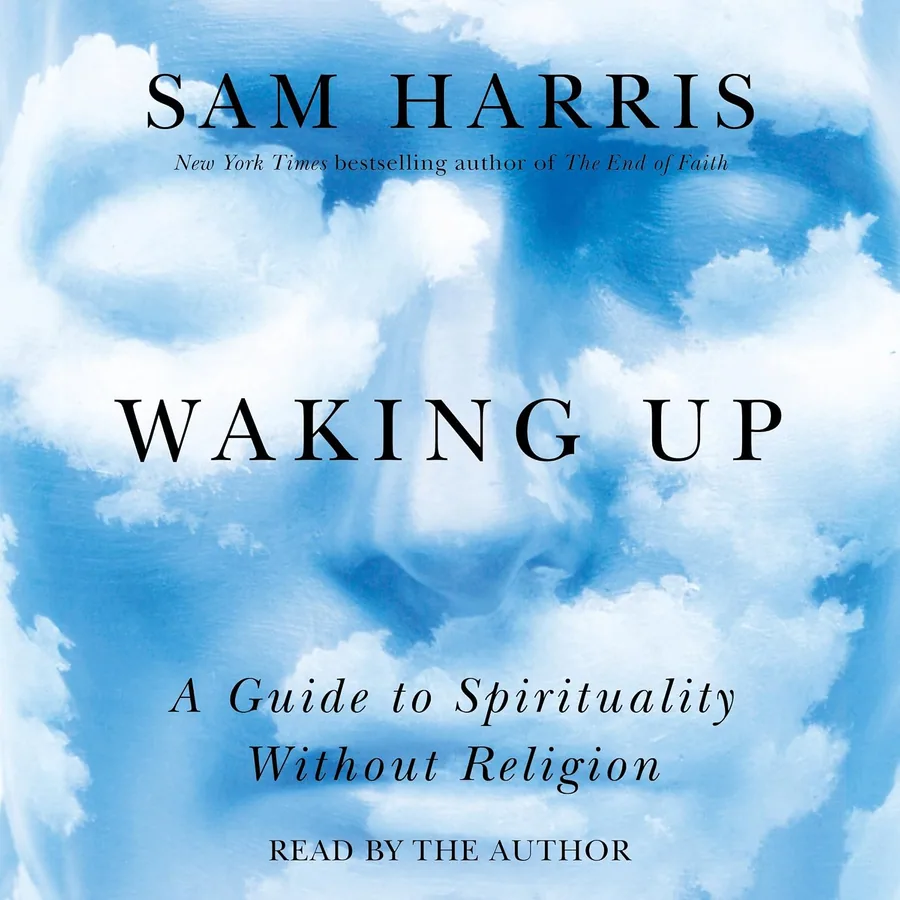
Where to read or listen
- Is there an audiobook of Waking Up: A Guide to Spirituality Without Religion?
- Yes. Waking Up: A Guide to Spirituality Without Religion has an Audible audiobook edition, narrated by Sam Harris.Listen free with Audible
We earn from qualifying Amazon purchases.
- How long is the Waking Up: A Guide to Spirituality Without Religion audiobook?
- The Waking Up: A Guide to Spirituality Without Religion audiobook runs 5 hr 53 min.
- Is Waking Up: A Guide to Spirituality Without Religion on Kindle+?
- No. Waking Up: A Guide to Spirituality Without Religion was not included with Kindle+ when we last checked on November 23, 2026.
Common questions
- What is Waking Up: A Guide to Spirituality Without Religion about?
- Sam Harris wants something that sounds like a contradiction: the inner life that mystics describe, with none of the supernatural baggage. Standing in his way is his own reputation. He is a famous skeptic and a neuroscientist, and a large audience knows him for taking religion apart. Waking Up is…
- Is Waking Up: A Guide to Spirituality Without Religion worth reading?
- We scored Waking Up: A Guide to Spirituality Without Religion 4.5 out of 5. Waking Up by Sam Harris is a spirituality book for people who reject religion but suspect contemplation has something real to offer. Part memoir, part neuroscience, it argues that your sense of self is an illusion, one that meditation lets you see through.
More like this
Related books

Man's Search for Meaning
Viktor E. Frankl

Meditations
Marcus Aurelius

Underland: A Deep Time Journey
Robert Macfarlane

Mere Christianity
C. S. Lewis

The Power of Now: A Guide to Spiritual Enlightenment
Eckhart Tolle

The Untethered Soul: The Journey Beyond Yourself
Michael A. Singer

When Things Fall Apart: Heart Advice for Difficult Times
Pema Chodron

Confessions
Saint Augustine

Everything Is F*cked: A Book About Hope
Mark Manson

A World Appears: A Journey into Consciousness
Michael Pollan