Where to read or listen
- Is there an audiobook of The Outsiders?
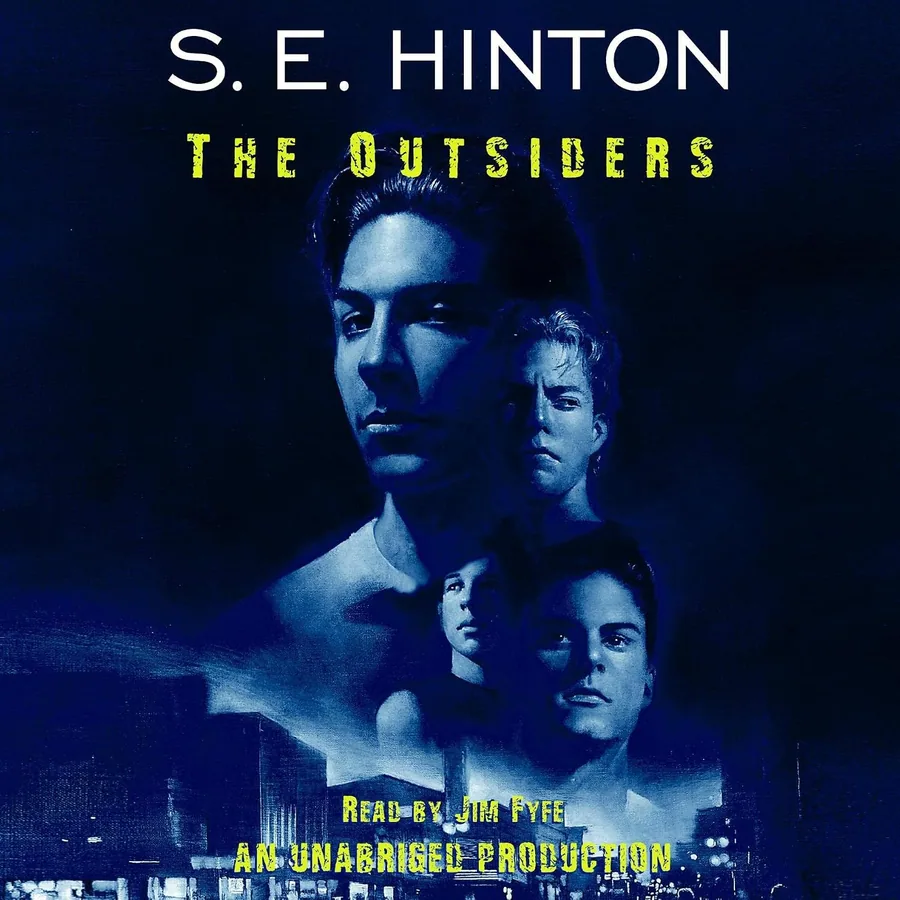
- Yes. The Outsiders has an Audible audiobook edition, narrated by Jim Fyfe.Listen free with Audible
We earn from qualifying Amazon purchases.
- How long is the The Outsiders audiobook?
- The The Outsiders audiobook runs 5 hr 9 min.
Common questions
- What is The Outsiders about?
- What do you do when the enemy you were raised to hate turns out to be hurting in the same places you are? The Outsiders hangs its whole story on that question, and it asks it through Ponyboy Curtis, a fourteen-year-old greaser whose narration is so plain and open that you forget you're being told…
- Is The Outsiders worth reading?
- We scored The Outsiders 4.9 out of 5. S. E. Hinton's The Outsiders is a short, hard-hitting coming-of-age novel about Ponyboy Curtis, a fourteen-year-old greaser, his two brothers, and a feud with the rich Socs that goes too far. It's a story about chosen family and class lines, and it still lands with teenagers…
More like this
Related books

Harry Potter and the Sorcerer's Stone
J.K. Rowling

The Queen's Gambit
Walter Tevis

The Giver (Giver Quartet, Book 1)
Lois Lowry

Wonder
R. J. Palacio

Firekeeper's Daughter
Angeline Boulley

The Hunger Games
Suzanne Collins

Where the Crawdads Sing
Delia Owens

To Kill a Mockingbird
Harper Lee

Cutting for Stone
Abraham Verghese

Born a Crime
Trevor Noah