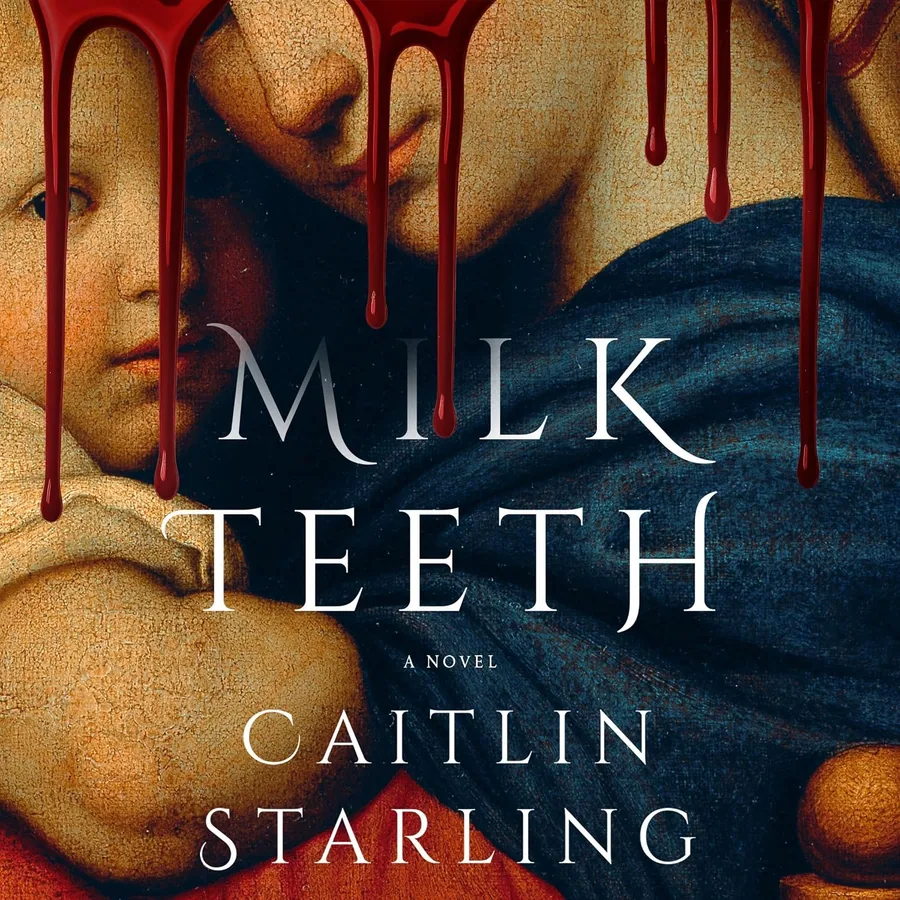
Milkteeth is the strangest vampire novel in a while, and it knows exactly why.
Caitlin Starling's setup is built on a job nobody sings about. Beatrice is a broodmother, the vampire who doesn't make new vampires but raises them. Fledglings can't survive on human blood yet, so for their first years they feed on her. She does this in an abandoned warren of offices under her patron's skyscraper, with two difficult fledglings already underfoot. Gorgeous, once a beauty and now a ruin who wants his maker back, has the swagger of a teenager who is certain he's grown. Fortunata is quieter and has plans of her own. Then Luisa arrives as a third, already marked by having eaten human flesh, and the arithmetic of one body feeding three mouths stops working.
The horror comes from that arithmetic. Beatrice hunts, feeds, cleans up, soothes crises and starts over, and the book keeps its eye on the physical cost of every round. Her hunger gets out of hand. Her anatomy begins to shift into something she can't explain, so she does the one unwise thing available: she seeks out a mortal OBGYN. Early on she sits in a lactation support group among human mothers, trying to borrow their advice for her three nurslings, a darkly funny image that also sets the book's terms. This is a domestic story first and a monster story second, and the monsters are the ones doing the dishes.
The prose is clinical where you'd expect lush. Starling narrates through Beatrice in first person, and Beatrice keeps turning to speak to "you," as though confessing to someone. Guessing who that listener is becomes its own low hum of suspicion, a second mystery running under the blood. The clinical register is what makes the body horror land: the changes to Beatrice read like a medical report from someone working hard not to panic, and that restraint is more upsetting than splatter would be. Readers who dislike gore should take the warnings seriously. The surgery and anatomy here are described in detail and at length.
The lore is the other draw. Fledglings are sequestered, forget who they were, and depend on a broodmother's body until they can handle human blood, which in this world can do permanent damage if taken too early. Broodmothers are needed by their coven and looked down on by it at the same time. Beatrice serves a matriarch named Manon and lives out of sight. That social order is the book's real argument: bodies valued for what they supply long before anyone asks who lives in them, with love so tangled up in need that it's hard to say where care ends and consumption begins. Starling doesn't settle the question, and the book is better for it. The motherhood allegory is not subtle, and it isn't trying to be.
There are fair complaints. A lot of pages go to the mechanics of feeding, the positions, the hunger and the toll on Beatrice, and that stretch can feel like a slog in a slow-burning middle. The vampire biology stays deliberately murky, since Beatrice doesn't understand her own body either, which is thematically right but leaves some questions feeling dodged. And the OBGYN thread, the part most promising on paper, wraps up more neatly than the rest of the book would predict. These are real dents, though small ones against the whole.
The stakes tighten as the secret thread pulls. A human doctor entering Beatrice's life threatens the secrecy her coven lives by and the safety of the fledglings she is meant to protect, and in a world run on concealment, one slip can be fatal. The tension comes less from chases than from watching Beatrice weigh her own needs against what she owes everyone depending on her. Whatever the narration is building toward, it reframes what came before, and it pays off the setup the confessional voice makes.
Why you should read
- Fans of vampire fiction wanting a new take
- Readers who like body horror with real nerve
- Horror that treats motherhood as the monster
- Confessional, direct-address first-person narration
- Gothic dread with a dark domestic edge
What to expect
- Explicit, clinical body horror and gore
- Slow-burn middle with heavy focus on feeding
- Intimate first-person voice that addresses "you"
- Murky vampire lore that stays unexplained
- A compact 299 pages
The author of The Death of Jane Lawrence pushes harder into the flesh here. At 299 pages it is compact, intense and sticky with hunger. It finds something fresh in an overworked monster, and it treats the cost of feeding another creature from your own body as the scariest thing in the room.