Where to read or listen
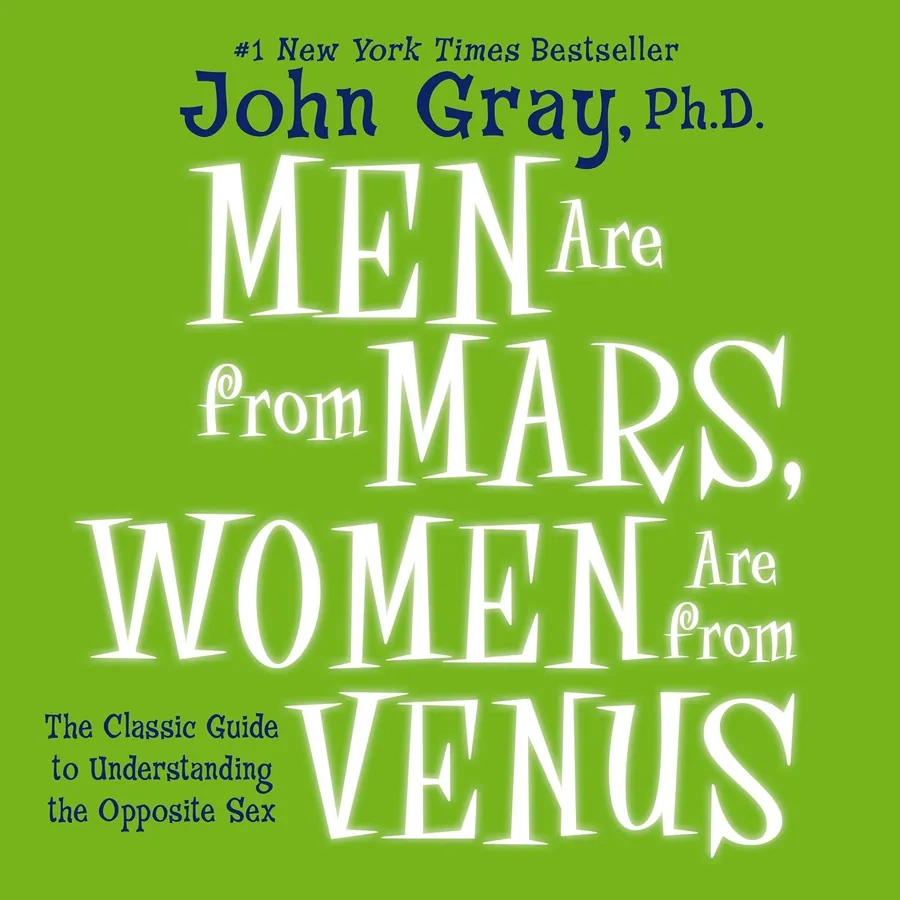
- Is there an audiobook of Men Are from Mars, Women Are from Venus?
- Yes. Men Are from Mars, Women Are from Venus has an Audible audiobook edition, narrated by John Gray.Listen free with Audible
We earn from qualifying Amazon purchases.
- How long is the Men Are from Mars, Women Are from Venus audiobook?
- The Men Are from Mars, Women Are from Venus audiobook runs 9 hr 28 min.
- Is Men Are from Mars, Women Are from Venus on Kindle+?
- Yes. Men Are from Mars, Women Are from Venus was included with Kindle+ when we last checked on November 23, 2026.
Common questions
- What is Men Are from Mars, Women Are from Venus about?
- A practical relationship book resting on a sweeping generalization, and the practical part is the reason to read it. The frame is a fable. Martians and Venusians fell in love once, got along because they respected their differences, then landed on Earth with amnesia and forgot they came from…
- Is Men Are from Mars, Women Are from Venus worth reading?
- We scored Men Are from Mars, Women Are from Venus 4.6 out of 5. Men Are from Mars, Women Are from Venus by John Gray is a classic relationship advice book for couples. It turns communication fights into a set of repeatable habits, from how to listen when a partner is upset to how to give space when a partner withdraws.
More like this
Related books

The Seven Principles for Making Marriage Work
John Gottman PhD

The 5 Love Languages: The Secret to Love that Lasts
Gary Chapman

How To Win Friends and Influence People
Dale Carnegie

Vibe: The Secrets of Strong Connections in a Lonely World
Adam Grant

Every Tool's a Hammer: Life Is What You Make It
Adam Savage

The Four Agreements: A Practical Guide to Personal Freedom
Don Miguel Ruiz

Tiny Habits: The Small Changes That Change Everything
BJ Fogg PhD

Range: Why Generalists Triumph in a Specialized World
David Epstein

Outliers: The Story of Success
Malcolm Gladwell

Mindset: The New Psychology of Success
Carol S. Dweck