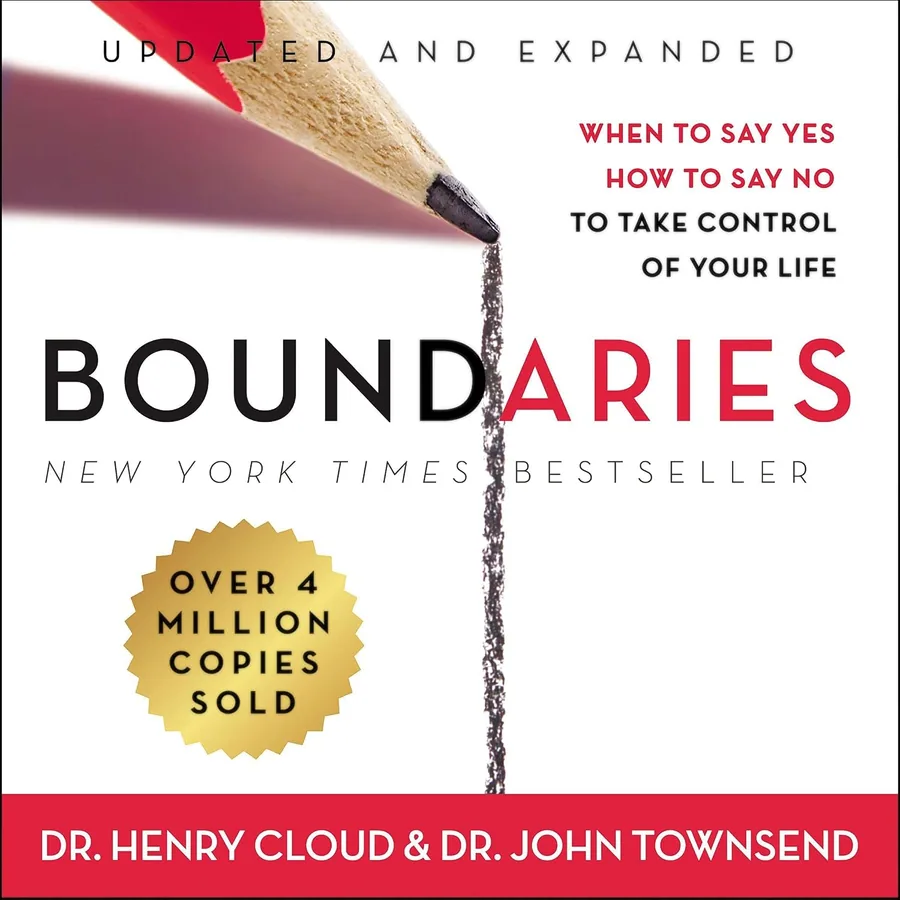
Where to read or listen
- Is there an audiobook of Boundaries?
- Yes. Boundaries has an Audible audiobook edition, narrated by Henry O. Arnold.Listen free with Audible
We earn from qualifying Amazon purchases.
- How long is the Boundaries audiobook?
- The Boundaries audiobook runs 11 hr 18 min.
- Is Boundaries on Kindle+?
- Yes. Boundaries was included with Kindle+ when we last checked on November 23, 2026.
Common questions
- What is Boundaries: When to Say Yes, How to Say No to Take Control of Your Life about?
- Is it possible to say no and still be kind and loving? That question drives Boundaries, and it is the one many readers arrive with, after years of carrying other people's moods and troubles as if they were their own. Henry Cloud and John Townsend, both psychologists, answer yes. They draw on years…
- Is Boundaries: When to Say Yes, How to Say No to Take Control of Your Life worth reading?
- We scored Boundaries: When to Say Yes, How to Say No to Take Control of Your Life 4.6 out of 5. Boundaries by Henry Cloud and John Townsend is a Christian self-help book on saying yes and no with a spouse, kids, parents, friends, and people at work. The authors are psychologists, and they build the case on scripture. The updated edition also covers digital life.
More like this
Related books

The Seven Principles for Making Marriage Work
John Gottman PhD

The 5 Love Languages: The Secret to Love that Lasts
Gary Chapman

How To Win Friends and Influence People
Dale Carnegie

Vibe: The Secrets of Strong Connections in a Lonely World
Adam Grant

Every Tool's a Hammer: Life Is What You Make It
Adam Savage

The Four Agreements: A Practical Guide to Personal Freedom
Don Miguel Ruiz

Tiny Habits: The Small Changes That Change Everything
BJ Fogg PhD

Range: Why Generalists Triumph in a Specialized World
David Epstein

Outliers: The Story of Success
Malcolm Gladwell

Mindset: The New Psychology of Success
Carol S. Dweck