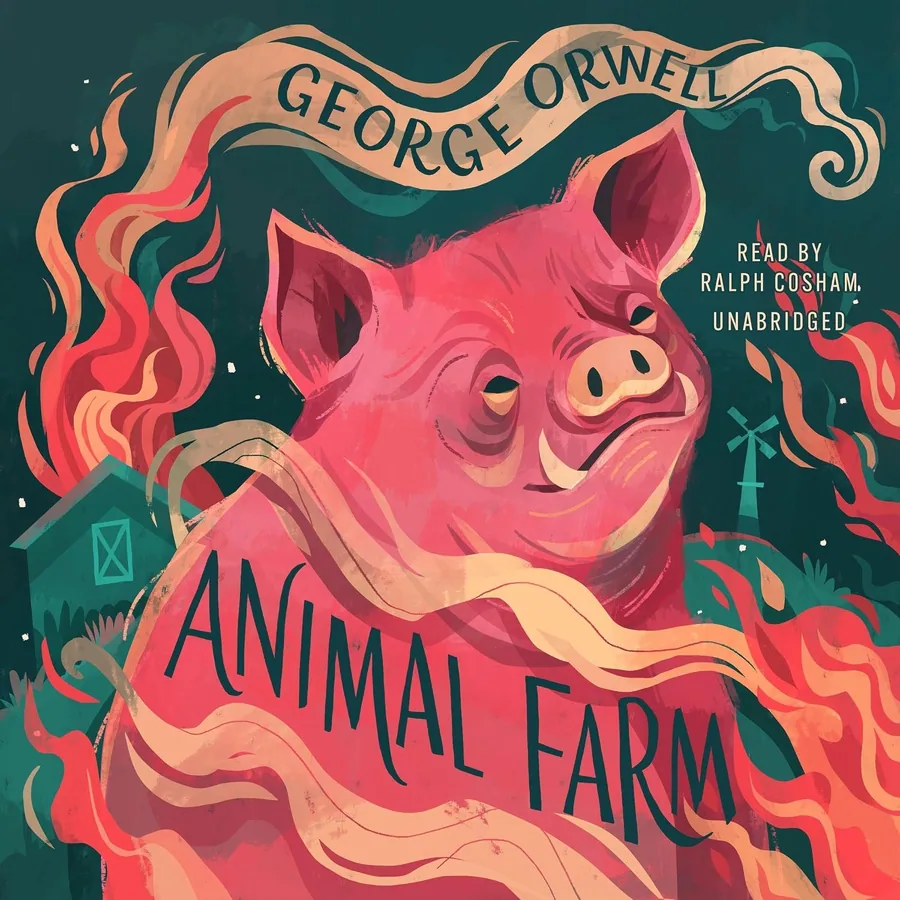
Where to read or listen
- Is there an audiobook of Animal Farm?
- Yes. Animal Farm has an Audible audiobook edition, narrated by Ralph Cosham.Listen free with Audible
We earn from qualifying Amazon purchases.
- How long is the Animal Farm audiobook?
- The Animal Farm audiobook runs 3 hr 11 min.
More by George OrwellSee every George Orwell book we've reviewed, with our scores.All George Orwell books →
Common questions
- What is Animal Farm about?
- Animal Farm is the rare book you can finish in a sitting or two that will bother you for a week. On the surface it is a barnyard story: the animals of Manor Farm, spurred on by the death of Old Major, throw out Mr. Jones and take the place over themselves. Snowball and Napoleon, two pigs, steer…
- Is Animal Farm worth reading?
- We scored Animal Farm 4.8 out of 5. George Orwell's Animal Farm is a short satirical fable about the animals of Manor Farm, who drive out their human master and then watch their revolution curdle under the pigs. It reads in a day or two, works as a first Orwell or a classroom classic, and stays with you long…
More like this
Related books

A Confederacy of Dunces
John Kennedy Toole

The Pillars of the Earth
Ken Follett

Lord of the Flies
William Golding

I Know Why the Caged Bird Sings
Maya Angelou

The Fellowship Of The Ring: Being the First Part of The Lord of the Rings
J.R.R. Tolkien

The Lion, the Witch and the Wardrobe: Classic Fantasy Tale for Kids (The Chronicles of Narnia Book 2)
C. S. Lewis

The Count of Monte Cristo
Alexandre Dumas

Around the World in Eighty Days
Jules Verne

True Grit: A Novel
Charles Portis

Jane Eyre (AmazonClassics Edition)
Charlotte Brontë