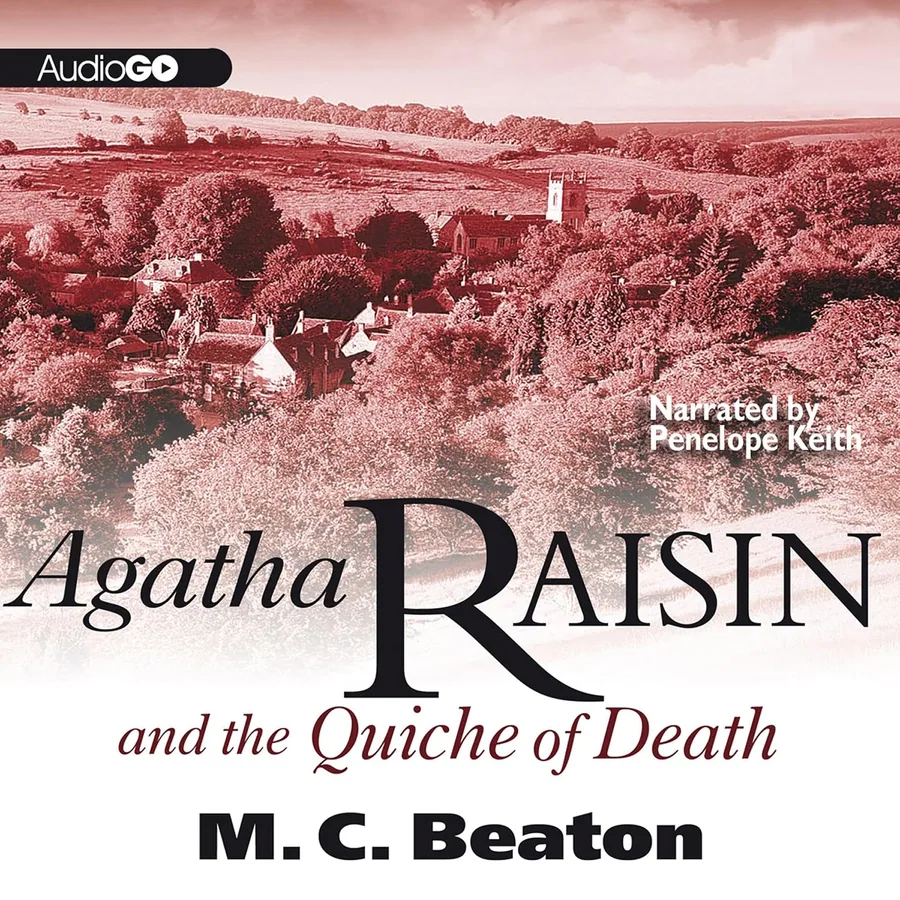
Agatha Raisin and the Quiche of Death, M. C. Beaton's cozy mystery, starts from a simple joke: a woman who bulldozed her way up the London PR business tries to bulldoze a village, and the village pushes back. Agatha sells the business and her flat, buys a cottage in Carsely, and settles into the Cotswolds life she has pictured since childhood. It takes her about a week to be bored stiff. She has no hobbies and no friends, and no idea how to make either.
So she does what she knows. She picks the highest prize on offer, the village baking contest, and goes for it. One problem. She can't bake. The quiche she enters came from a London quicherie, and she expects it to win anyway. Instead the judge, Mr. Cummings-Browne, dies, and the poison turns out to be in her entry. Her little fraud is now sitting next to a corpse, and she has to own up to it. Sinister notes start arriving, and the book asks whether she's being punished for the cheating or for something closer to murder.
That's a good engine for a first book. The premise promises embarrassment first and detection second. Beaton delivers on both. The mystery is the vehicle, and the real subject is a loud, lonely woman trying to be accepted by people who find her grating. Readers are blunt about Agatha. She's rude, bossy, and insensitive, and she wants to be loved more than she'd admit. Those two facts pull against each other on every page she's on, and that friction is the book's main pleasure. She is infuriating and oddly easy to root for.
The supporting cast does a lot of the work. Bill Wong, a policeman who checks in on Agatha, comes across as funny and decent, a fixed point in a village full of people with something to hide. The Boggles are there for readers to dislike, and readers do so with relish. The vicar's wife is held up as a saint, which tends to make a reader wait for the crack. The village itself behaves like a character, with the gossip, the rain, and the fair that pass for an event in the Cotswolds. The mood sits close to a good episode of Midsomer Murders: dubious neighbors, a body, and a cheerfully English refusal to be too upset about it.
Now the fair complaint. As a puzzle, this is not the strongest of its kind. The red herrings are plentiful, but some readers sort out the culprit early, and the book spends a generous amount of time introducing villagers, so the plot can feel like it's waiting its turn. Suspicion here is a light touch rather than a squeeze. Violence stays off the page, sex gets a passing mention, and nothing about the pacing will rattle anyone's nerves. That is by design. The book wants you amused, not afraid, and it keeps a quick, easy pace that suits a rainy afternoon.
It also reads like a first book. Agatha is more sorry for herself here than she becomes later, and readers who came to the series from a later title say the characters and the humor sharpen as it goes on. There's a thread involving a neighbor that carries through the series, and Agatha herself is clearly built to grow. Reading in order helps, and starting here makes sense.
Why you should read
- Cozy English village mysteries
- Prickly, flawed heroines you root for anyway
- Midsomer Murders-style atmosphere
- Starting a long series at book one
- Light reading with no graphic violence
What to expect
- A quick, easy read with gentle humor
- Violence and gore stay off the page
- Plenty of villagers and red herrings
- A mystery some readers solve early
- Character growth that deepens across the series
The verdict is simple. This is a small, brisk, amusing opening, with a heroine who is hard to like and hard to leave alone. The mystery is modest, the company is good, and the poisoned quiche gives the series a funny start.