Where to read or listen
- Is there an audiobook of A Long Way Gone: Memoirs of a Boy Soldier?
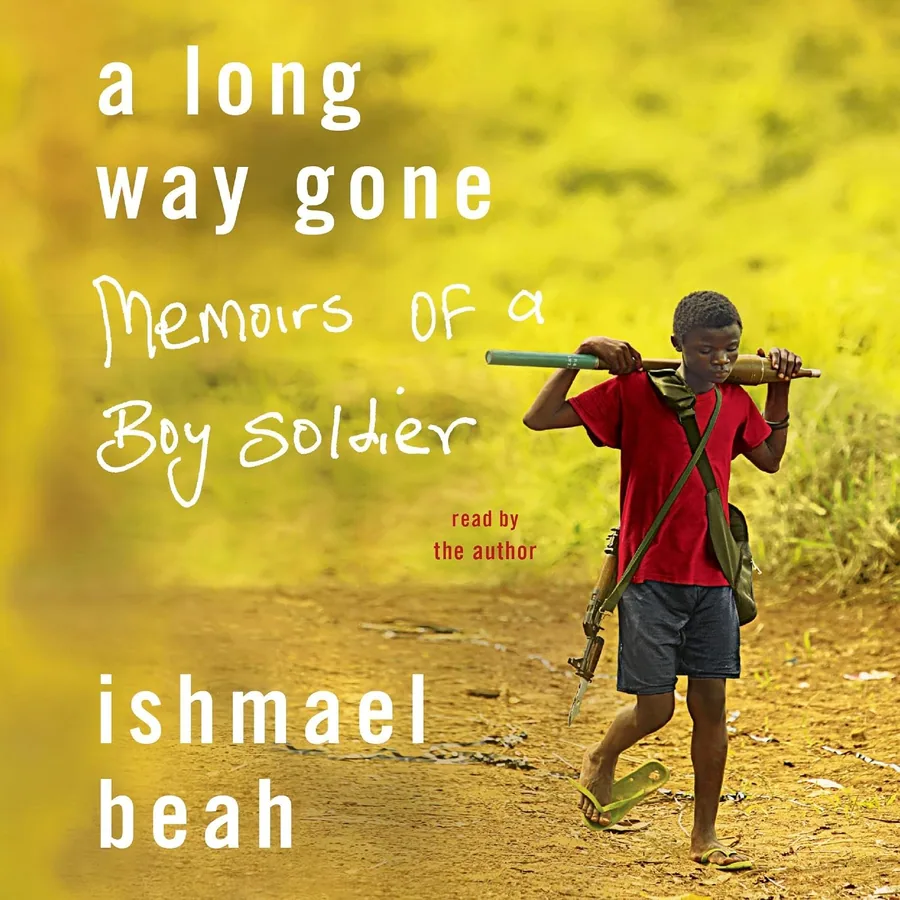
- Yes. A Long Way Gone: Memoirs of a Boy Soldier has an Audible audiobook edition, narrated by Ishmael Beah.Listen free with Audible
We earn from qualifying Amazon purchases.
- How long is the A Long Way Gone: Memoirs of a Boy Soldier audiobook?
- The A Long Way Gone: Memoirs of a Boy Soldier audiobook runs 7 hr 43 min.
Common questions
- What is A Long Way Gone: Memoirs of a Boy Soldier about?
- What turns a gentle twelve-year-old into a soldier who kills without feeling, and what could bring him back? Beah's memoir is built to answer both, and the answers it gives are concrete. He sets out with his older brother and some friends for a rap music event, a boy's ordinary plan, and rebels…
- Is A Long Way Gone: Memoirs of a Boy Soldier worth reading?
- We scored A Long Way Gone: Memoirs of a Boy Soldier 4.6 out of 5. A Long Way Gone is Ishmael Beah's first-person memoir of being a boy soldier in Sierra Leone's civil war. It follows him from a village childhood at twelve through the army, drugs and killing, and into a UNICEF rehabilitation center. A hard book, but a rare witness account.
More like this
Related books

A Rumor of War
Philip Caputo

Lone Survivor: The Eyewitness Account of Operation Redwing and the Lost Heroes of SEAL Team 10
Marcus Luttrell

You with the Sad Eyes
Christina Applegate

The Hero Next Door: Stories of Patriotism and Purpose
Martha Raddatz

Disrupting the Game: From the Bronx to the Top of Nintendo
Reggie Fils-Aime

The Glass Castle
Jeannette Walls

Born a Crime
Trevor Noah

Swan Song: Diana, My Sister
Charles Spencer

A Walk in the Park: The True Story of a Spectacular Misadventure in the Grand Canyon
Kevin Fedarko

A Game of Thrones
George R. R. Martin